On October 14, shares of neocloud operator CoreWeave fell about 15 percent as its 2032 bonds’ yields approached 15 percent. According to data from S&P Capital IQ, CoreWeave’s 9.625 percent bonds are now trading at about 80 cents on the dollar.
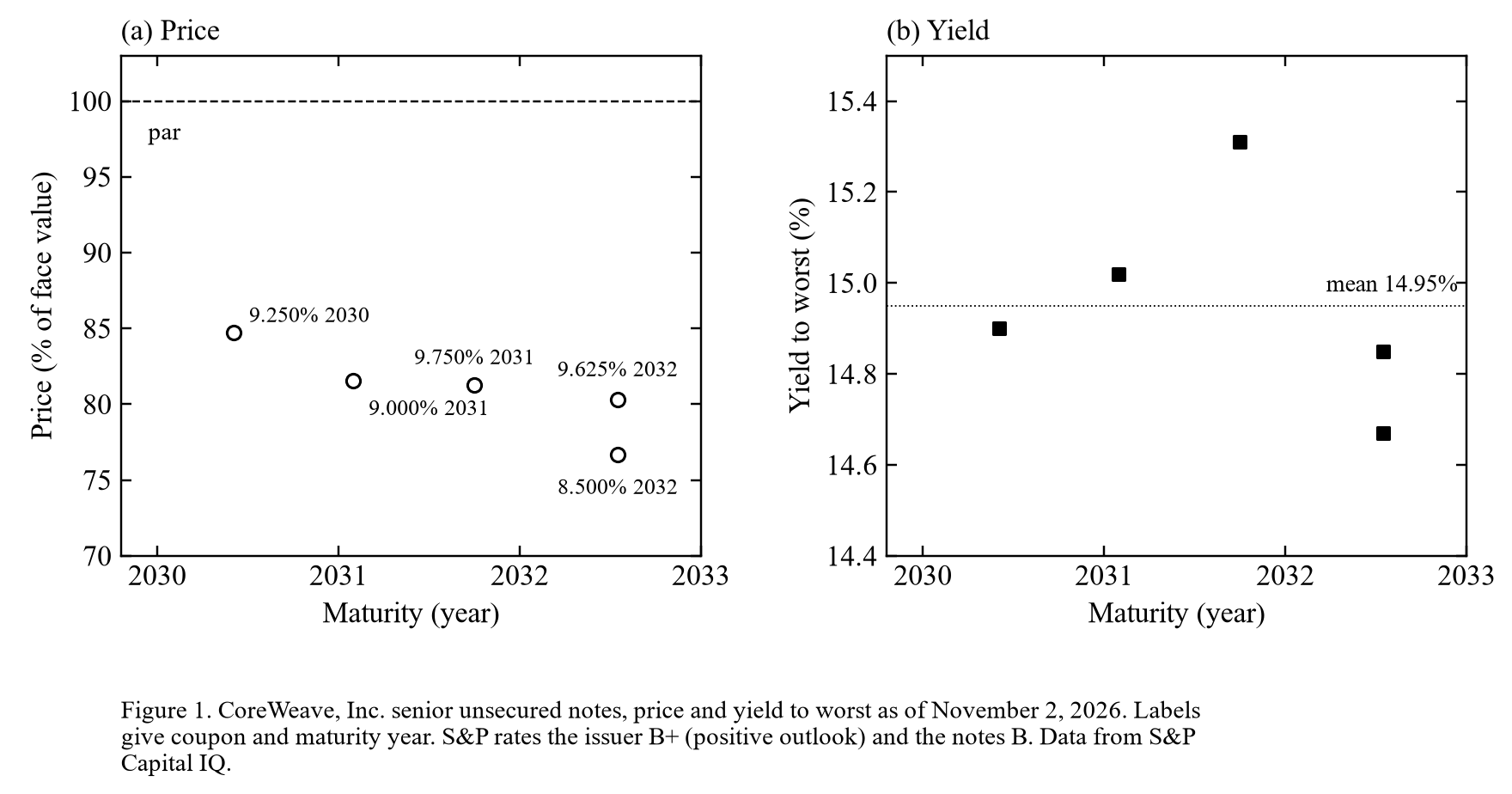
CoreWeave senior unsecured notes, price and yield to worst, Nov. 2, 2026. Data from S&P Capital
IQ.
CoreWeave, which has a B+ rating from S&P Global and is the largest player in the “neocloud” space (companies building out clouds of Nvidia chips for AI customers), is an operator in a space that data-center lenders are nervous about for two main reasons. Lenders are nervous about construction risk (delays in getting the facility built) and tenant credit risk (the tenant not paying rent over a 10-to-15-year lease). Tenants like Microsoft help developers get financing at lower rates, a luxury neocloud startups can’t count on. Meanwhile neocloud firms sign 10-to-15-year leases for space but usually get compute deals with customers of only about five years.
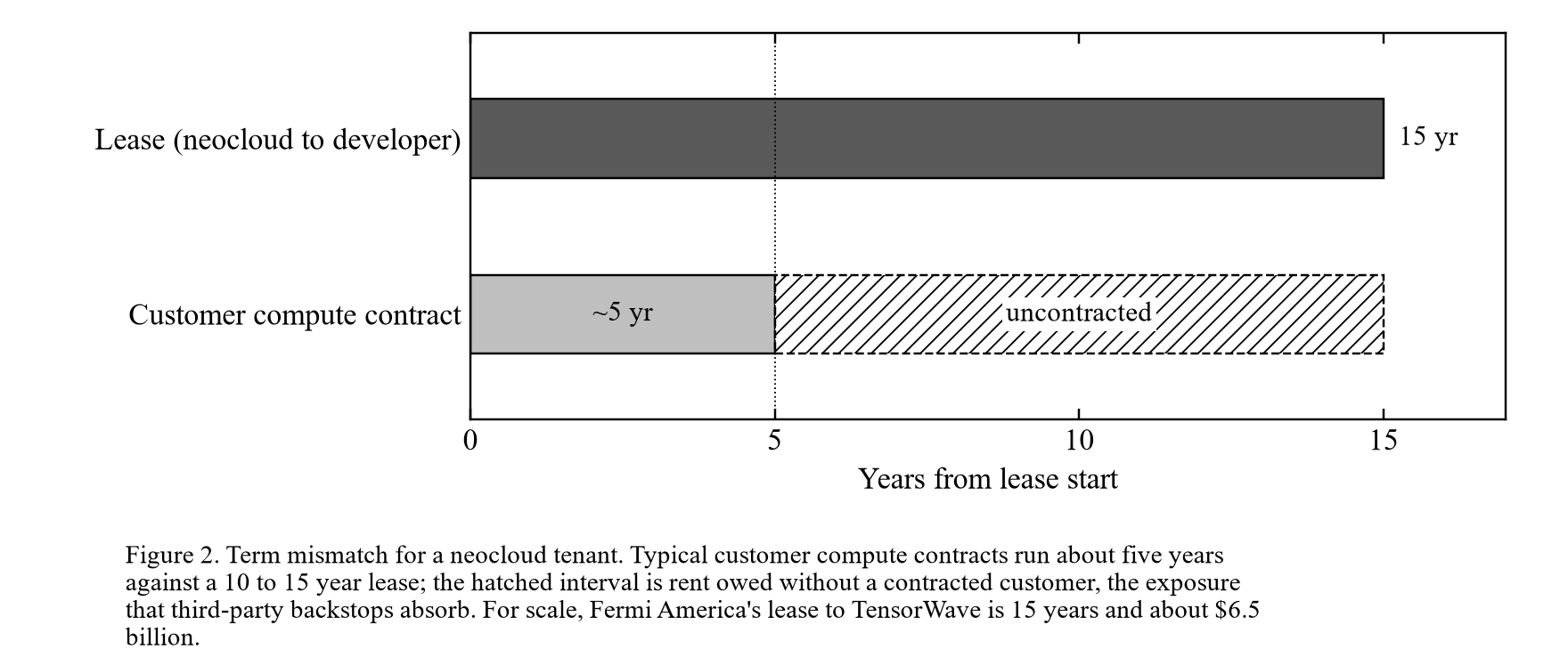
A typical neocloud lease runs about three times longer than the customer contracts that pay for it.
On October 13, AMD agreed to provide credit support for a 15-year, $6.5 billion lease for TensorWave at the Fermi America site. Once the site is built and TensorWave starts paying rent, AMD will back the lease payments. In its report for the quarter ended September 30, Alphabet disclosed $75.7 billion in backstop obligations relating to data centers, including promises to cover lease payments if a tenant can’t.
These guarantees shift default risk to cash-rich companies. The guarantees don’t solve the fundamental mismatch between the longer-term leases on these facilities and the shorter-term contracts neoclouds have with AI companies. They move it onto bigger companies, which usually disclose these guarantees in the footnotes of their financial reports.
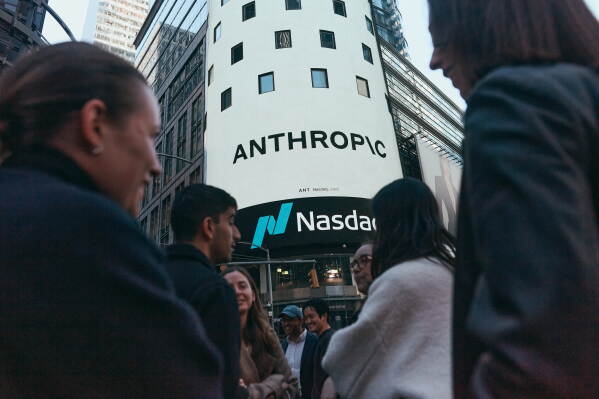
On October 28, Bloomberg reported that after Texas paused new projects to review grid risk, banks led by Morgan Stanley are putting on hold $5 billion to $7 billion in high-yield bonds that would be used to refinance part of about $15 billion in debt tied to a Texas facility leased by Anthropic with Google support. The delays stem from the state’s grid review, not concerns over Anthropic’s creditworthiness, and will force banks to hold this debt on their books longer.
If demand for AI continues, these guarantees won’t be needed. However, if demand slows down, multiple major tech firms could be on the hook for these guarantees at once. Monitoring guarantee totals in companies’ quarterly regulatory filings will be critical.