When Molson Coors announced a $3.645 billion goodwill impairment charge in Q3 2025, Wall Street took notice, as it was one of the largest write-downs in beverage industry history (Macrotrends). Goodwill is the premium a company paid for an asset on its balance sheet, and goodwill impairment is when the company writes down that value, admitting it overpaid for the acquired asset. In this case, Molson Coors paid $12 billion for SABMiller’s U.S. assets in 2016, a portfolio now worth significantly less today. This is not simply a Molson Coors problem, though; the entire adult beverage industry is facing a structural shift in how Americans drink, particularly among Gen Z (NYT). So how did one of the most iconic beer portfolios in the world end up here, and can it find a way out?
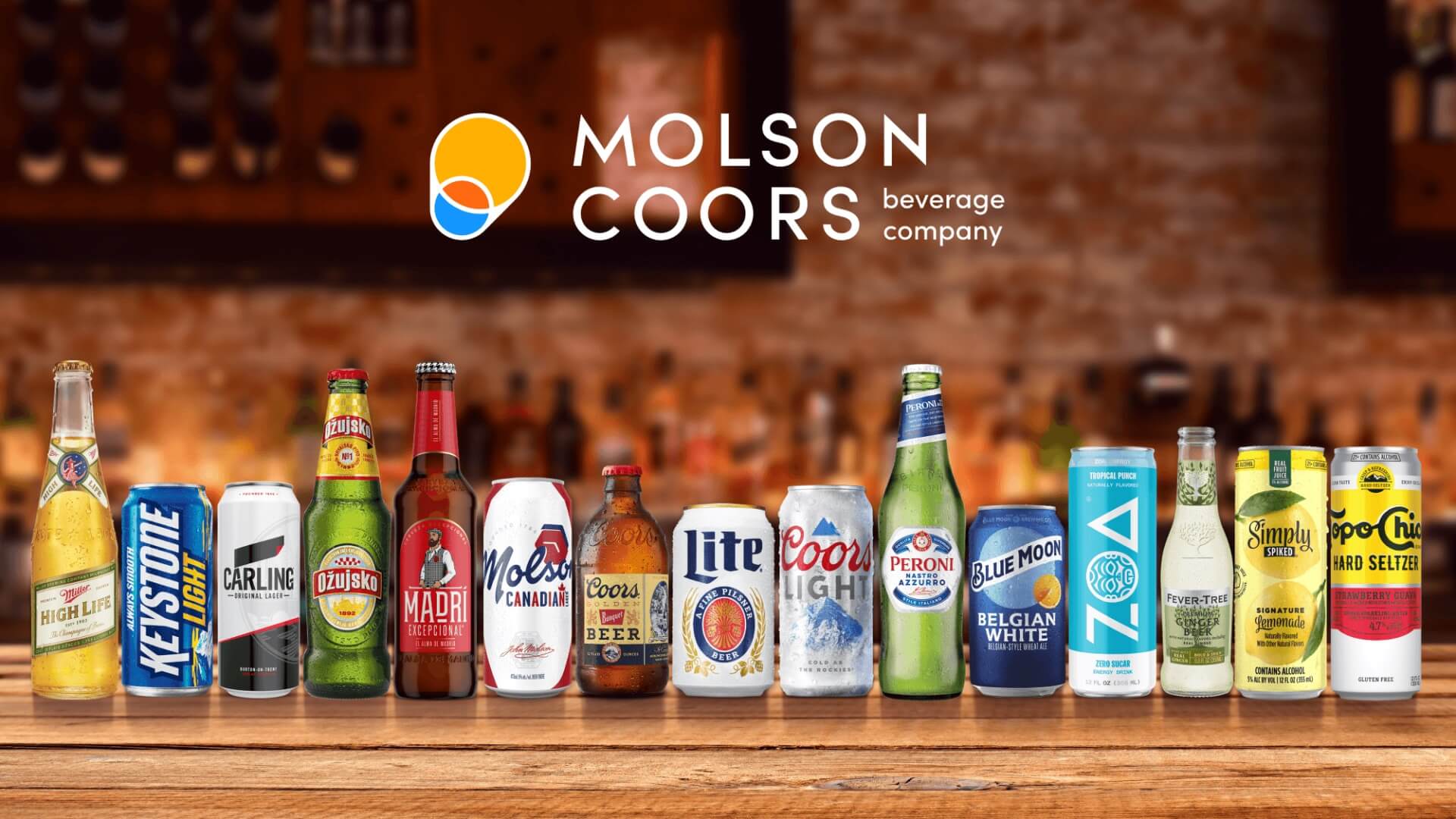
Molson Coors was created in 2005 through a merger of equals: Molson, then the largest brewery in Canada, merged with Coors Brewing Company, the third-largest brewery in the United States, instantly creating a powerhouse in North American beer. The company rebranded to Molson Coors Beverage Company in 2020 to signal ambitions beyond beer. Revenue has been largely stagnant since the pandemic; a 9.4% jump to $11.7 billion in 2023 gave way to consecutive declines of 0.6% in 2024 and 4.2% in 2025, bringing total net sales to $11.14 billion, all while gross margins have held steady around 38% (Molson Coors). Molson Coors organizes its portfolio into three distinct tiers: Above Premium, Premium, and Value Brands. Above Premium — Blue Moon, Madri Exceptional — represents the company’s highest-margin products and its primary engine for future growth. Premium is the core of the business: Coors Light, Miller Lite, Coors Banquet, and Molson Canadian drive volume and are the firm’s bread and butter. Value brands, including Keystone Light and Milwaukee’s Best, carry lower margins and sit in a structurally declining sales category. The company distributes through the standard three-tier system: manufacturer to independent distributor to retailer.
Molson Coors is at a crossroads. Beer volume has been declining since 2023, and this past year it fell 8.6%, which is not a one-year blip but a deepening trend that management is actively working to reverse. Three structural forces are driving the decline. First, a generational market shift: Gen Z is drinking less alcohol than any prior generation, gradually shrinking the total addressable market (NYT). Second, hard seltzers have reshaped the competitive landscape. Peaking in popularity around 2021, they remain an active force in adult beverages. Molson Coors responded by rebranding to “Molson Coors Beverage Company,” launching Vizzy Hard Seltzer, and partnering to manufacture Topo Chico Hard Seltzer (Molson Coors). Third, tariffs and supply chain pressures have hit the company hard. Rising aluminum costs, the primary material for its cans, are pushing up cost per unit and compressing gross margins (WSJ).
To address these challenges, Molson Coors hired new CEO Rahul Goyal this past year to pivot the company in the right direction. His central objective is to make the business leaner with such a wide array of beverage options. The company has become bloated, and Goyal aims to cut costs and redeploy capital into the product lines that are actually performing. One standout product is Madri Exceptional, an above-premium Spanish-style lager that has shown remarkable growth, particularly in the U.K. (Morning Advertiser). Expansion beyond beer remains another potential source of growth, most notably through its partnership with Coca-Cola to distribute Topo Chico Hard Seltzer. Molson Coors’ sales may be under pressure, but its scale economies and vast distribution network still make it one of the most entrenched players in the beverage industry. That said, a company that has lost nearly 62% of its market value over the past decade, from a $20.8 billion peak in 2016 to roughly $7.9 billion today, will need to execute a meaningful turnaround if it has any ambitions of closing the gap with AB InBev (MarketCap).
To close out the article, I will give a SWOT analysis for Molson Coors to evaluate the company’s position by identifying internal strengths and weaknesses alongside external opportunities and threats.
Strengths
- Iconic Brand Portfolio
- Above Premium Product Line Growth
- Brand Investment and Marketing
Weaknesses
- Diversification Outside Beer
- Lack of Hard Seltzer Innovation
- Sales Dependence on Americas
Opportunities
- Hard Seltzer Expansion
- Premiumization of Product Lines
- Non-Alcoholic Beverages
Threats
- Direct Competitors (AB Inbev & Constellation)
- Supply Chain Pressure and Tariffs
- Slowing Demand among Younger Demographics