Home sales fell to their lowest level in 16 years in October. Existing-home sales slid 5.5% from September to a seasonally adjusted annual rate of 3.75 million, worse than the 3.8% decline economists expected and the sharpest monthly drop since January. Sales were down 8.8% from a year ago, the largest annual decrease since 2023. The last time sales were this slow was in 2010, but then homeowners were forced to sell, whereas today they are choosing to stay.
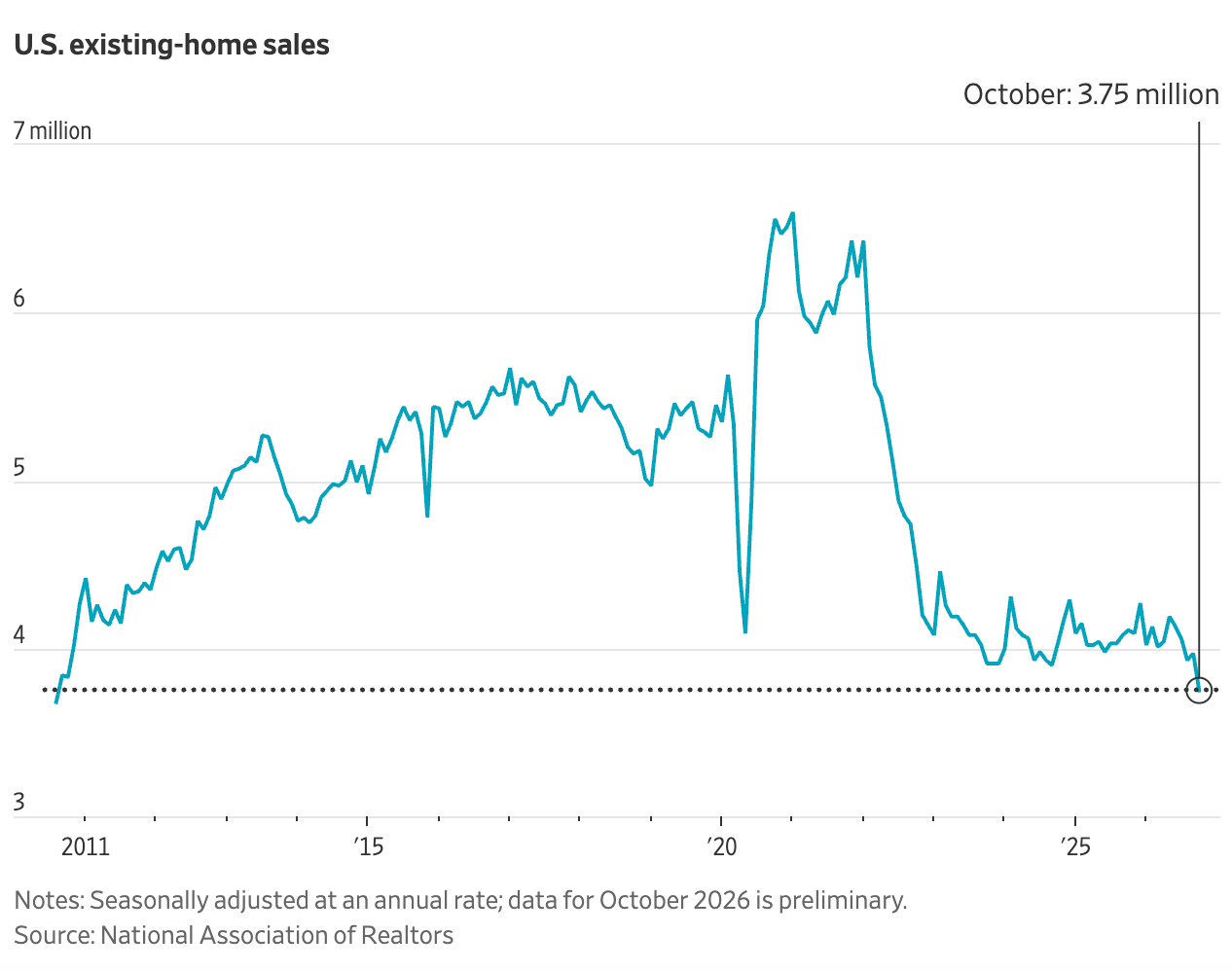
Only 2% of October’s sales were foreclosures or short sales, compared with 26% in 2010. Owners today aren’t moving because they don’t want to give up the low mortgage rates they locked in before 2022. With so few homes on the market, prices have barely moved from record highs, and the median existing-home price is 0.4% higher than it was a year ago.
Early 2026 looked more hopeful. Rates briefly slipped under 6% in February, but climbed once the war with Iran began. The conflict and heavy AI spending have kept inflation high, and mortgage rates have risen with it. Most homes that sold in October went under contract in September, when a bond market selloff pushed rates above 7%. Rates rose even further in October, so sales may continue to fall. Inflation has also outpaced wages, meaning the average buyer can afford less than before. First-time buyers made up 29% of sales, down from 32% a year ago, while investors and second-home buyers grew to 20%, up from 16%. The typical first-time buyer is now 40, a decade older than in 2010.
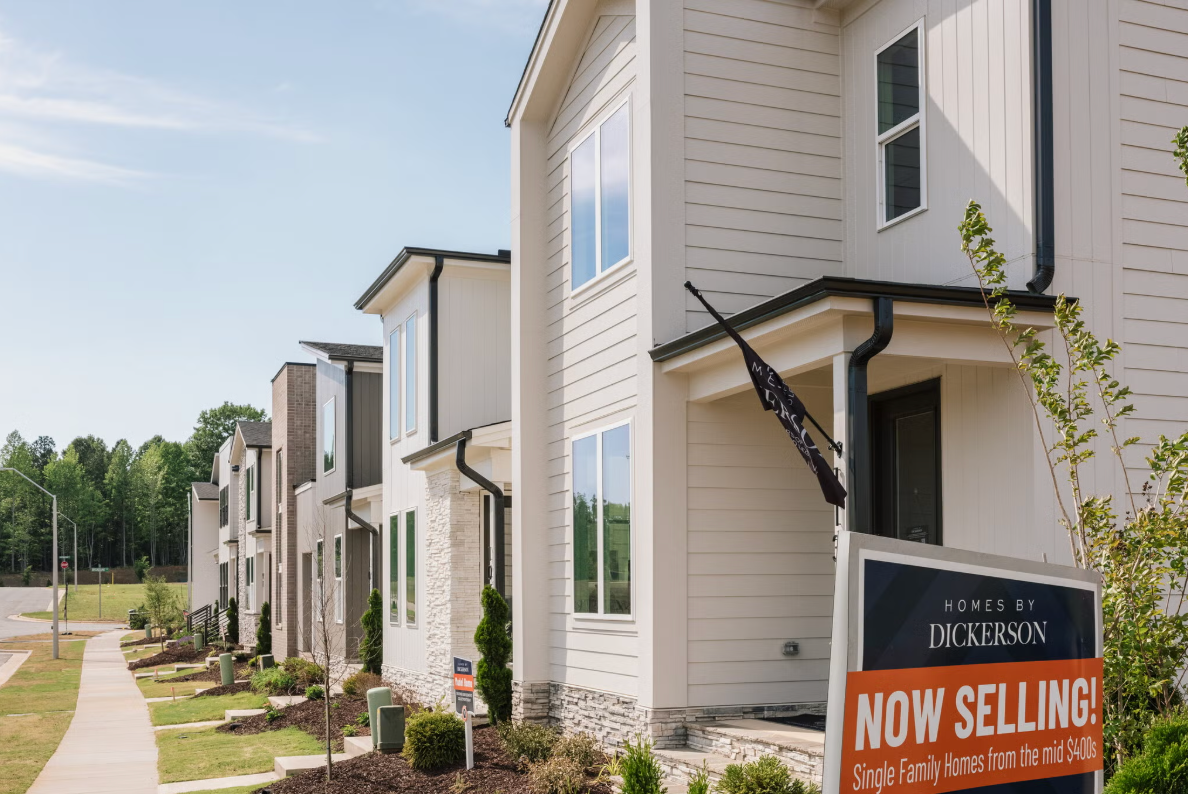
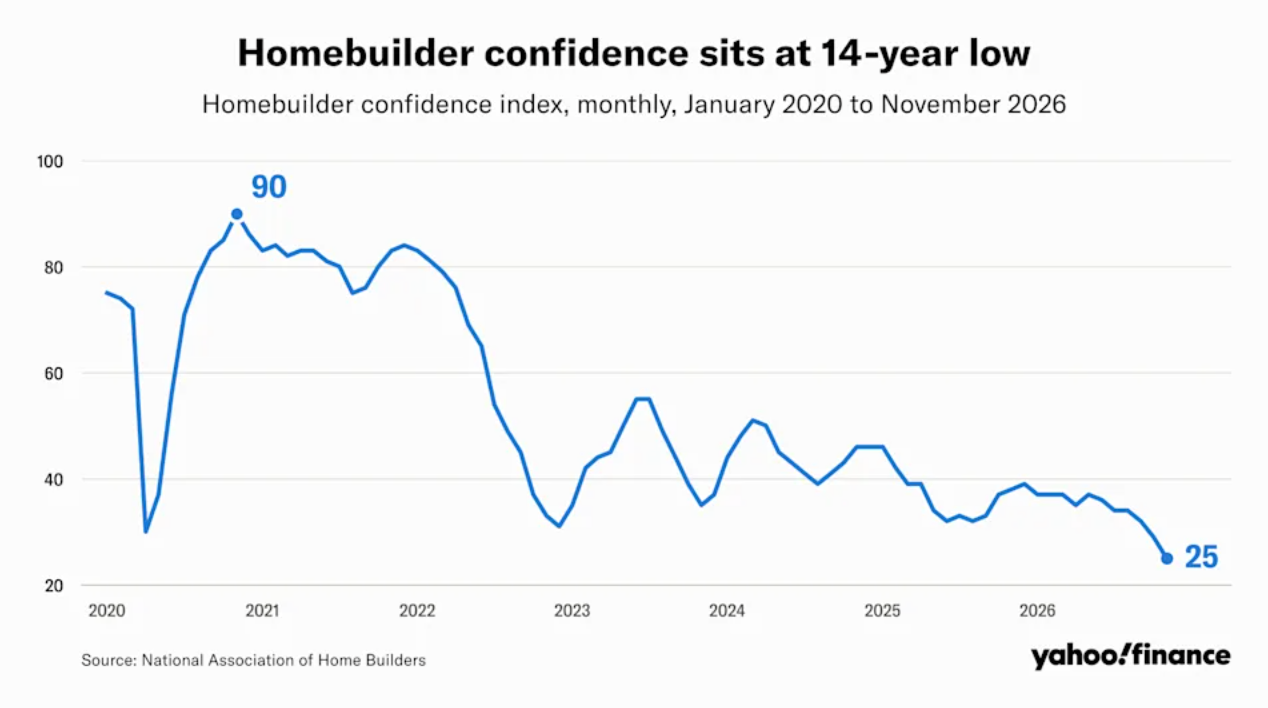
Builders are also struggling in this environment. Homebuilder confidence fell four points to 25 in November, below the expected 29 and the lowest since April 2012. Nearly half of builders (46%) cut prices to attract more buyers, yet buyer traffic still sank to a 15-year low (outside a brief dip at the start of the pandemic). “Builders are confronting multiple challenges in today’s economy,” said Bill Owens, chair of the National Association of Home Builders. He pointed to stricter immigration enforcement, which has shrunk the construction workforce, and higher fuel prices that are pushing subcontractors to raise their rates.
Relief seems far away. Goldman Sachs projects just 3.9 million home sales in 2027, the first year under 4 million since 1995. Mortgage rates rose to 7.28% this week after a month of declines, and with the Fed expected to keep raising rates, they are unlikely to come down soon. As Bankrate housing market analyst Jeff Ostrowski put it, “You are going to have a frozen housing market for a long time.”