AI now touches every part of our daily lives, and healthcare has absorbed it more than most fields. The promises of AI integration include faster drug discovery, sharper diagnoses, less tedious data entry, improved clinic efficiency, and broader access to healthcare. Many of these hopes have come true. But a harder question follows: Is AI actually making healthcare cheaper or more expensive?
Case 1: Lower Costs
The data suggests the answer could go either way. A 2023 National Bureau of Economic Research working paper estimated that wider AI adoption could save 5% to 10% of U.S. healthcare spending (BPI). Along with that, Penn Medicine has made pharmaceutical prior authorization 30% more efficient, allowing the system to handle more requests and capture more pharmacy revenue (BPI).
Human costs matter just as much. A JAMA Network Open study found that clinician burnout fell from 51.9% to 38.8% in 30 days with an AI scribe. Clinicians also reported improvements in cognitive task load, after-hours documentation time, and focused attention on patients (JN). These benefits have financial implications: health economists say that reducing burnout could cut costly workforce turnover. When a physician quits, the loss is expensive. Keeping the clinicians healthy and happier is itself a form of cost control. Reducing workload across healthcare positions could limit burnout and reduce costs.
Case 2: Higher Costs
Others, however, see a different picture, and much of the debate centers on billing. In September, the Blue Cross Blue Shield Association reported that hospitals’ AI tools added $1 billion in expenses over 2 years (NYT). Insurers argue that AI-assisted coding describes patients as having more complicated conditions that require more testing, which raises the average cost per case by nearly $12,000 (NYT). Hospitals dispute this, saying the tools they employ document care more accurately for genuinely sicker patients. At the same time, insurance companies are accused of using their own AI tools to delay or deny healthcare by flagging what falls outside coverage. The result is an AI arms race between hospitals and insurers, with patients caught in the middle.
Health systems leaders are candid about the risk. Bobbie Byrne, MD, executive vice president and CIO of Charlotte, N.C.-based Advocate Health, told at Becker’s Conference that AI will likely raise overall healthcare costs, though not necessarily her own organization’s, because “care is what costs” (BPI). If AI finds disease earlier or reaches underserved patients, more care will be delivered, and more care means more spending.
The Bottom Line:
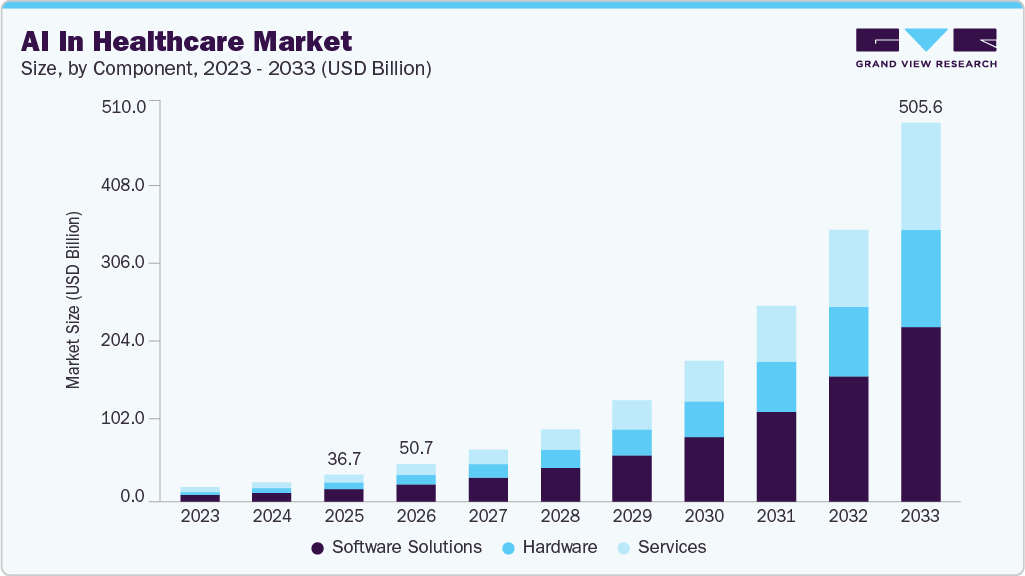
AI is very unlikely to be a simple cost cutter or cost driver. Right now, recent data points point to higher spending, in part because savings take time to appear. Long-term savings will depend on whether healthcare redesigns how work gets done rather than layering AI onto old strategies. Whether healthcare costs increase or decrease will be determined by incentives built around it.