The AI spending boom has been a main driver of economic growth across the US this year. JPMorgan estimates that the five largest US hyperscalers will spend about 697 billion in 2026 and even more in 2027. Two forces are now pushing back: Rising borrowing costs and a democratic majority in Congress.
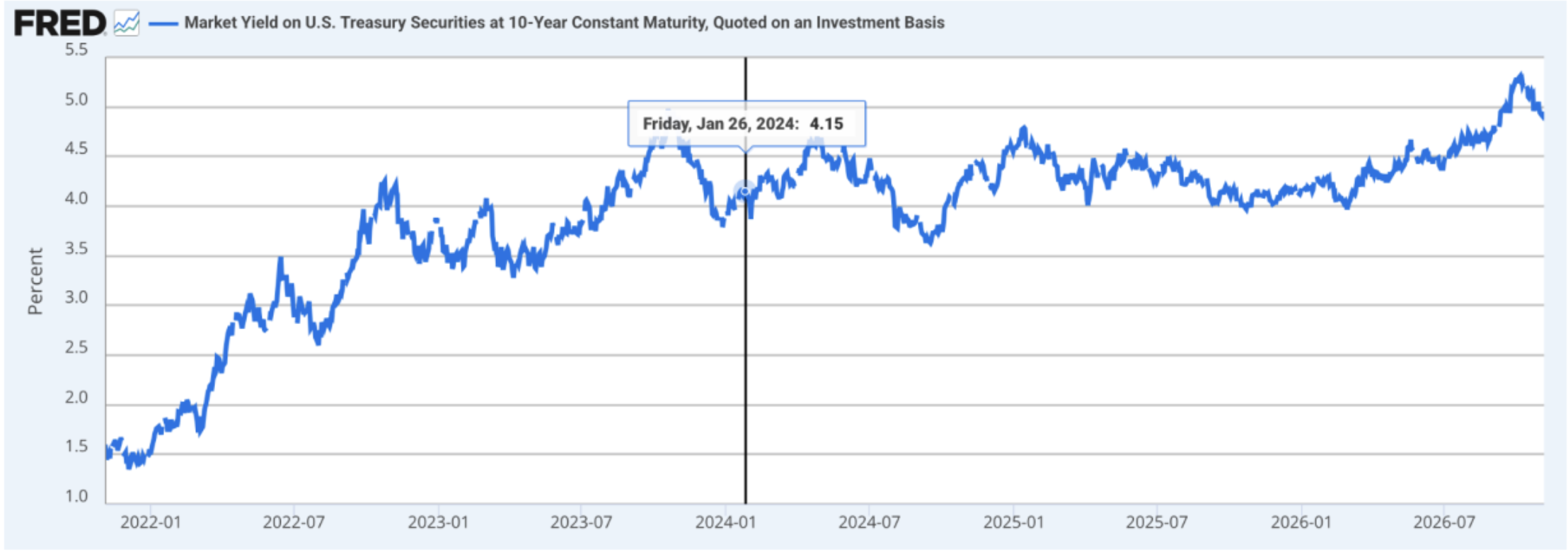
In September, the FOMC decided to hike the federal funds rate 25 basis points to 3.75%-4.00% because it needed to reduce inflation. This hike hurt many large AI companies that have piled up debt on their balance sheets, and investors immediately began to question whether these companies could pay it off. However, inflation has remained high since then, with core PCE increasing 0.3% in the September PCE report. This raises the strong possibility that the FOMC will need to raise the federal funds rate by another 25 bps, which could further hurt AI hyperscalers that are currently taking on a lot of debt. Meanwhile, US bond yields skyrocketed to highs we haven’t seen in almost 2 decades. The US 10-year Treasury note reached as high as 5.35%, and the US 30-year bond reached even higher, at 5.72%. Since those highs in October, bond yields have come down a bit, but they remain elevated. Together, these factors have major impacts on the AI buildout. Hyperscalers are spending roughly 90% of operating cash flows on data centers, and their leverage has reportedly doubled. Every new bond and lease now costs more, which means that these companies need even higher revenues to justify the spending. On top of that, rating downgrades on these companies’ bonds could push borrowing costs even higher, compounding the issue. Some of the giants might absorb this for a while, but smaller, more leveraged companies will be far more exposed. Higher rates will not stop the AI buildout, but they will make it much slower and more selective.
Now add in Washington. On Tuesday, November 3rd, during the midterm elections, Democrats took control of the House and Senate in a surprising blue wave landslide. The biggest victory was the one in Texas. Texas will now have a democratic senator for the first time in 38 years and a democratic governor for the first time in 35 years. Texas is a major hub for data centers, and around 32% of the US capacity under construction is in Texas. With Democrats winning the governor’s seat and a Senate seat in Texas, we should expect more regulations on AI buildout in the state and slower construction. The trend we will see in Texas is what we will expect to see across the country, as Democrats now control Congress. There will be more regulation and a slowing of the AI data center buildout. Now when you combine the slowing of the data center buildout with the higher rates and borrowing costs you can see a recipe for failure starting to form. While the party is not necessarily over for hyperscalers, the easy phase will be. If financing costs stay high, expect slower, more selective spending.