When an eager college student submitted a project detailing a chicken-finger-only restaurant, his professor gave him the lowest grade, arguing that a chicken-finger-only restaurant would never work. Undeterred, Todd Graves firmly believed in his dream. He worked grueling hours on an oil rig off the coast of Los Angeles and later as a commercial fisherman in Alaska, working 20 hours a day to save up enough money to bring his dream to life (Raising Cane’s). He returned to Louisiana State University and opened the first Raising Cane’s location in 1996. It was an immediate stunning success. Today, Raising Cane’s has grown to nearly 700 locations across the United States and ranks second in sales per fast-food location (Forbes).
Raising Cane’s is not your typical fast food restaurant. It is a hyper-focused, highly specialized business model. The company offers one of the most limited menus in the industry, featuring only five food items: chicken fingers, crinkle fries, coleslaw, Texas toast, and a single dipping sauce (Forbes). This level of simplicity drives meaningful cost advantages. A simplified menu reduces inventory complexity, lowers input waste, and shortens employee training cycles. It also allows a highly streamlined kitchen operation, allowing the company to serve customers quickly and consistently. This operational efficiency translated into higher customer turnover and greater revenue per restaurant. Cane’s has stunning sales per store of $6.6 million, which is second in the fast-food industry behind Chick-Fil-A (Forbes). By having a small menu, Cane’s has to optimize output rather than maximize it. The company wins by doing less, better.
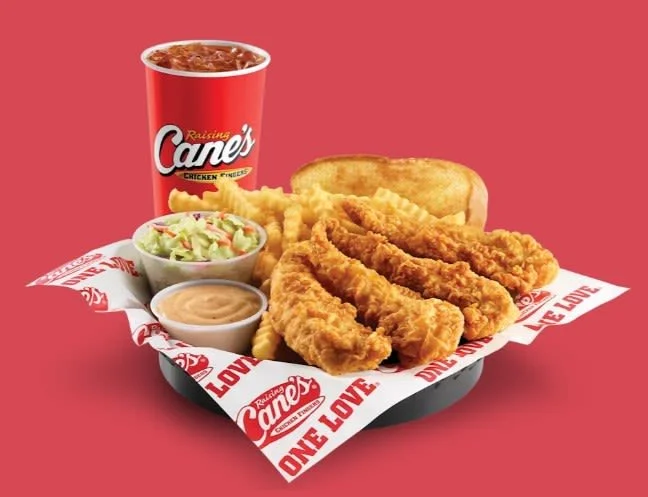
This model delivers a strong, predictable customer experience. By focusing on chicken tenders, Cane’s reduces quality variability, ensuring customers know exactly what to expect. This simplicity reinforces customer retention and loyalty. By focusing on a narrow product, Cane’s creates market specialization, edging out competitors like Chick-fil-A or McDonald’s, because they can’t offer a highly refined single product without sacrificing a large menu. This focus creates operational leverage, allowing Cane’s to scale efficiently while maintaining quality and speed.
However, this model is not without its risks. The same specialization that drives efficiency also introduces concentration risk. With such a narrow product offering, Cane’s is highly dependent on sustained demand for chicken. If consumer preferences change or demands soften, the company has little flexibility. There’s also a supply shock risk if your main product, chicken, faces supply shortages. External competition is another concern as its biggest rival, Chick-fil-A, is sweeping across the nation. A limited menu limits innovation and may constrain long-term growth, and Cane’s must maintain its operational edge to defend its market position.
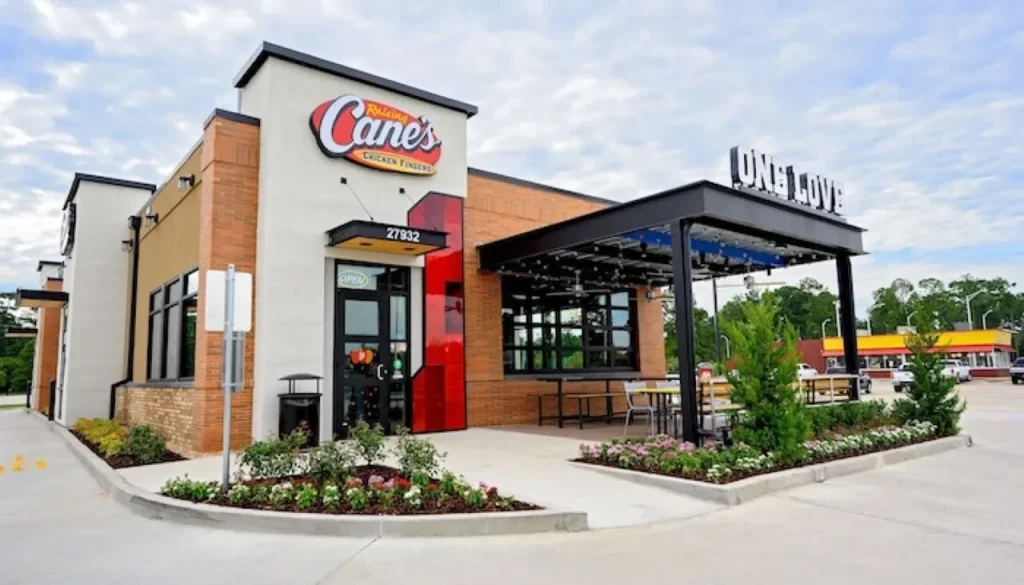
Despite these risks, Raising Cane’s is well-positioned for continued growth. Since Raising Cane’s is a private company, financial data is limited. In 2024, it reported staggering 33% revenue growth as the company is actively and rapidly expanding across the country (Bloomberg). With domestic growth well underway and international opportunities, the company’s business model appears scalable. However, long-term success will depend on balancing operational efficiency and store growth. In an industry driven by constant innovation, Raising Cane’s has proven that doing less exceptionally well can be a viable business strategy.
To close out the article, I will provide a SWOT analysis of Raising Cane’s to evaluate the company’s position by identifying internal strengths and weaknesses, as well as external opportunities and threats.
Strengths
- Product Specialization
- Brand Loyalty & Reputation
- Consistent Product Quality
Weaknesses
- Highly Concentrated Menu
- Dependence on Volume Per Restaurant
- Narrow Product Appeal
Opportunities
- Geographical Expansion
- Digital Ordering and Drive Through Services
- Operational Innovations
Threats
- Chicken Price Volatility
- Consumer Preference Shifts
- Market Saturation & Competition