Incumbent Lula da Silva just won Brazil’s October runoff presidential election against Senator Flávio Bolsonaro, the son of former president (and currently incarcerated) Jair Bolsonaro. Just three weeks ago, Flávio had led the first round of runoff voting by a roughly two-percent margin, which was subsequently erased in a 51.79% to 48.21% win for Lula in the final round (Al Jazeera).
The race ran in the shadow of former president Jair Bolsonaro’s 27-year sentence, in which he was accused of plotting a coup, a case brought by the Prosecutor-General, who was a former lawyer for Lula, and decided by the Supreme Court. Bolsonaro supporters call it lawfare, while Lula’s defenders call it protection of democracy. Initially, Flávio refused to concede on election night; however, Flávio’s own party recognized the result the next day (Al Jazeera).
In the run-up to the election, markets had bet on Flávio and his pro-market policies. After the first round, the Brazilian index Ibovespa jumped more than 8% as investors priced in his victory and proposed spending cuts. Lula’s surprising win reversed that trade. On October 26, the Ibovespa fell 13.9% (Reuters), and the dollar rose about 8% to R$5.40 (Rio Times), as the 10-year bond yield hit a decade high of about 15.45% (Trading Economics).
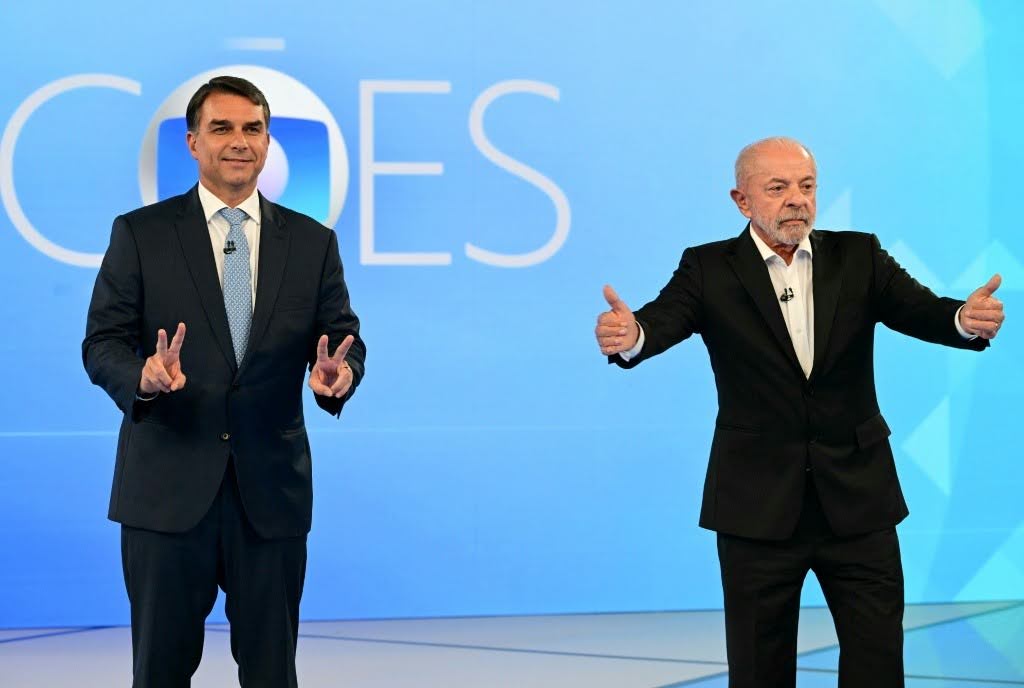
Flavio Bolsonaro (left) poses next to Lula (right) during a presidential debate (Pablo PORCIUNCULA / AFP)
If one story has dominated the fiscal picture of governments internationally, it’s debt. In Brazil, Gross public debt was 82.9% of GDP in August (Trading Economics), and economists surveyed by the Finance Ministry expect it to reach 87% in 2027 (Rio Times). Interest alone cost 8.80% of GDP over the year to June (Reuters). In addition, Credit insurer Credendo estimates that around 90% of federal spending is mandatory, leaving less wiggle room for fiscal adjustments than Lula would like (Credendo). Each rise in market rates worsens this debt path, which pushes rates higher again.
Furthermore, Lula has not named a finance minister or devised a cost plan. Analyst Divya Singaravelu says Lula “has not gone into the details” of his spending cuts (Al Jazeera). He must also deal with a Congress where Bolsonaro’s Liberal Party holds the largest bench in both houses.
Externally, U.S. pressure, particularly on tariffs, has pushed Brazil toward China. Washington announced tariffs in response to the Bolsonaro prosecution case in 2025, and a 25% tariff has been in place since July 2026, though about two-thirds of Brazil’s exports to the U.S. are exempt (The Dialogue). In the first eight months of 2026, China bought 30.7% of Brazil’s exports, a figure that is increasing. The U.S. bought 9.6%, a figure that is decreasing. (Americas Quarterly).
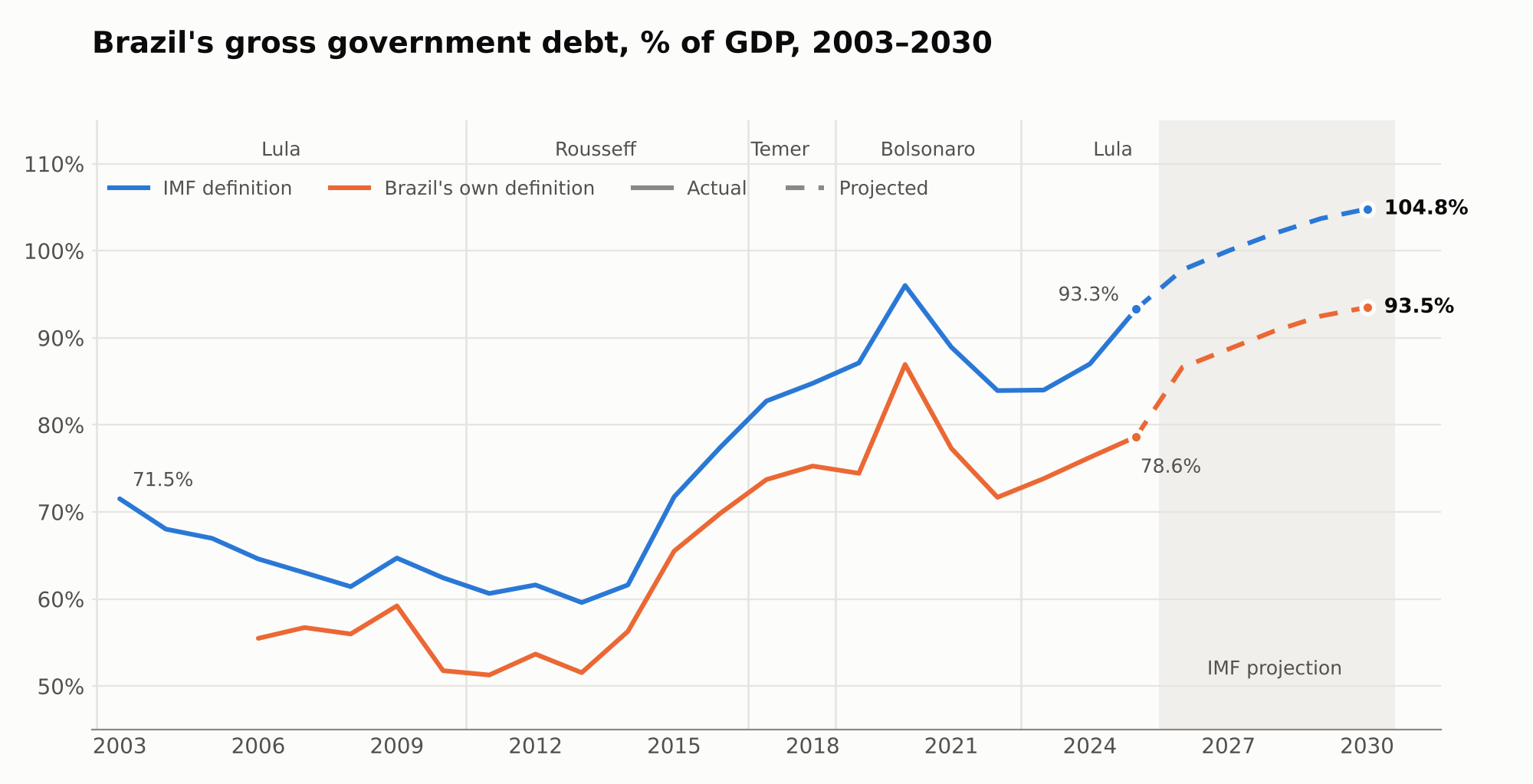
Brazilian gross government debt as a percentage of GDP. Sourced from: IMF World Economic Outlook (2003–2022); IMF 2026 Article IV, Country Report No. 26/191 (2023–2030); Central Bank of Brazil 2006–2025). Brazil’s measure excludes most Treasury bonds held by its central bank.
Minerals are where Brazil matters most. It mines about 93% of the world’s niobium and supplies 67% of U.S. niobium imports (USGS). Additionally, it holds the second-largest rare earth reserves after China (AFP). Flávio himself noted that Brazil could help the United States reduce its dependence on China for rare earth minerals (ANI).
Lula takes a different line on mineral exports. His government declined to join a U.S.-led minerals alliance (MercoPress), and a law he signed in September offers incentives to process those minerals in Brazil. The U.S., however, does have one foothold in Brazilian minerals. It financed the Serra Verde mine, Brazil’s only rare-earth mine (Bloomberg).
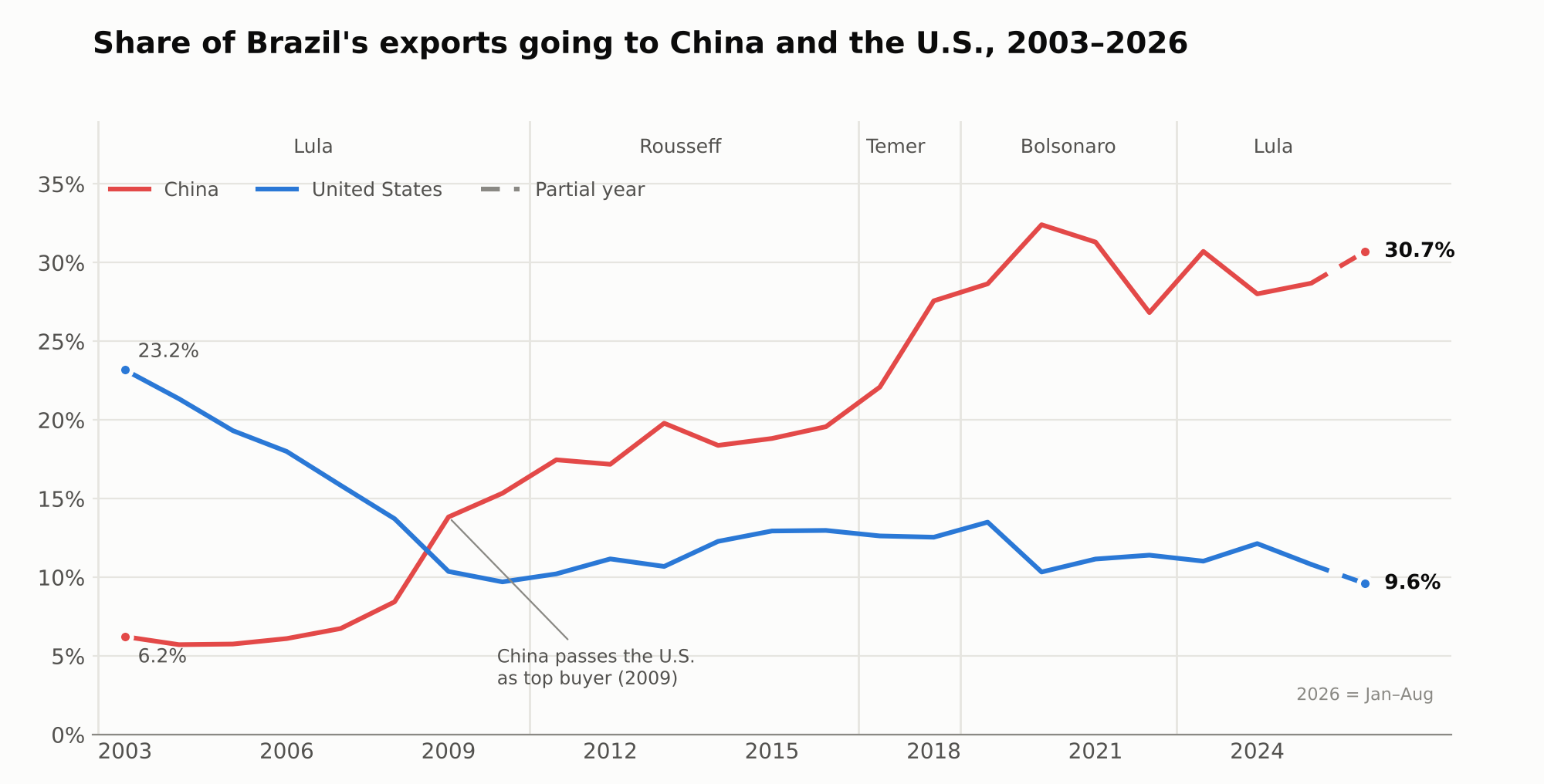
Share of Brazilian exports going to China vs. the U.S. Sourced from: World Bank WITS, UN Comtrade (2003–2024), Brazil trade ministry data, B3 Bora Investir (2025), Americas Quarterly (Jan–Aug 2026). Share of total goods exports by value.
Lula won the vote but lost the market’s confidence. The real and Brazilian stocks now hinge on who he names to run the economy and whether that person arrives with a cohesive plan. However, opposition means he will likely operate as a lame duck for much of the term. This doesn’t change the fact that Brazil’s minerals stay in demand regardless of who governs. Yet with Lula in power, U.S. access will likely remain subject to processing requirements and slower trade talks.