
With the escalation of the Iranian conflict, financial markets quickly shifted into “risk-off” mode, repricing the probability of energy supply disruptions and the potential inflationary fallout. A sharp rise in crude prices, broad declines in global equities, and a noticeable shift in bond markets away from expectations of near-term rate cuts were the clearest signals.
Oil was the most immediate indicator of risk. Concerns over supply disruptions — particularly through the Strait of Hormuz, a critical global oil chokepoint — pushed Brent crude to roughly $81 per barrel on March 3, according to the Associated Press. Markets rapidly began pricing in the secondary effects of higher oil prices on financial conditions, transportation costs, and inflation.
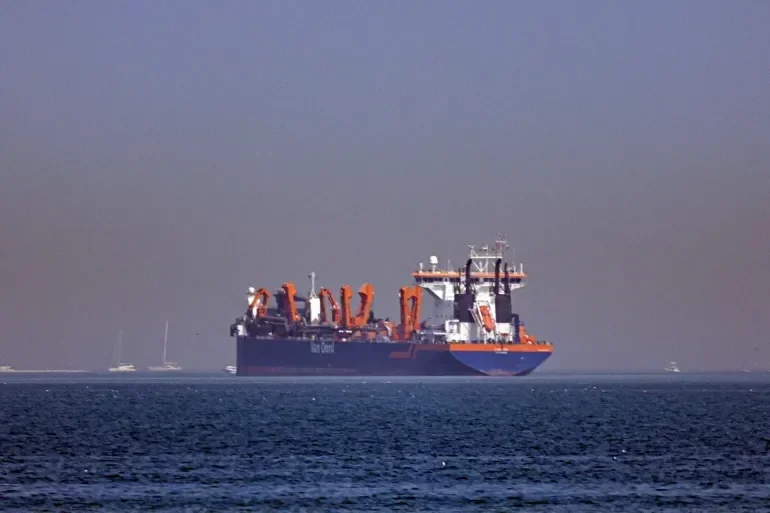
Gas markets in Europe intensified those concerns. The Guardian reported that the energy shock triggered a global equity sell-off and sent UK gas prices up roughly 30% to a three-year high. This matters because gas and electricity costs flow through to households and businesses quickly, increasing the risk of a broader economic slowdown if elevated prices persist.
Equities declined across regions. The Associated Press cited notable drops in major European indices such as France’s CAC 40 and Germany’s DAX, along with losses in South Korea’s Kospi and Japan’s Nikkei. The Guardian also reported a pullback in the UK’s FTSE 100, reflecting a broad decline in risk appetite.
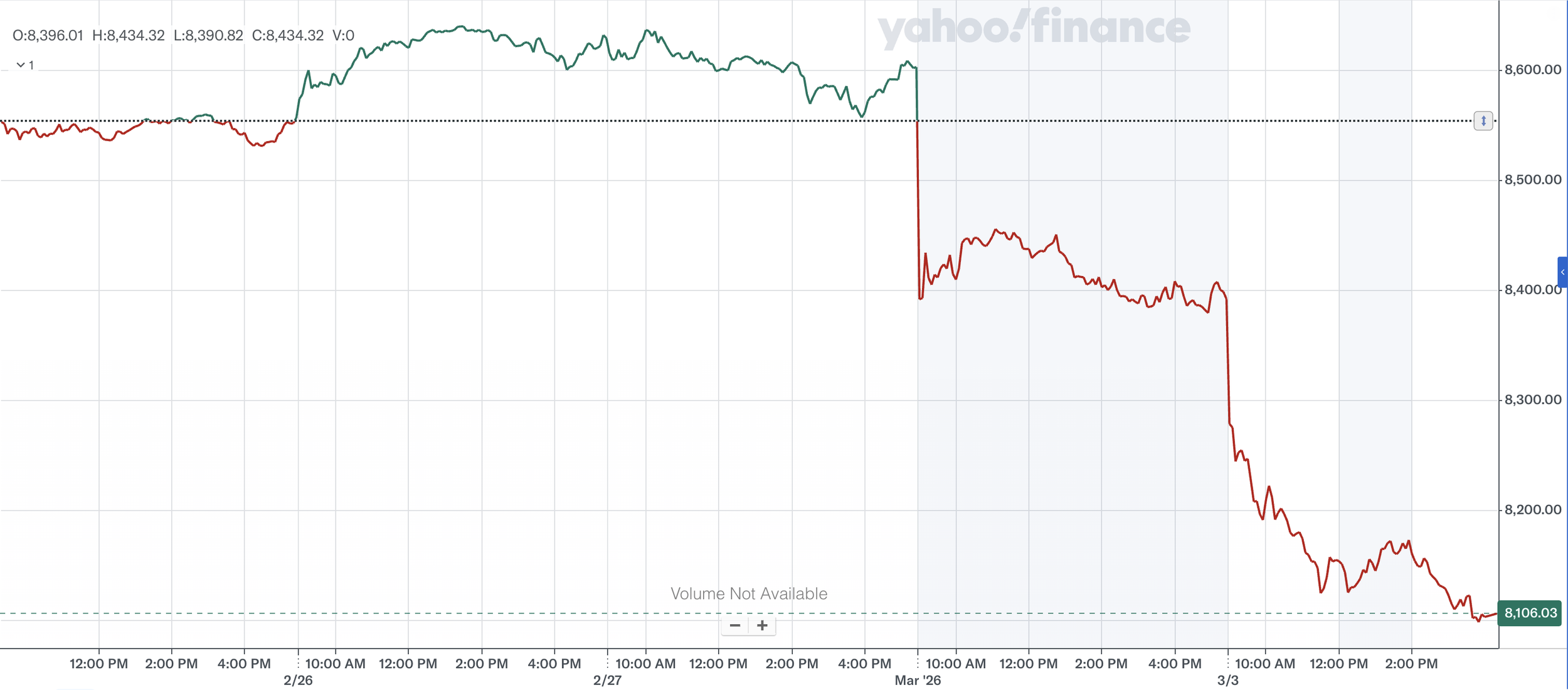
France’s CAC 40 5-Day Performance
Sector performance followed a familiar pattern. Traders priced in higher operating costs and weaker travel demand, pressuring airlines and other fuel-sensitive industries. At the same time, energy assets benefited mechanically from rising crude prices, underscoring how geopolitical shocks can create both winners and losers in a single session.
The most significant macro shift occurred in rates markets. Reuters reported a bond selloff across the euro zone, the US, and the UK, driven by a reassessment of inflation risks tied to surging oil and natural gas prices. That shift reduced expectations for imminent rate cuts. The Guardian similarly noted that in the UK, the probability of a March rate cut fell sharply as markets digested the renewed inflation threat from energy.
In the days ahead, attention will center on whether shipping and production disruptions ease or intensify, whether crude prices continue climbing in a way that threatens growth, and whether central banks can contain inflation without undermining economic activity. As Reuters highlighted, policymakers are closely watching the durability of the shock — a key distinction. Temporary spikes tend to normalize, but a sustained energy shock can meaningfully alter the policy path.