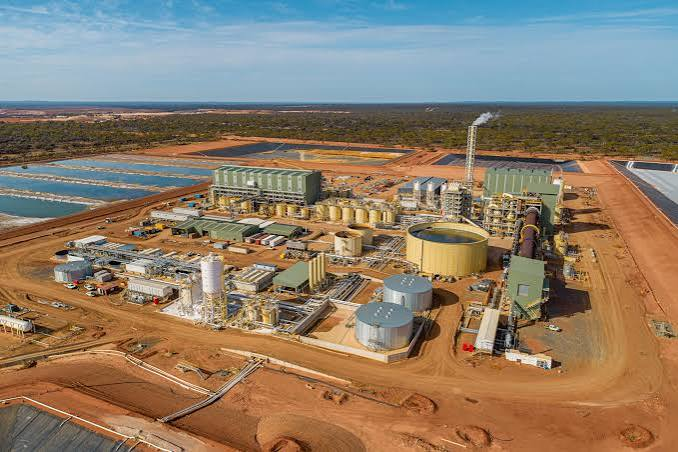
Earlier this month, Lynas Rare Earths agreed to buy Meteoric Resources for $672 million in an all-stock deal. Meteoric is an Australian mining company, but almost all the deal’s value comes from one project in Brazil called Caldeira, which the companies say is the largest known ionic-clay rare-earth resource outside China.
The deal is significant because of China’s dominance in the rare-earth industry, which underpins everything from EVs and electronics to fighter jets, missiles, and industrial equipment. They are especially important for high-performance magnets used in electric motors and other technologies that must operate under extreme conditions.
Lynas is already in a unique position: it is the largest producer of separated rare earths outside China and the only non-Chinese commercial producer of some heavy rare earths, including dysprosium and terbium. Earlier this year, it also began producing samarium oxide, another rare earth heavily used by the defense industry.
Meteoric gives Lynas a chance to expand that position strategically. Brazil has the second-largest rare-earth reserves in the world, behind China, with around 11 million metric tons. Caldeira could also be cheaper to develop than some traditional mines because its minerals are found in clay rather than hard rock, making them easier to extract and process.
However, Lynas is paying a lot to get it. The $672 million offer is a 68% premium to Meteoric’s share price before the deal was announced. And while that might seem aggressive for a company whose main asset hasn’t even been fully developed yet, Lynas isn’t really paying for what Meteoric earns today: it’s paying for what Caldeira could become if demand for rare earths outside China keeps growing.
The deal is also entirely stock, with Meteoric shareholders receiving Lynas shares and will own around 5.9% of the combined company once the deal closes. That structure makes sense because Lynas still expects to spend more than $500 million developing Caldeira, so paying with stock lets Lynas keep its cash for the project instead of spending hundreds of millions to buy Meteoric and then spending another $500 million to build the mine.
There is downside, though, as issuing new shares dilutes existing Lynas shareholders, and those shareholders are now taking on the risk that Caldeira doesn’t turn out as well as expected. Lynas shares fell about 6.6% after the announcement, while Meteoric shares jumped more than 47%, suggesting investors weren’t fully sold on the price Lynas agreed to pay.
The skepticism makes sense, given that Lynas is paying a 68% premium for a project that still needs more than $500 million in investment before it reaches its potential. If construction costs rise, rare-earth prices fall, or the project is harder to develop than expected, Lynas could end up spending well over $1 billion on acquisition and development without getting the return it expected.
On the other hand, waiting has its own risk. Western governments and companies are trying to build supply chains that rely less on China, and there are only so many large rare-earth resources outside the country. If demand continues to rise and those resources become more valuable, Lynas could end up wishing it had bought Caldeira when it had the chance.
Ultimately, Lynas is betting that securing a major rare-earth resource outside China will be worth paying up for today, even if that means taking on more than $500 million of additional development spending before Caldeira reaches its potential. If the project develops as expected, that price could eventually look justified; yet, if costs rise, production disappoints, or rare-earth prices weaken, Lynas may have paid too much too early.