For decades, nuclear power’s biggest problem has been cost. Take Plant Vogtle in Georgia, the last large U.S. nuclear plant, which finished about seven years late and at more than twice its original budget. Up to this point most plants have been custom megaprojects, and they seem to cost more and more.
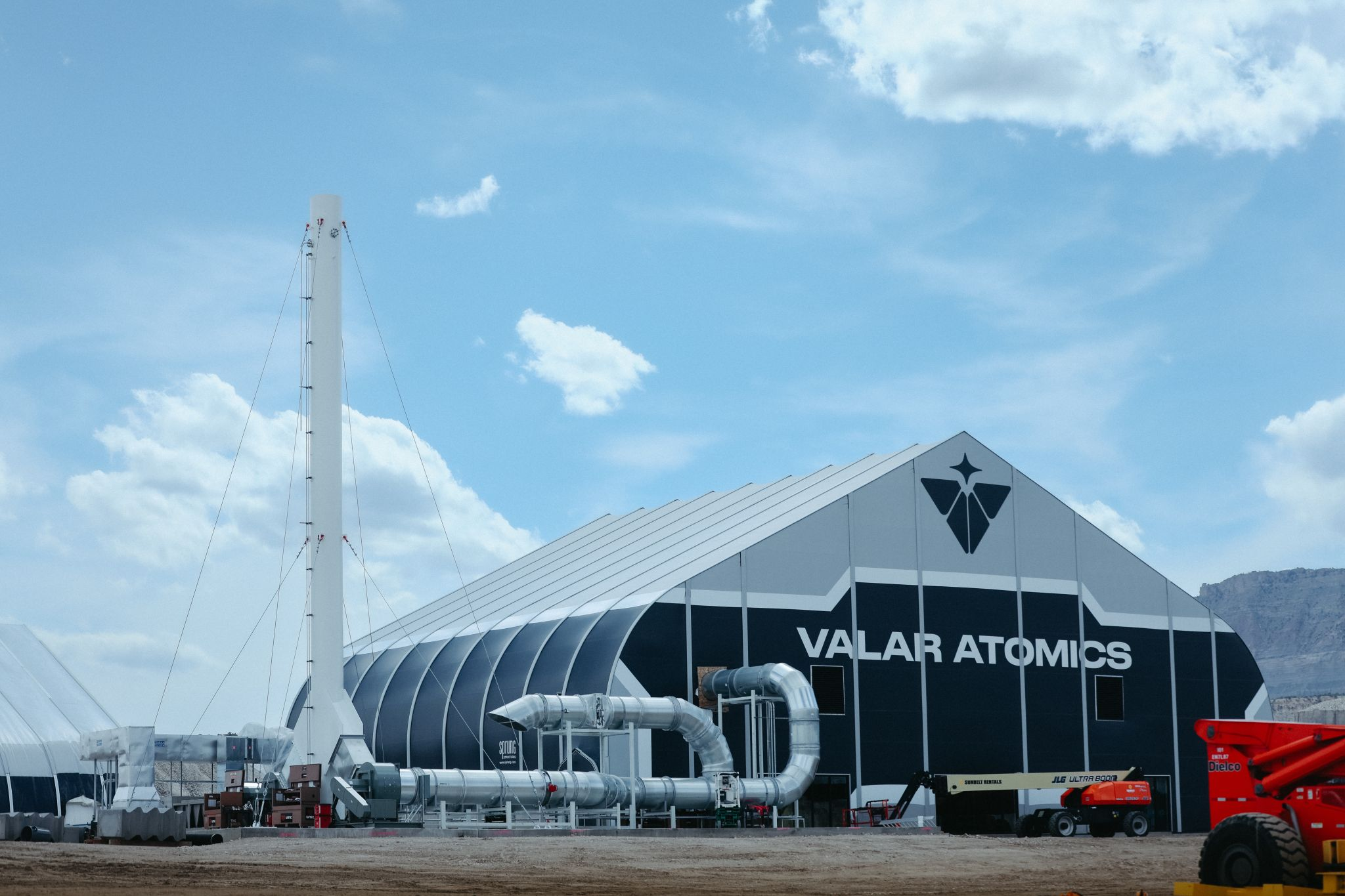
Valar Atomics, a California startup, wants to change that by implementing many aspects of Elon Musk’s SpaceX. SpaceX introduced the idea of building rockets at scale and improving its designs without stopping production. Valar wants to build one standard reactor on a factory line, by the thousands. If that works, the cost barrier to nuclear power would greatly diminish.
If Valar pulls this off, the payoff ripples well beyond the power industry. Its small reactors could supply clean power for years without refueling. They could provide power data centers without draining local water. They could also keep military bases running without the fuel convoys that cost soldiers’ lives (as was seen in Afghanistan). Valar has already shown its reactor works, but the path to thousands of units depends on a fuel supply the U.S. doesn’t have yet.
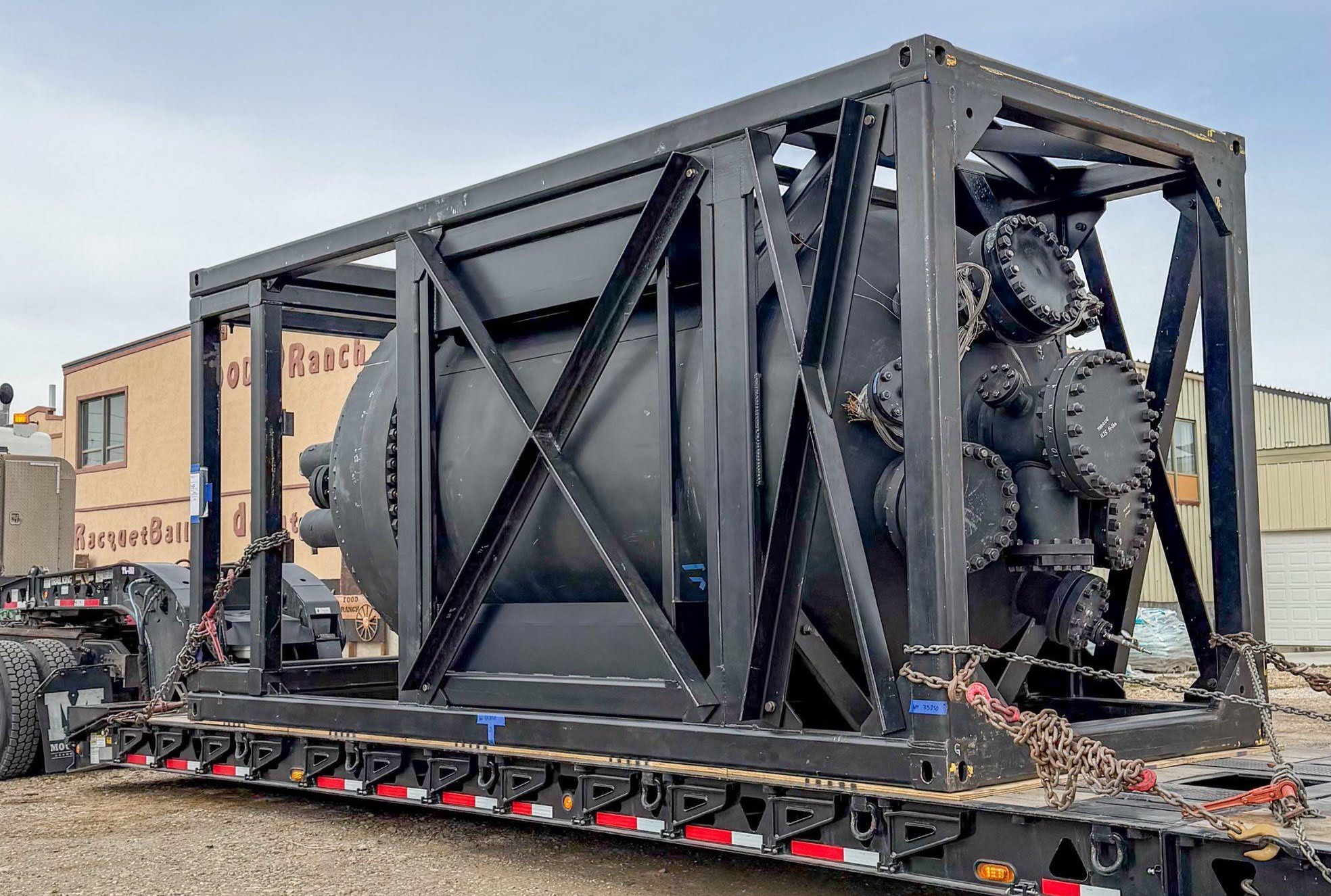
Example of a Valar Atomics Reactor. Butler, Kevin. Photograph. In “Valar Atomics Welcomes Community for Reactor Facility Open House.” ETV News, February 24, 2026. https://etvnews.com/articles/local-news/valar-atomics-welcomes-community-for-reactor-facility-open-house/.
SpaceX’s reusable rockets are aimed at flying repeatedly. Valar’s version of that is fuel that lasts over a longer period, at scale. A small, portable reactor can run for years without refueling, and it releases almost no carbon while it runs. Over its full life, from mining to shutdown, nuclear power produces about 6 grams of CO2 per kilowatt-hour, according to a United Nations study. Coal produces 750 to 1,095 grams.
Not that it has been in the news, but AI data centers need huge amounts of steady power. Many cool their servers by evaporating water, and a large one can use up to 5 million gallons a day. Valar’s reactor uses helium gas instead of water to carry heat away. Valar and Nvidia are planning a 30-megawatt AI data center in Utah that is designed to use very little water.
Additionally, A 2009 Army study found one casualty for every 24 fuel convoys in Afghanistan in 2007. A reactor that runs for years removes the need for most of those trips. In February, the Air Force flew Valar’s reactor, without its fuel, from California to Utah on C-17 cargo planes.
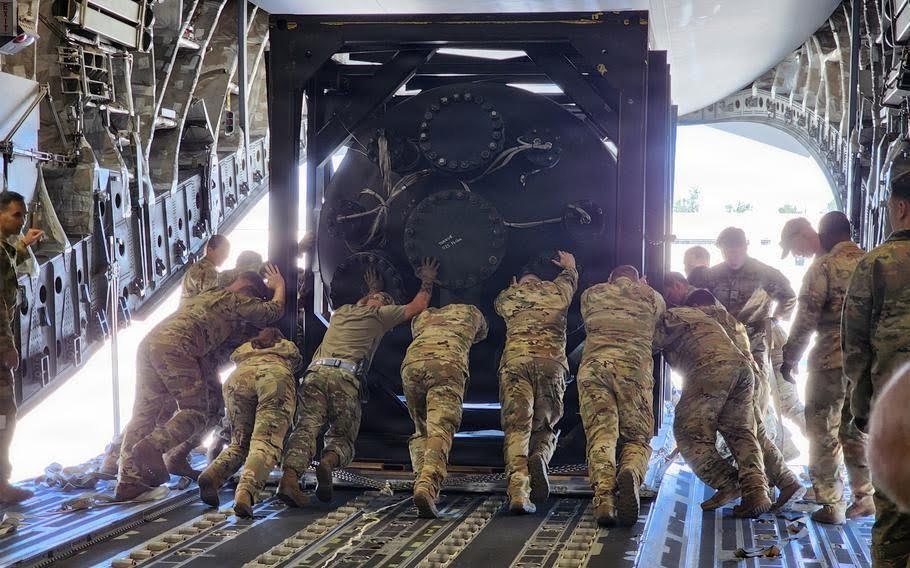
U.S. airmen assigned to the 452nd Logistics Readiness Squadron Aerial Port Flight at March Air Reserve Base, Calif., load a Valar nuclear reactor onto a C-17 Globemaster III aircraft on Feb. 15, 2026. (Wendy Day/U.S. Air Force)
In June, the reactor “went critical” in Utah. That means it kept a nuclear chain reaction going on its own, which is the basic proof that a reactor works. It ran at very low power, and Valar raised $1 billion two months later.
Despite the prospects, Valar’s fuel is HALEU, uranium that is more concentrated than normal reactor fuel. Russia is still the only commercial seller, and a 2024 U.S. law already blocks those imports. Centrus Energy delivered 900 kilograms of HALEU in 2025, the first real U.S. production in decades. The Department of Energy estimates demand could reach 50 metric tons a year by 2035, more than 50 times that amount. Valar also needs a Nuclear Regulatory Commission license to sell power, and that review can take up to 18 months.
These problems slow the timeline down. However, if U.S. fuel production can scale up and licensing keeps getting faster, the timeline gets shorter. If Valar can secure enough fuel and move as fast as it promises, it could make nuclear power cheap enough to use almost anywhere- and completely change the game.