In the past few years, AI has quietly worked its way into our daily lives, and fashion companies have caught on as well. It has folded its way into supply chain traceability, creative direction, and employee training. AI speeds up the work that could have taken weeks. Fashion companies have started to question if humans are needed anymore.
Traceability and Production
AI systems can now document every step of product creation – weaving, dyeing, and assembly. This includes the transformation of raw materials into finished products. They use technologies such as RFID or IoT sensors, which are embedded in the garment. This gives brands reliable data to verify each product’s standards and ensure alignment with the regulatory requirements for each company, known as the DPP (Digital Product Passport). AI also improves efficiency. It reduces the materials used and limits the waste it creates. One of the biggest issues in fashion is the overconsumption of raw materials, and this will be a major gain for the fashion industry if it cuts down on consumption.
Creative Direction and Design
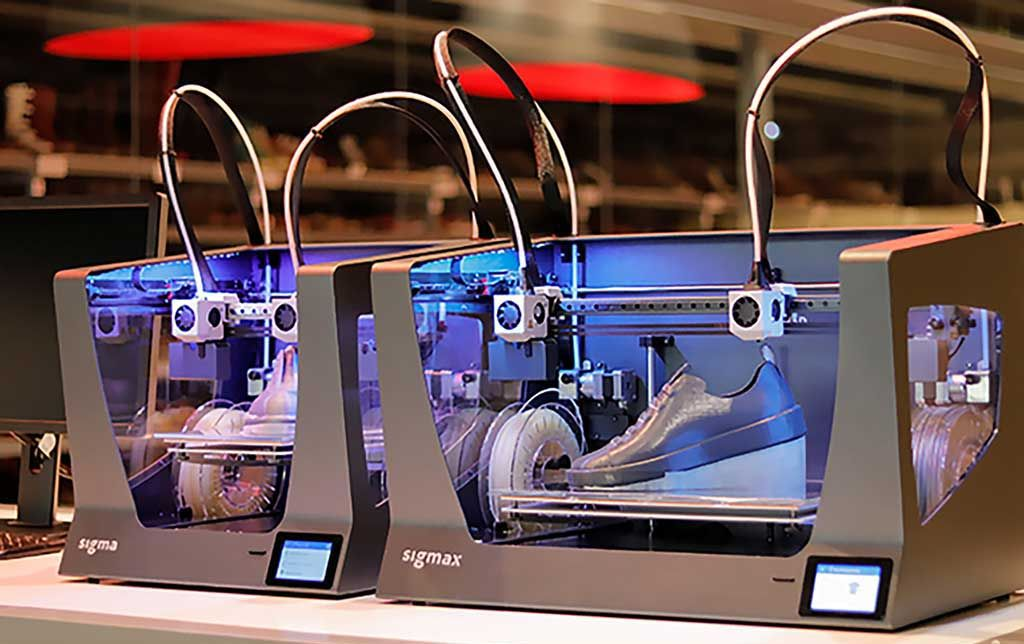
AI in design and creation works less like a replacement but more as a helpful tool for designers. AI can test color palettes and silhouettes and create mood boards, which take away repetitive tasks for designers. Tapestry, the parent company of Kate Spade and Coach, exemplified this in practice. Tapestry says physical prototypes are still necessary, so they have craftspeople on-site to help verify designs created by AI. Tommer Emmar, senior manager of digital production creation at Tapestry, spoke on the addition of 3-D printers that can print shoes, accessories, and sneakers: “The timeline for 3-D printing a shoe is 1-3 days, which he said is a 75% reduction compared with ordering a prototype from an overseas factory” (Wall Street Journal). This addition makes Tapestry more efficient, enabling them to create new products faster. 3-D printing allows products to reach the market faster and generate more profit more quickly. The key is to have both humans and AI working in unison. AI can’t do all the designing on its own. AI has creative expertise, but it is not always achievable; this is why human oversight is needed.
Employee Training and Culture
Fashion companies also use AI to help train employees and shift how their staff engages with technology. At Kate Spade, employees practice live conversations with AI to learn how to perform a sale. They get a performance score and comments on how to improve. VP Victoria Santoriello says it’s too early to tell whether the training will translate into better sales, but employees have liked the practice so far for improving conversations with customers (Forbes). Tapestry has also leaned into building AI-generated Gen Z personas to help employees learn how they behave. Every customer is different, but the addition of AI allows workers to improve interactions and better understand how different customers behave.
Conclusion
AI is great for fashion’s simple, data-driven work, such as tracking materials, conducting compliance checks, generating ideas, and serving as a practice tool for employees. What it can’t replace is human judgment. A craftsperson who knows how a design can be built, or a human instinct that AI will never have. The fashion industry is using it to reduce busywork and improve efficiency, thereby raising profits and reducing waste. AI allows humans to focus on aspects of fashion that still require human intuition and touch.