For many years, the global economy has leaned towards greater economic integration, with companies assembling their products from parts made in different countries, manufacturers looking all over the world to find the cheapest places to produce goods, and consumers leveraging cheaper items imported from other countries. Nowadays, however, this approach is being questioned with the introduction of higher tariffs. Increased geopolitical tensions and concerns about national security are prompting governments and businesses to reconsider how and where goods are produced. Therefore, the move towards a more fragmented global economy is becoming one of the most significant macroeconomic trends in 2026.
Tariffs are taxes that governments impose on goods brought in from other countries, typically calculated as a percentage of the item’s value. Governments use them to protect domestic industries or to pressure other countries into changing their economic policies. However, tariffs come with costs: when a tariff makes an imported item more expensive, that extra cost may be absorbed by the foreign producer, the importing company, or passed on to consumers through higher prices. Ultimately, this is why tariffs often create immense debate, as they can protect some jobs while raising costs for others, both at home and abroad.
In recent years, the United States has placed greater trust in tariffs as part of both its economic and national-security policies. Its trade policy has focused on China and on particular industries considered strategically important, such as technology, automobiles, metals, and other manufactured goods. The goal here is to decrease reliance on foreign suppliers and to encourage greater production at home. But altering an international supply chain is far more complicated than merely transferring a factory from one country to another. For decades, companies have been building global supply chains in which a single product might include raw materials from one country, parts made in another, and the final assembly in a third. That complexity is why the International Monetary Fund believes it would still take four to five years for companies to fully reorganize their supply chains, even though high tariffs give them a strong incentive to do so faster.
As a result of this shift, businesses are increasingly turning to countries such as Vietnam, Mexico, and India, as well as other emerging manufacturing hubs, as alternatives to China.
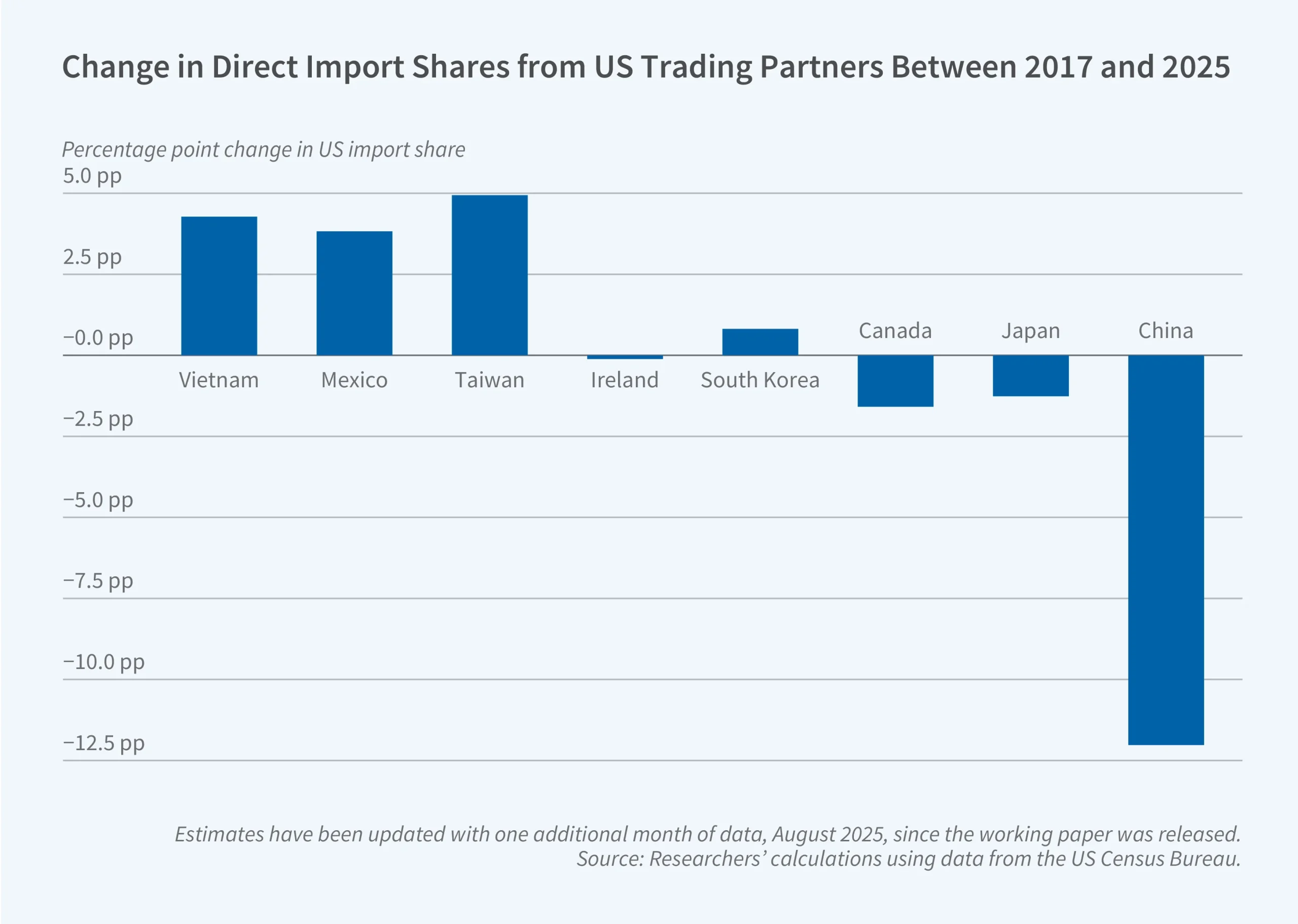
U.S. import sourcing has shifted sharply away from China since 2017, with Vietnam, Mexico, and Taiwan capturing larger shares of American imports. Source: NBER, U.S. Census Bureau.
Companies are often relocating their production to political allies or to countries that are geographically closer. This trend could bring advantages, including increased domestic manufacturing, which could create more jobs and reduce the United States’ reliance on foreign suppliers for products of strategic importance. Domestic production of vital goods could also make supply chains more resilient during wars, pandemics, or other international crises. COVID-19 showed how susceptible highly interconnected supply chains can be when factories close down and transport networks are disrupted.
Yet, this added security comes with a price. Producing goods in several countries or having extra suppliers can be more expensive than concentrating production in the cheapest location. In response to tariffs, businesses might choose to increase their prices, cut back on investment, or accept smaller profit margins. Eventually, consumers will feel the impact in the form of higher prices for a variety of products, such as electronics, clothing, cars, and household goods. Hence, retailers have already altered their actions in order to anticipate changes in trade policy. In July, the National Retail Federation stated that U.S. container ports were expected to see record import volumes, as retailers had been bringing goods into the country earlier than usual to get ahead of potential higher tariffs, demonstrating how businesses can adjust their behavior before tariffs take effect. These effects are not confined to the United States, as China, still a major player in global manufacturing, has responded by increasing its efforts to export high-tech products. Chinese exports rose 23.9% year-over-year in July 2026, largely driven by semiconductors and other high-tech items, even as China’s domestic economy continues to suffer from weak consumer demand and a troubled property market.
This situation creates an interesting contradiction within the global economy, as countries are becoming more protective of their own industries even while international trade remains critically important. Global merchandise trade rose by about 12.5% year-over-year in the first quarter of 2026, so we know that globalization is not disappearing; it is changing.
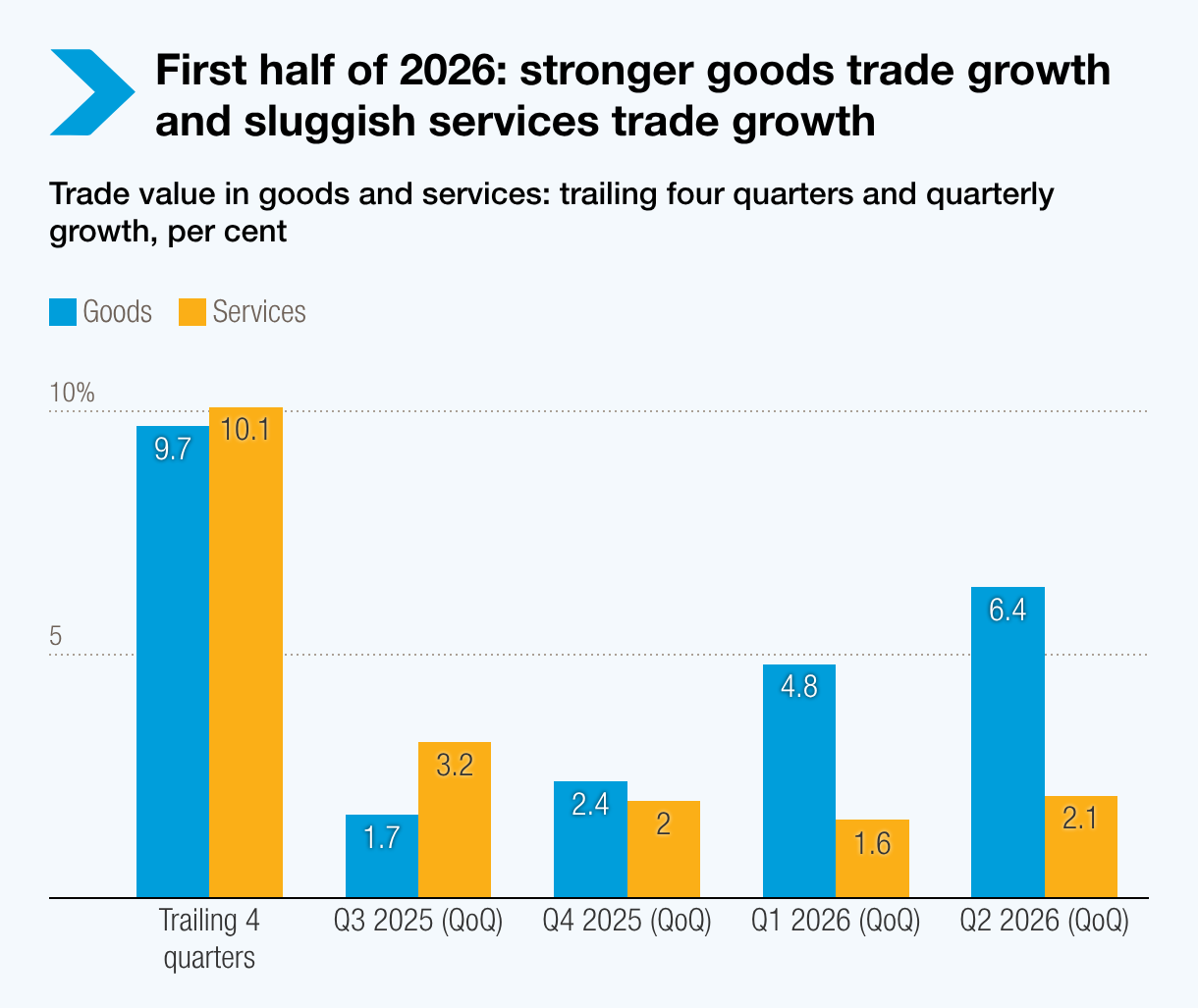
Global goods trade growth accelerated through the first half of 2026 despite rising tariffs and trade tensions. Source: UNCTAD.
The question over the long term is whether this new method will result in a stronger, more resilient global economy or instead one that is less efficient and more expensive. Those in favor of tariffs argue that it is acceptable to have somewhat higher costs at present, since they would help strengthen domestic industries and reduce dangerous dependencies. On the other hand, others say that being protective can lead to higher prices, lower economic efficiency, and retaliation from other trading partners. In the end, the reintroduction of tariffs marks a fundamental shift in how governments approach globalization. For most of the last few decades, the main aim has been economic efficiency, and goods have generally been produced where they could be made at the lowest cost. Today, however, security, political relations, and supply chain resilience are becoming just as important. The global economy isn’t moving away from international trade, but it is becoming more careful about how that trade is structured. The choices made during this period could influence the form that global commerce takes for many decades to come.