If you’ve followed finance news this past week, you’ve seen the Nvidia numbers everywhere, and for good reason. But something just as interesting is happening on the SaaS side right now, and it’s basically the same story, just told from the other direction.
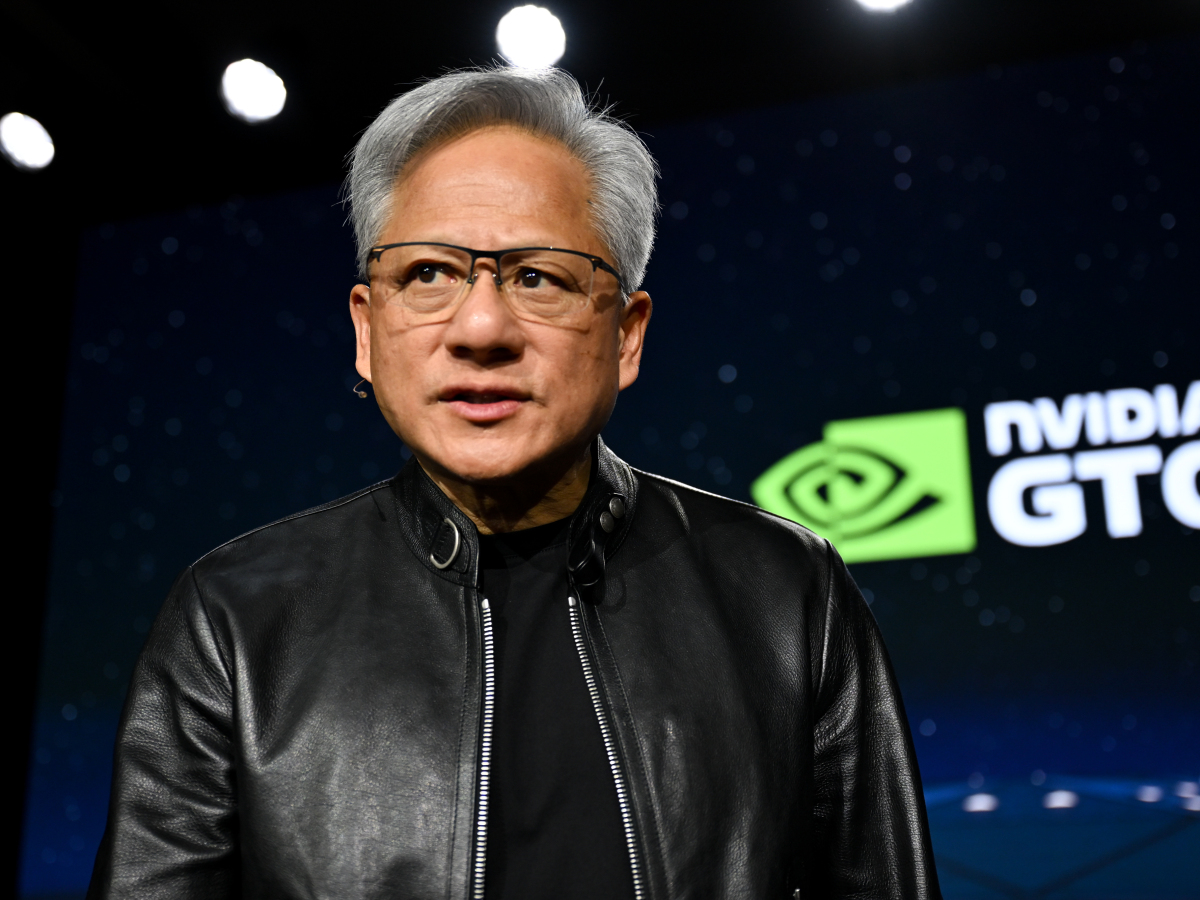
Nvidia released its Q2 fiscal 2027 earnings on August 26, and the results were hard to exaggerate. Revenue hit $96.2 billion, up 106% YoY and 18% higher than the previous quarter, well past the roughly $92 billion analysts expected. Data center revenue alone reached $89 billion, up 117% YoY, with most of that growth coming from the Blackwell Ultra ramp, Nvidia’s newest chip architecture (Fortune). Shares rose about 4% the next day, and CFO Colette Kress went a step further on the call, telling investors to expect 70% revenue growth in fiscal 2028, well above the 45% analysts had modeled.
CEO Jensen Huang framed all of this as a pivotal turning point, arguing that AI isn’t speculative anymore since it’s actually producing usable output for paying customers, which is why demand keeps climbing instead of leveling off. Q3 guidance backs that up too, with Nvidia projecting $108 billion against a roughly $104 billion street estimate (WSJ).
Not everything about the quarter was reassuring, though. Nvidia’s stock had closed lower for seven straight trading days before the earnings pop, as investors grew uneasy about the financial risk Nvidia is taking on to help its customers afford its chips. Earlier this month, Nvidia teamed up with a group of major Wall Street firms to guarantee portions of up to $500 billion in loans that other companies are taking out to build data centers. Basically, if those borrowers can’t pay it back, Nvidia’s on the hook for a good part of it. Around the same time, Nvidia agreed to backstop a massive OpenAI data-center project in Ohio, so if OpenAI’s lease plans for that project fall through, Nvidia could be looking at billions of dollars of exposure. Kress pushed back against the criticism that this is just Nvidia paying its own customers so they can keep buying Nvidia chips, arguing that return on that invested capital would justify the risk. And then there are margins, which are also getting squeezed, with guidance calling for gross margin to fall from 75% to 71-72% by the fiscal fourth quarter, as chip prices are climbing faster than expected (WSJ).
Meanwhile, SaaS (software-as-a-service) is staging a comeback, and it deserves more attention alongside the Nvidia headlines. Rewind to February 2026, and software stocks were getting crushed. Over $1 trillion in market cap was lost in about a week due to fears that AI agents would cause companies to stop paying for software subscriptions (Forrester).
Turns out that fear was overblown, or at least premature. By June, the public software index had climbed back into positive territory for the year. But not every name benefited equally: infrastructure-heavy names led the charge, while a bunch of mid-tier software companies were still struggling to recover. But Salesforce, HubSpot, and Snowflake in particular posted earnings that surprised people, and ServiceNow (a recent CFR pick of the week, actually) flipped the AI narrative in its favor, instead of being replaced by it, by leaning into AI-driven productivity gains.
Thus, the ‘AI kills Saas’ story has fallen apart because the logic gaining traction now is that AI can perform a task, but it doesn’t replace the system that task operates within. Someone still has to own the data and workflow logic that ties everything together, and that someone is still enterprise software.
Zooming out, these two stories are really one because Nvidia’s growth depends on AI moving from experimentation to deployed, revenue-generating products, and SaaS’s recovery depends on that same shift. Still, not everyone is convinced that the shift is happening as cleanly as the stock charts suggest, as analyst Naveen Chhabra noted that many businesses are still struggling to get AI projects into production, and that the gap between infrastructure spending and realized profit could eventually force pullbacks if returns don’t materialize (WSJ). For now, Nvidia’s results are evidence that AI usage is real and growing, while SaaS’s rebound is evidence that real AI usage doesn’t make software irrelevant, but rather gives software a new value proposition.
In the end, Nvidia and SaaS are answering the same question from two different angles: is AI actually being used, or just talked about? And, so far, both are pointing to the same answer.