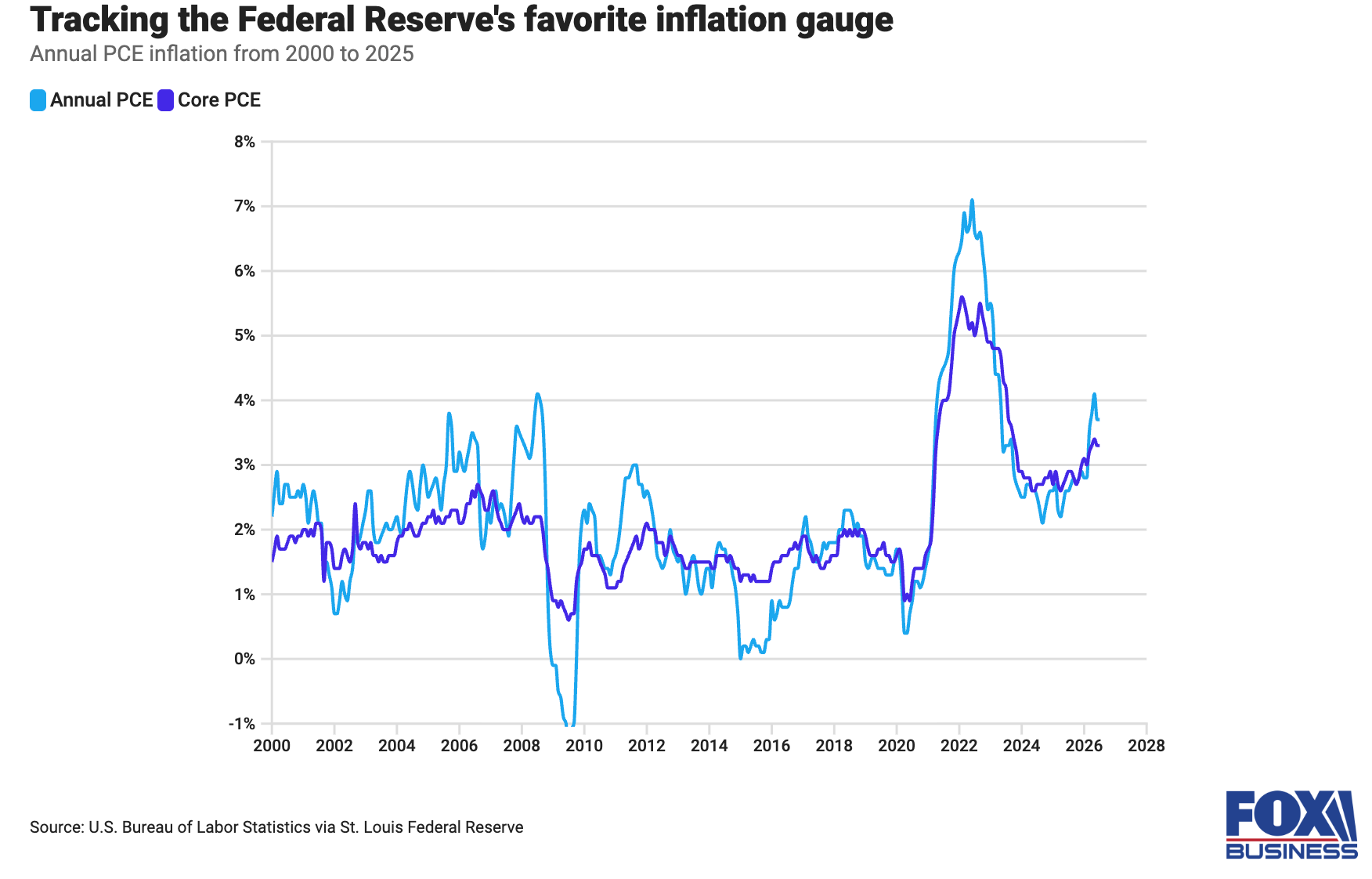
The Fed’s most valued inflation report just complicated the case for interest rate cuts, right when the central bank can least afford it. The Bureau of Economic Analysis reported this Wednesday, August 26, that the personal consumption expenditures (PCE) price index rose 0.2% in July and 3.7% from a year earlier, both a tenth of a point above economists’ predictions. Core PCE, which excludes food and energy and is watched most closely, increased 0.2% month-over-month and 3.3% annually, well above the Fed’s 2% target.
The report breaks what had looked like a cooling trend. Core PCE had been running at a 3% annualized pace over the prior three months, down from a peak of 4.5% in May, and Consumer Price Index readings for June and July had softened, feeding hope that inflation was finally coming back down. Economists expected the trend to hold or even improve in July. Instead, headline PCE came in a tenth of a point above forecasts, and while core inflation matched expectations, it stayed flat rather than continuing to fall. The report reads as a stall, not the improvement markets were hoping for.
 The report shows goods and services prices moving in opposite directions. Goods prices fell monthly, mainly due to decreasing gas and energy costs. Services prices, on the other hand, increased by 0.3% for the month. This distinction matters because goods prices change with global supply and energy markets, but services inflation is much stickier and depends more on wages and everyday demand. Services inflation typically requires higher interest rates for longer to bring down.
Personal income increased by 0.4% in July, higher than expected, indicating income rose faster than prices. But spending did not keep pace. Inflation-adjusted consumer spending was flat in July, a sharp drop from June’s 0.4% gain. The personal saving rate, which has declined since the beginning of 2025, climbed to 3%, up from a four-year low of 2.6% in June, suggesting households are getting more cautious.
Consumer caution complicates Kevin Warsh’s first major policy address as chair at the Fed’s annual Jackson Hole conference on Friday. Warsh is known as an inflation hawk and has kept a low profile since taking over the Fed in May. Friday’s speech will be the clearest signal of how he plans to navigate slowed spending against sticky inflation.
Fed funds futures, tracked by CME Group’s FedWatch tool, now show a hike as more likely than a cut for the Fed’s next move, and no change is expected before December. A few months ago, the debate was only about how soon rates would come down. Now they may go up, depending on how Warsh chooses to act.