Estimates say that by 2030, data centers will require 50 to 130 gigawatts of new power generation, the equivalent of powering 40 to 125 million homes. But data centers need this access fast, so rather than waiting for the grid to catch up, developers are building their own on-site power running on natural gas.
FERC is planning 20 years out for loads that need power in the next year and a half. And even without regulatory hurdles, connecting to the grid may take upwards of 5 years. Data center applications are urgent and have been contracted to deliver computing power more quickly. However, developers have found other ways to navigate this issue. Building private gas-fired onsite power plants is more feasible, so more and more companies are skipping grid wait times and building their own power.
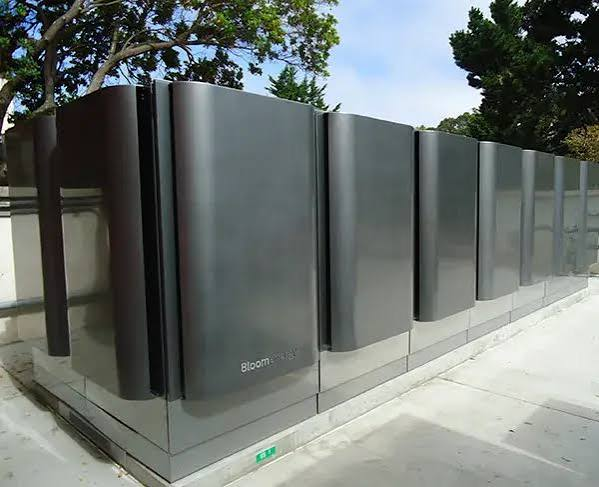
Companies have announced plans for about 101 GW of this onsite power. Over half of that equipment is on order, meaning the demand is real and already backlogged. Leading this is Bloom Energy. Its fuel cells run on natural gas and can be installed without waiting for the regular power grid. Bloom has more than $7 billion in contracts and is committed with Brookfield for up to $25 billion in capital to build out inventory. As of now, there is 2 GW of power up and running for current data centers. This GW demand gap is defining the fuel cell market, and while we wait for the looming promises of nuclear’s future to materialize, fuel cells are the answer. Small modular reactors and other next-gen nuclear projects are floated as the long-term fix for data centers, but most are still years, not a decade, from actually running. No developer is willing to wait that long, and in the meantime, fuel cells are filling the gap.
That’s why Bloom is so far ahead of the other two companies worth watching. Plug Power and Ballard Power Systems make fuel cells that run on hydrogen, not natural gas. Hydrogen fuel cells are cleaner, but cost and production time are holding them back. So far, their data center application still looks more like testing than real deployment: Microsoft has run small hydrogen fuel cell pilots with both companies as backup power, meant to prove the technology before they decide to bet on it. Plug Power traditionally supplied warehouses for Amazon and Walmart, but this shift is inevitable. However, for now, data centers are not their core business, which is why this looks like an early experiment. Ballard Power Systems came from transportation and industrial fuel cells before turning its attention to backup power for data centers and other critical facilities. Neither company has landed anything close to Bloom’s billion-dollar contracts yet, but in the current AI bubble, that may change.
Looking outward, the real story is still about overall power demand: only 2 GW are accessible against a projected minimum of 50 GW. That’s how far the actual power supply is lagging behind what data centers will need in just a few years. Natural gas fuel cells aren’t a perfect long-term solution, but they are the bridge we’ll deploy until due time. For now, the bridge is the opportunity, and whoever can build power quickly, reliably, and at scale takes it.