
The impact of war and foreign relations may seem irrelevant to many people who are not directly affiliated, but these impacts open up opportunities and provide a clearer compass for moving forward securely. On March 13th and March 18th, the DOW and the Nasdaq plummeted, and March 20th marks the fourth week in a row where the market has seen a sharp overall decline in major indexes. As the United States has recently invaded Iran and under continued uncertainty in the Middle East, the average American can identify the increase in gas prices, among other things, as a direct consequence of this, but there is more to it than that. Times of uncertainty and volatility remind us that there are ways to generate stable returns and yields through private credit and, most notably, by investing in companies that use convertible arbitrage and multifaceted bonds as yielding vehicles.
As most famously expressed by Matthew McConaughey in the movie The Wolf of Wall Street, the reality is that nobody knows for certain whether a stock will go up or down. There may be some great times, especially if you got into Google back in the day or were one of the earlier investors in Crypto or AI; yet there will also be plenty of bad days. Nonetheless, the same principle applies. It is a risk that lacks full protection and can ultimately hurt you financially in the long run. Any investment in the stock market is made on the basis of assumptions, not guarantees. This dynamic is particularly true in times of economic uncertainty, when households save more.
As of late, there has been an incredible resurgence in macro trends toward alternative investment strategies to leverage sectors of finance that aren’t completely one-dimensional. Alternative Convertible Arbitrage allows for any investor to remain at a neutral position. It starts with the fact that convertible bonds are the only bonds with a stock component. You can convert the bond into the underlying stock, since the stock and bond markets usually have a negative correlation. This bond has some level of stock sensitivity, so whether the company goes up or down, the same result is reflected in the convertible bond, just at a smaller scale. The idea is that while you buy the convertible bond of a given company, you simultaneously short the same (or similar) amount of stock of the same company. The given company must offer both of these options, but not all companies have the capital to do so. This is a pair trade that represents both scenarios of what could happen.
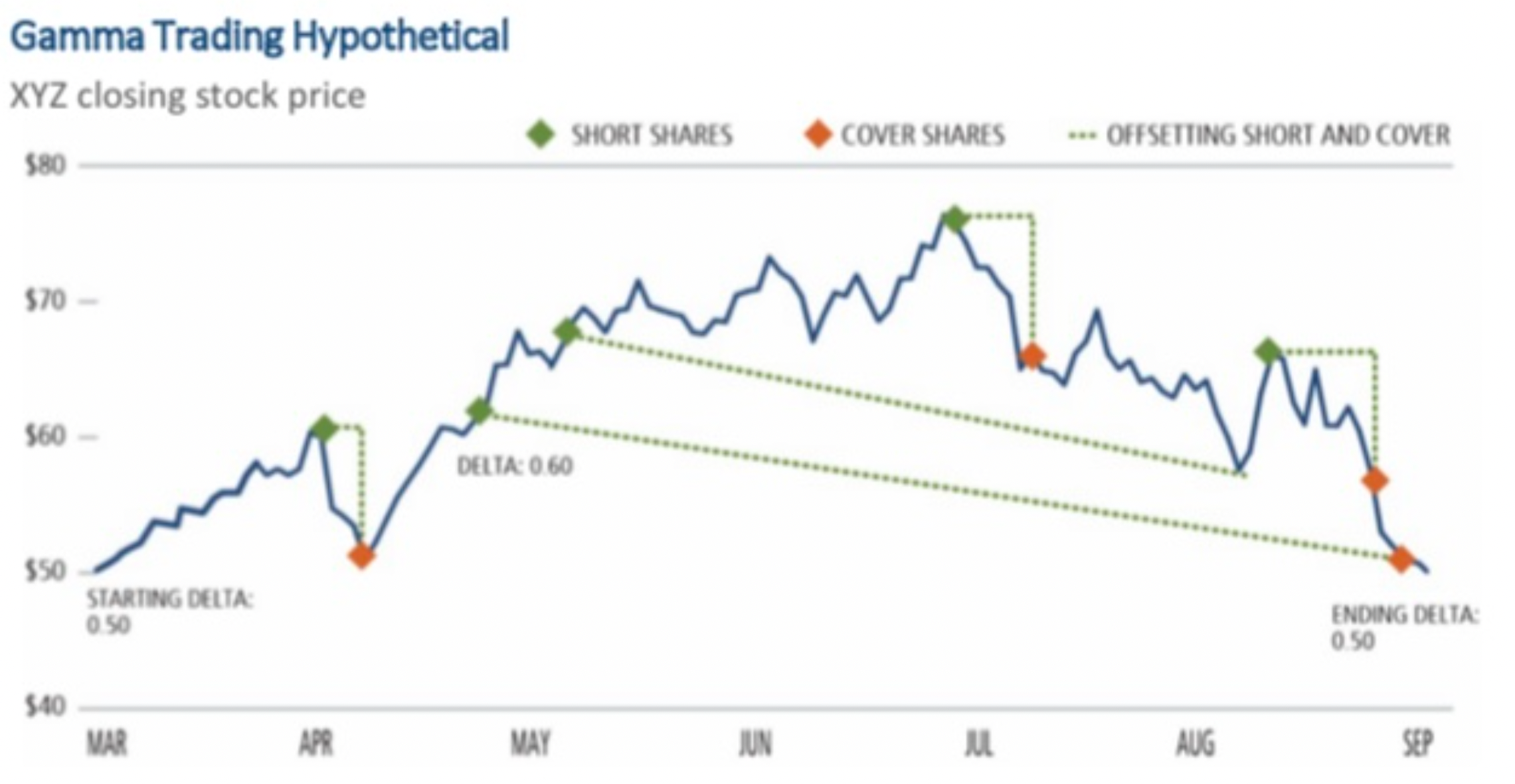
Whether or not the stock market goes up, it doesn’t matter, because we can still make money. The results are not directly dictated by the stock market. Using this logic, say the stock goes up: you’ll make money on the convertible bond but lose on the shorting position. Say the stock goes down, and you make money on the short but lose on the convertible bond. While you can tweak the amounts with different assumptions or information to gain more of a profit, you're just trying to make a little more than you lose on every trade. This method has delivered consistent returns in a volatile market, and it offers strong risk mitigation, appealing to older investors who cannot afford to lose money or take risks. There is a level of constant growth guaranteed by mitigating the traditional risks you would have originally faced. What used to be simply a hedge fund strategy has become a common practice for asset management companies and portfolio managers, as financial practices increasingly embrace a greater variety of alternative investment strategies.
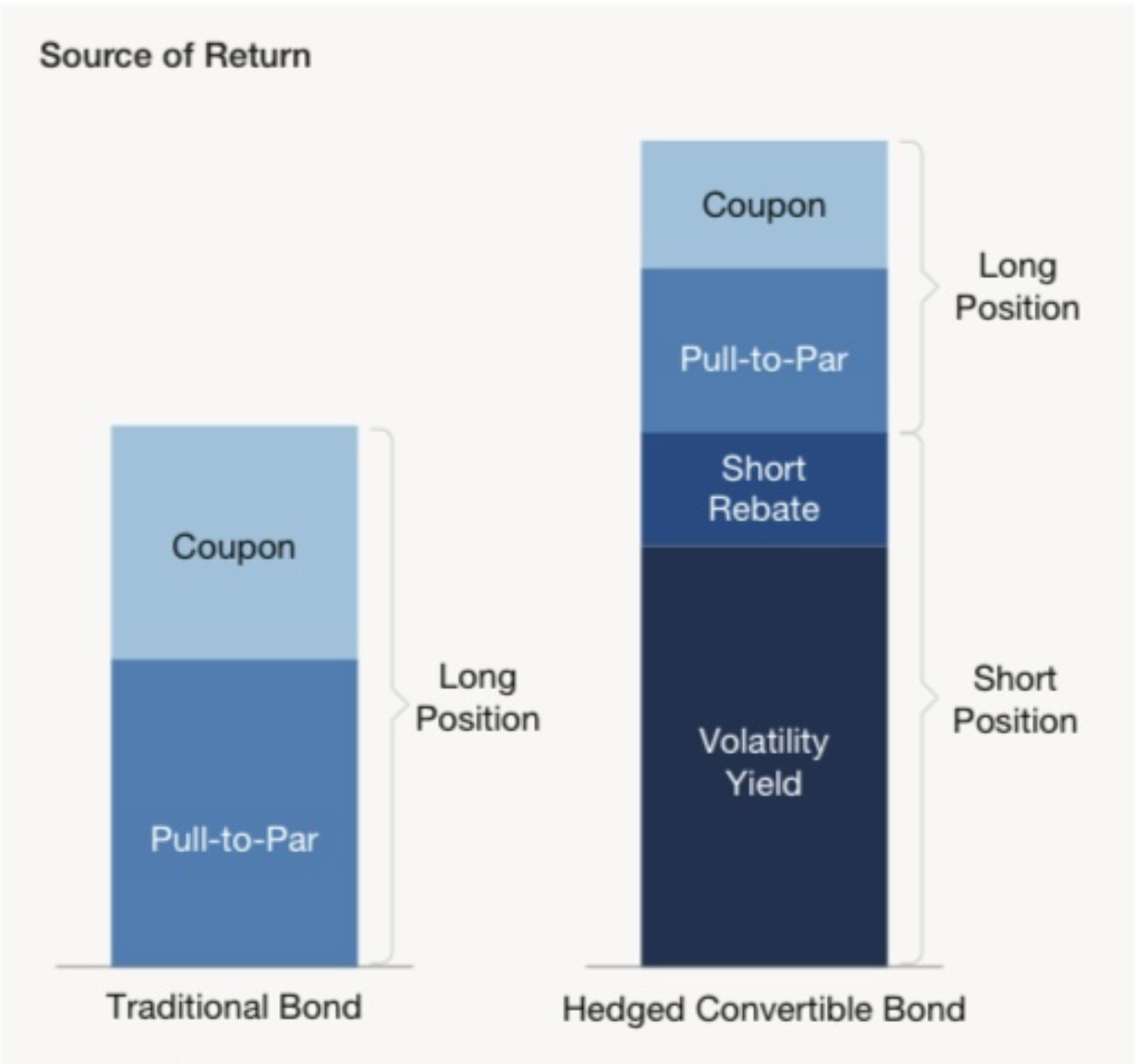
As time goes on, more and more companies are turning to this model, and not just hedge funds. Companies that specialize in alternative investments, like Wolverine and Lazard, have seen a significant uptick in this strategy. The reality is that there is always a level of uncertainty, though it can increase drastically, as we are seeing now. Predicting the future with so many things going on in just about every relevant field is next to impossible, so for now, we just take it day by day with our decisions and analysis.
The question now is, do you try to leverage a volatile stock market at face value, or do you acknowledge the risk and play it out with the safer alternative? While you could achieve significant, life-changing returns in a volatile market, does the reward outweigh the risk? For many, steady is boring. But, in an ever-so-quickly changing world and market for the better or for the worse, maybe “boring” isn’t so bad.