The Bite Heard Around the Internet
What McDonald's CEO Kempczinski taught us about brand control, viral exposure, and the economics of imperfection in the creator economy
Executive Summary
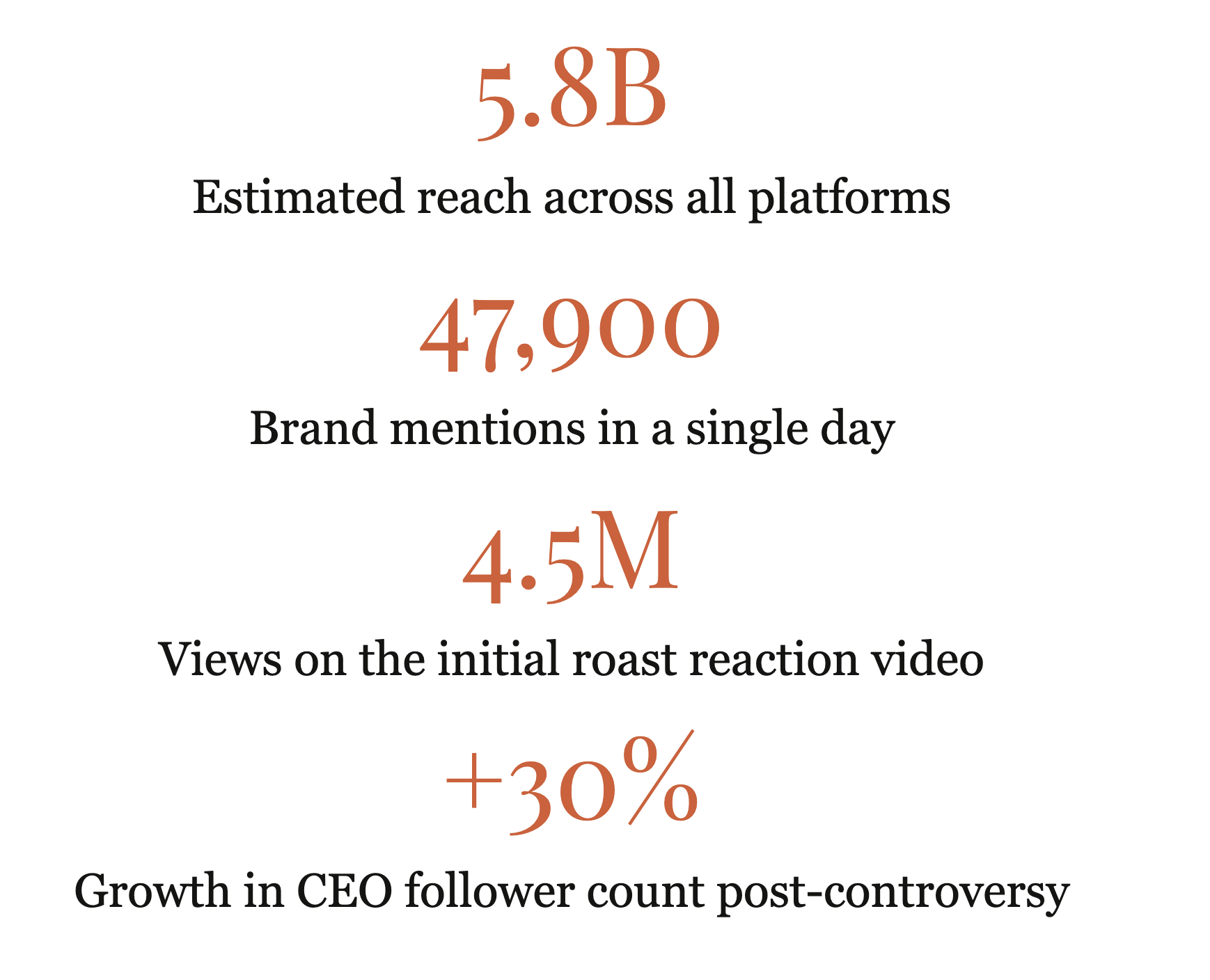
In late February 2026, McDonald's CEO Chris Kempczinski posted what was intended as a routine promotional video for the company's new Big Arch burger. The clip, featuring an executive, a burger, and a phone, cost virtually nothing to produce. Within days, it had generated the highest brand conversation volume in McDonald's history, reaching an estimated 5.8 billion across all platforms and driving 47,900 mentions in a single day. This review examines the viral mechanics, the competitive response landscape, and what the episode reveals about brand equity formation in the creator economy.

Catalyst & Viral Mechanics
The original video sat dormant on Instagram for several days before Irish comedian Garron Noone published a roast reaction on TikTok. The mechanism was immediate: parody content proliferated, and the broader conversation scaled into the tens of millions. Two elements drove the mockery. First, the conspicuously tentative bite, small enough that commenters interpreted it as a tacit admission about the product's quality. Second, Kempczinski's repeated use of the word "product" rather than "food," which struck viewers as clinical and distancing. The comment sections wrote themselves: "That's a nice-looking product, I'll take two units, please."
The cost of production was effectively zero. The return on earned media was immeasurable. This is the defining asymmetry of creator-economy virality: the production budget is irrelevant; the authenticity signal is everything.
"This notion of you can control everything — that's not the world that we're in."
— Chris Kempczinski, McDonald's CEO, Wall Street Journal interview, March 2026
Competitive Response Analysis
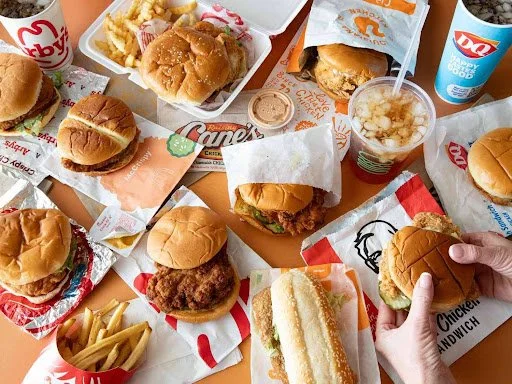
The episode triggered a rapid reactive marketing cycle from the QSR sector. Burger King, Wendy's, KFC, and A&W all deployed executives to social media to eat their flagship items with deliberate, theatrical enthusiasm, a coordinated implicit critique. Even Mini USA participated, commenting, "Gonna start test driving our cars 1 meter at a time," which accumulated 105,000 likes. The competitive response was swift, coordinated, and, in several cases, genuinely sharp.
Wendy's response, their president devouring a burger with the caption "This is what it looks like when you don't have to pretend to like your 'product'", was arguably the sharpest reactive line in the cycle. Yet Burger King appeared in 68% of the online discussions, Wendy's in just 18%. McDonald's owned the entire conversation. And McDonald's was the one selling Big Arches.
Kempczinski's read on this was direct: "I always love when my competitors are talking about me. It means people are hearing about Big Arch and going out and buying it." This is not spin; it reflects a structural truth about how attention economies operate. Being discussed, even critically, is a form of market presence that competitors cannot manufacture through their own polished content.
The Authenticity Paradox
Prior to this episode, Kempczinski already had seven times as many social followers as the next fast-food CEO, Starbucks' Brian Niccol. His follower count grew 30% off the back of the controversy. This is the central paradox the episode illustrates: the imperfect moment performed better than a polished campaign could have.
Consumers are increasingly skeptical of advertising. What social media offers, when it works, is perceived authenticity. The operative word is "perceived." The video felt unscripted precisely because it was slightly uncomfortable. An awkward nibble and a mildly robotic vocabulary choice humanized Kempczinski more effectively than any produced spot would have. His follower growth is not a reputational anomaly; it is the mechanism working as intended.
For brand leaders, this presents an uncomfortable strategic implication: the creator economy does not reward perfection. It rewards presence, personality, and tolerance for imperfect moments, including those that invite mockery. The mockery is often the mechanism.
Strategic Verdict - Key Takeaways
The highest-reach campaign in McDonald's history cost one executive, one burger, and one phone. The production budget was irrelevant. The authenticity signal, however accidental, was the entire product.
Control is no longer the operative variable in brand management. The relevant variables are speed of response, executive visibility, and an organizational tolerance for moments that don't go entirely to script. Competitors who responded quickly and with personality captured secondary attention; those who didn't were absent from the conversation.
Kempczinski's mother told him not to talk with his mouth full. In the creator economy, next time, he probably should.
Sources: McDonald's social analytics, Wall Street Journal CEO interview (March 2026), platform engagement data. Brand mention and reach figures represent estimates across Instagram, TikTok, X, and ancillary platforms during the primary virality window, February–March 2026.