The Productivity Gamble
Something strange is happening in the U.S. economy right now, growing while barely adding jobs. Over the past year, the labor force actually shrank by over 550,000 people, a drop we haven't seen outside of a pandemic or a recession, yet GDP kept climbing.
The short answer is productivity. When you can't grow by adding more workers, you have to get more output out of the workers you already have, and that's exactly what's been happening. Output per hour worked rose 2.1% last year, continuing a trend that has been building since COVID forced companies to automate faster and workers to find roles that actually suited them. People stopped job-hopping as much, and it turns out staying put and getting good at something pays off economically. This isn't just workers being busier. It represents a genuine rise in the economy's potential output ceiling. In macroeconomic terms, the long-run aggregate supply curve is shifting right, meaning the economy can produce more without generating inflation. That's what makes this a supply-side story rather than a typical overheating scare.
The deeper story is structural, though. Trump's immigration crackdowns, mass retirements, and record-low birth rates have essentially capped how much the labor force can grow. The Fed estimates the economy may need fewer than 10,000 new jobs per month just to stay stable, which is an extraordinary shift for a country that was adding hundreds of thousands of jobs per month just a few years ago.
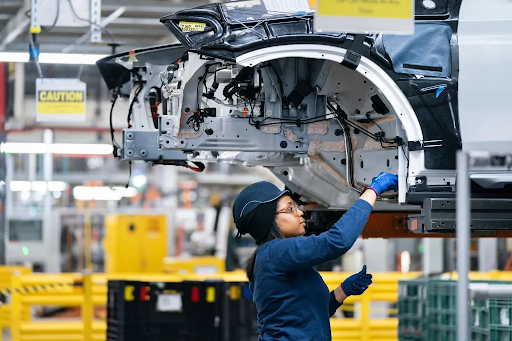
AI and technological advancement are the wild cards everyone's watching, but no one can fully measure them yet. Some think it's already quietly lifting productivity numbers. Others point out that transformative technologies historically show up in productivity data only after firms reorganize workflows, retrain workers, and redesign processes around them, not the moment the tool becomes available. The productivity boom from personal computers didn't materialize until the mid-1990s, roughly two decades after PCs arrived. That lag matters enormously when interpreting today's numbers, because it means we may either be underestimating AI's contribution or giving it credit for gains it didn't cause.
Another thing to keep an eye on is wage pressure. With a shrinking labor pool, firms may raise wages to attract workers, driving up their costs. Normally, low unemployment signals an economy bumping against its capacity, the Phillips Curve relationship, where tight labor markets feed inflation. But if productivity gains are real, that relationship weakens because the capacity ceiling is rising alongside demand. The danger is if wages rise faster than productivity growth. That excess cost is typically passed on to consumers, pushing prices up regardless of how efficient workers are.
If this increased productivity holds, it is a rare scenario in which growth occurs without inflation despite a shrinking workforce. But if these gains don’t reflect lasting change, a smaller labor force with stubborn inflation is a much harder problem to solve.