Stock Pick of the Week (6/15)
When investors think about defense stocks, names like Boeing, Lockheed Martin, and Northrop Grumman usually dominate the conversation. One company that receives far less attention, however, may be one of the most interesting long-term opportunities in the sector: Curtiss-Wright (CW).
They trace their roots to aviation pioneers Orville and Wilbur Wright and Glenn Curtiss. Formed in 1929 through the merger of their companies, Curtiss-Wright became one of America's largest aerospace manufacturers and played a major role in aircraft production during World War II. Over the decades, the company evolved from building airplanes into supplying highly specialized technologies for defense, aerospace, naval, and nuclear applications, creating the business that investors see today.

They produce highly specialized components used in military aircraft, submarines, nuclear power systems, and other mission-critical applications. Unlike many manufacturers that compete on price, Curtiss-Wright often supplies proprietary parts that are deeply embedded within major defense and energy programs. Once those systems are installed, replacing them is difficult, creating a steady stream of recurring business that can last for decades.
What makes the company particularly compelling today is its exposure to two powerful long-term trends: increased defense spending and the resurgence of nuclear energy. The U.S. Navy is investing heavily in submarine production and fleet modernization, while governments and utilities worldwide are exploring new nuclear projects and small modular reactors. Both trends require the specialized technology that Curtiss-Wright provides, positioning the company at the center of spending cycles that could stretch well into the next decade.
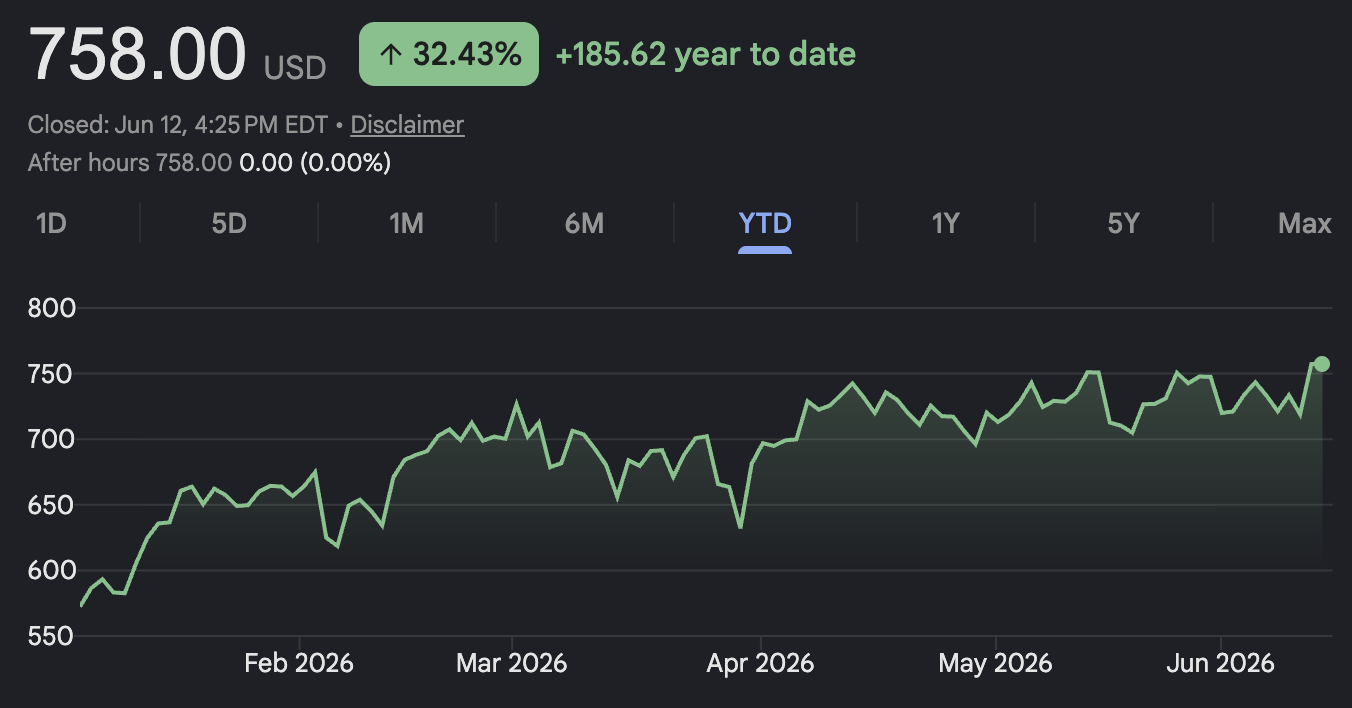
The stock recently pulled back following its first-quarter earnings report, as management narrowly missed adjusted EBITDA expectations. However, the market's reaction may have overlooked the bigger picture. Revenue, earnings, and backlog all exceeded expectations, while the company's order book continued to grow. In fact, Curtiss-Wright reported a book-to-bill ratio above 1.0 and a backlog of roughly $4.3 billion, suggesting demand remains strong and future revenue visibility is improving.
There are additional reasons for optimism. Earlier this year, the company secured a contract worth more than $400 million from Boeing to supply mission computers for the C-17 aircraft fleet, adding another meaningful source of future revenue. Management also recently expanded its credit facility to $1.5 billion, providing significant flexibility for acquisitions. Curtiss-Wright has historically used acquisitions to add niche technologies and strengthen its competitive position, and investors may be underestimating the value of future deals.
The primary concern, as implied, is valuation. CW trades at a premium compared to its historical averages, meaning expectations are already high. If growth slows or major projects face delays, the stock could face pressure as investors reassess how much they are willing to pay for future earnings. Large defense and nuclear programs are also complex and can experience procurement or supply-chain setbacks.

Still, Curtiss-Wright appears to be much more than a traditional industrial company. It has transformed itself into a highly specialized supplier serving some of the world's most important defense and energy projects. While the stock is not cheap, the combination of strong backlog growth, long-duration contracts, and exposure to two major spending themes makes CW an intriguing idea for investors looking beyond the market's most crowded names.
Curtiss-Wright may not be the most talked-about defense stock, but its unique position within defense modernization and nuclear expansion could make it one of the most compelling long-term compounders in the market today.
