Airlines Aren’t Struggling With Demand – They’re Struggling With Geopolitics
Demand vs. Profitability Disconnect
Airline earnings in early 2026 are sending a clear signal that the market keeps misreading. Demand is strong, and revenues are growing, yet profitability is shrinking, and the reason has nothing to do with how many people want to fly. The problem is that the cost of flying them has surged, and geopolitics is driving it.
The source of this shock lies in fuel costs, as escalating tensions in the Middle East have pushed oil prices sharply higher. Brent crude has spiked above $119 per barrel and held above $110, pushing jet fuel prices to their highest levels since 2022, when the Russia-Ukraine war drove a similar spike in global energy prices. Airlines that previously expected fuel costs in the $2.27-$2.42 per gallon range are now facing prices closer to $3.00 per gallon. In an industry where fuel prices account for approximately 25-35% of total operating costs, that shift is substantial and quickly erodes margins.
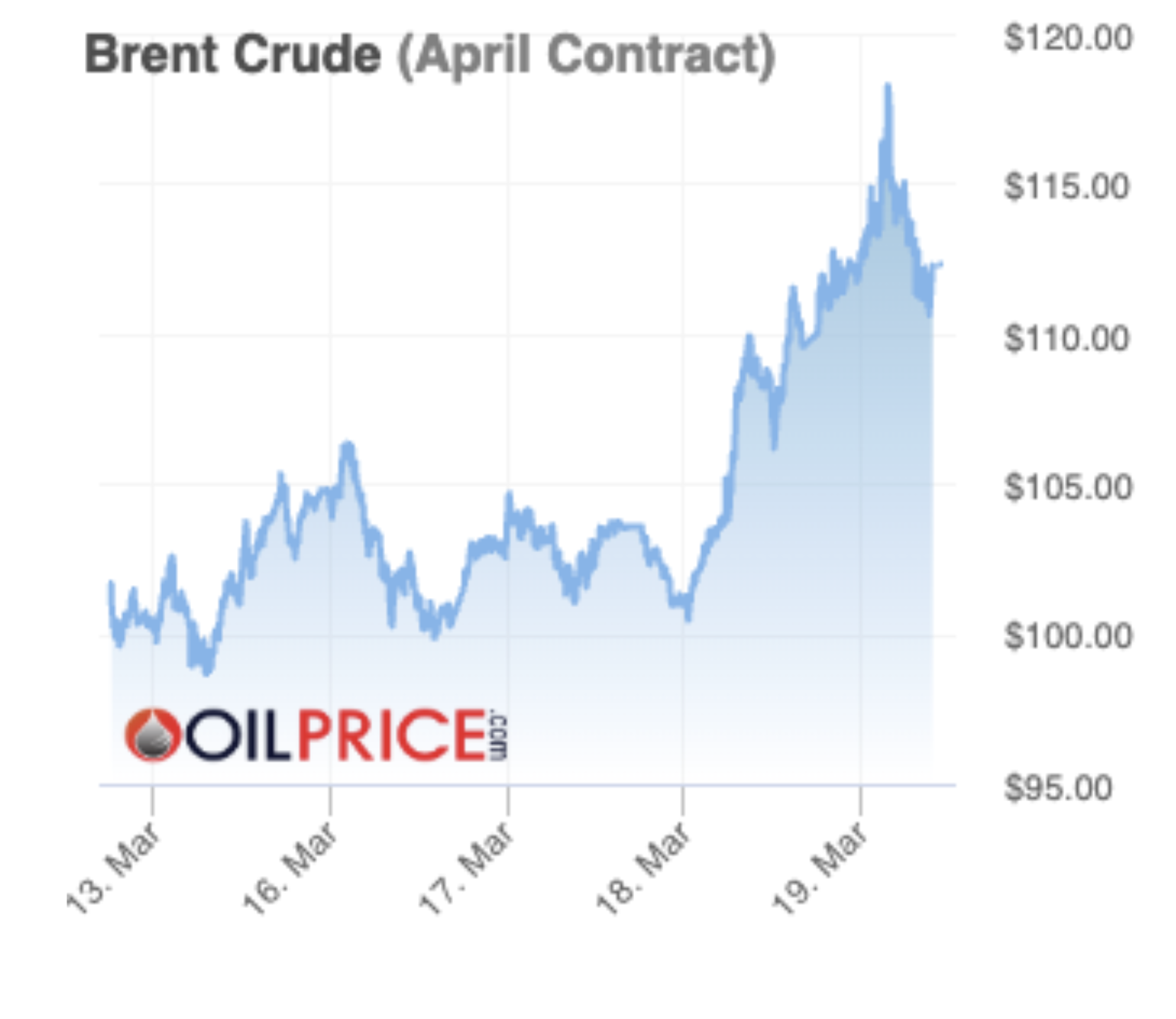
Brent crude prices surged sharply amid escalating geopolitical tensions, driving increased volatility in global energy markets.
Lagging Pricing and Margin Compression
The difficulty is that airlines have limited tools to respond in real time, as capacity is scheduled months in advance and fare adjustments lag behind cost movements, meaning costs absorb the shock first while revenues take time to catch up. That gap between rising costs and slower pricing response is exactly where margins shrink.
Major U.S. airlines confirm demand remains strong, with Delta raising its revenue outlook to roughly $15 billion, marking continued strength in both consumer and corporate travel. Similarly, American Airlines expects more than 10% YoY revenue growth, and JetBlue expects unit revenue (RASM, or revenue per available seat mile) to rise to 5-7%, indicating that pricing and demand are firm across the industry.
Falling Profits and Structural Vulnerability
However, despite this, profitability is falling, as American now expects a quarterly loss of up to $0.50 per share, even with strong revenue growth. Frontier highlighted that higher fuel costs alone will add up to $50 million in incremental expenses in a single quarter, while JetBlue raised its cost outlook significantly.
Rising ticket prices offer only partial relief, and even that help is mostly defensive. Airlines are raising fares to help recover costs rather than aiming to expand margins, meaning that even as revenues climb, the gap between what it costs to operate a flight and what the airline earns from it remains wide. Therefore, until fuel stabilizes, the industry is effectively using more energy and effort just to maintain its position.
Ultimately, this dynamic reflects an underlying and deep structural vulnerability that becomes visible under external, specifically geopolitical, stress. Airlines aren’t cyclical businesses that rise and fall with consumer confidence and consumption; they are much more complicated systems that depend on the stability of costs and energy markets. Hence, the takeaway is that the shock to airlines isn’t about demand; rather, geopolitical instability has made the environment in which they operate fundamentally more difficult to navigate and plan for.