Summary
On April 29th, 2026, the United Arab Emirates announced it would exit OPEC and the larger OPEC+ effective May 1st, ending nearly six decades of membership. This dealt the oil cartel one of its major setbacks in recent history (Al Jazeera). The timing isn't an accident, but a calculated bet on what the future of oil actually looks like.
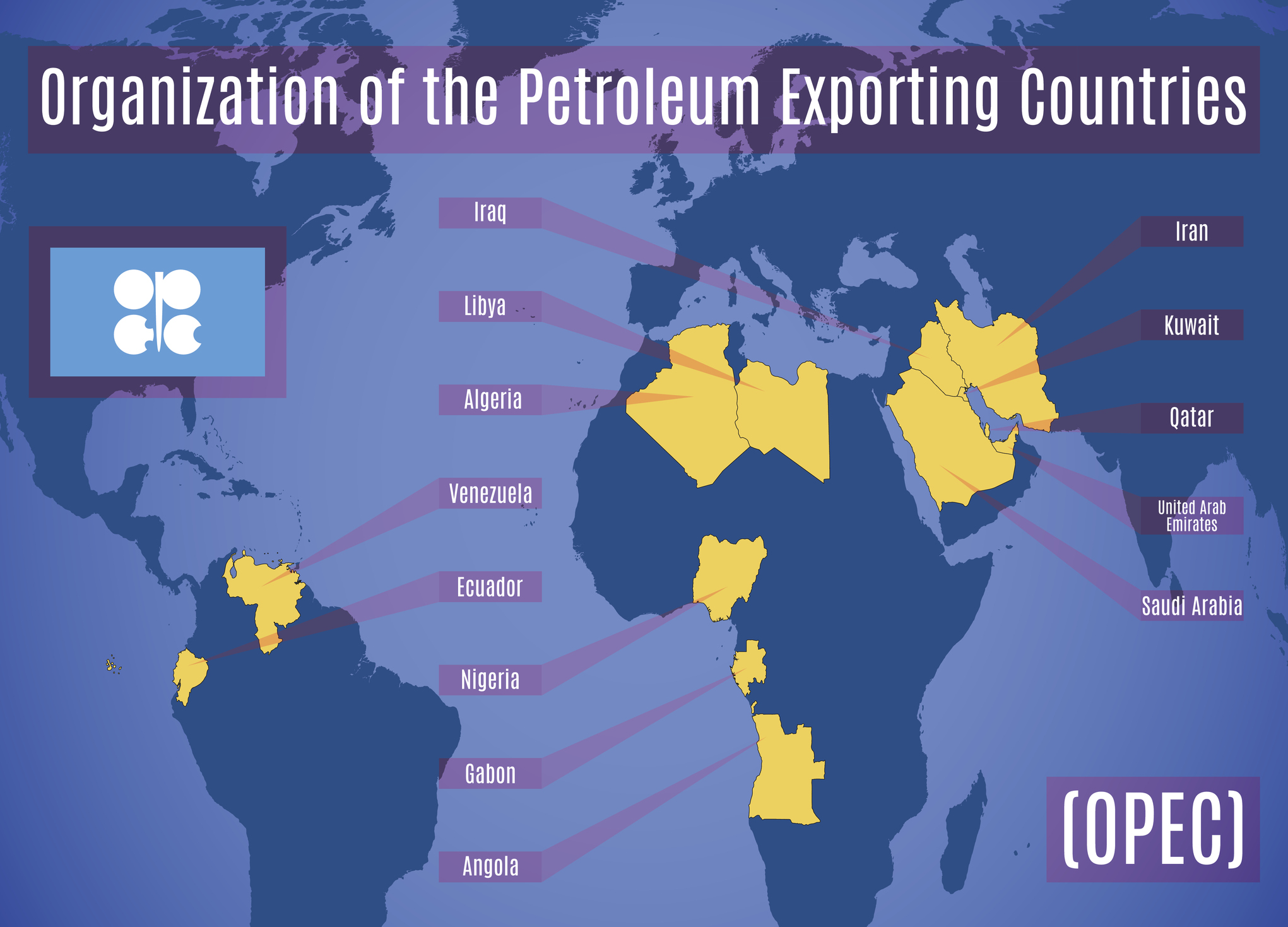
Map of OPEC countries (The Motley Fool).
A Brief History of the Cartel
OPEC (the Organization of the Petroleum Exporting Countries) was founded in September 1960 at the Baghdad Conference by five nations: Iran, Iraq, Kuwait, Saudi Arabia, and Venezuela (The Economist). The earliest logic was that oil-producing nations were tired of Western companies setting the price of their own resources. By coordinating production, member states could keep prices steady and protect revenue. The UAE, through its emirate of Abu Dhabi, joined in 1967 (Reuters).
The cartel's defining moment came in 1973, when Arab OPEC members imposed an oil embargo targeting the U.S. and Western Europe over their support of Israel in the Yom Kippur War. Within months, the price of oil quadrupled, Western economies lurched into stagflation, and for the first time, the world fully grasped its exposure to OPEC’s energy supply chains (NYT).
After the 2014 oil price crash, OPEC expanded its coalition by bringing in non-member producers like Russia and Kazakhstan, forming OPEC+ in 2016 (WSJ). Today, OPEC controls roughly 30% of global supply, while OPEC+ accounts for about 41% (Reuters).
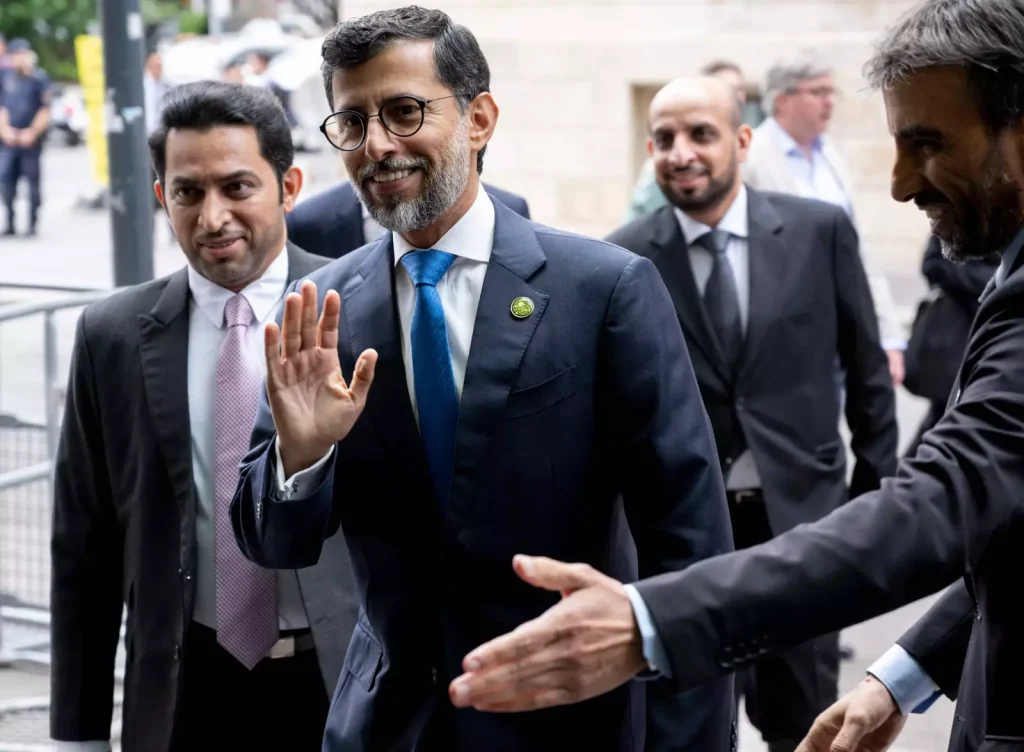
The UAE’s Minister of Energy and Industry Suhail al-Mazrouei, arriving for an OPEC meeting in Vienna on June 4, 2023 (NPR).
Why the UAE Left
The short answer is that Abu Dhabi's ambitions to produce outgrew OPEC's quota ceiling.
The UAE was capped at producing around 3.2 million barrels per day under its membership agreement despite having a capacity of 4.8 million bpd. The UAE even had plans to scale that number to 5 million bpd by 2027 (Bloomberg). That gap represents enormous revenue being sacrificed in the name of the oil cartel.
More importantly, Abu Dhabi has been reading the same long-term energy forecasts as the rest of the market. Analysts broadly agree that global oil demand is approaching a structural peak, driven by EV adoption, efficiency improvements, and changes in energy sourcing (The Economist). The UAE wants to maximize production and revenue before the market fundamentally shifts away.
Saudi Arabia is taking the opposite stance—keeping output capped to support price floors and betting that the commodity retains its premium value into the coming decades (Financial Times). These strategies are incompatible, and the split has been building for years.
Saudi-UAE relations have also quietly deteriorated over Yemen, regional competition for influence, and Abu Dhabi's deepening ties to both the U.S. and Israel through the Abraham Accords (Al Jazeera).
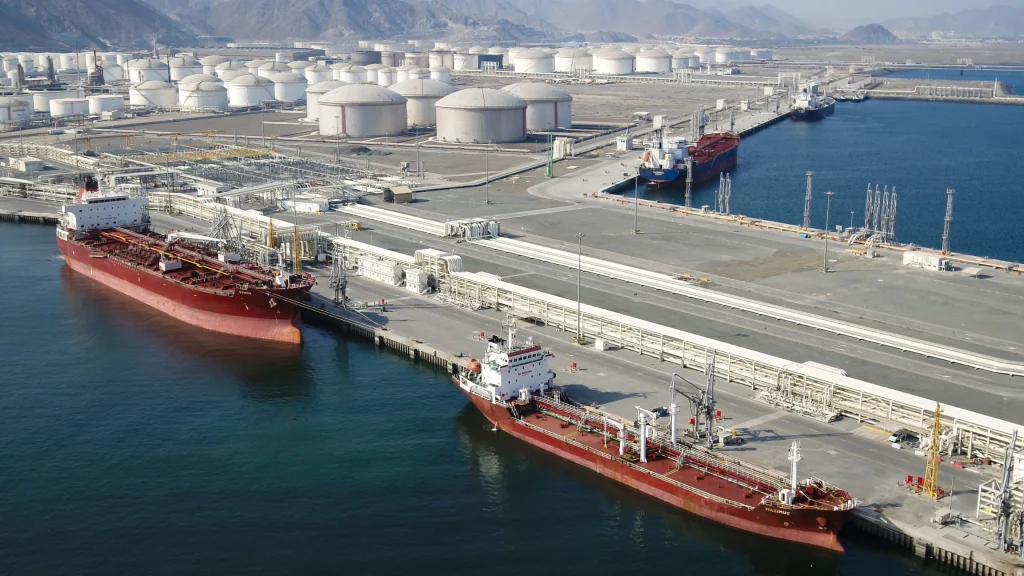
The UAE’s Fujirah Port (furjirahport.ae).
What It Means for Prices
In the short term, the market impact is largely limited by the ongoing Iran conflict. UAE export capacity through its Fujairah port remains constrained as the Strait of Hormuz remains closed. Saudi Arabia attempted to revitalize the East-West Petroline, but OPEC's total production dropped by roughly 27% in March alone (S&P Global). Additional UAE barrels aren't entering the global markets in any meaningful way until the Strait reopens.
Once it does, however, things will shift. The UAE will have every incentive to maximize output and recapture market share with no production ceiling in place. More supply, without another demand surge, will put downward pressure on prices. Oil futures markets are already pricing in this post-conflict scenario, showing a bearish long-term outlook for crude (Bloomberg).
OPEC has managed friction and defections before. But losing a producer with 5 million bpd of capacity during the Iran war is a huge structural blow. The world's major oil producers are no longer united on a common strategy.