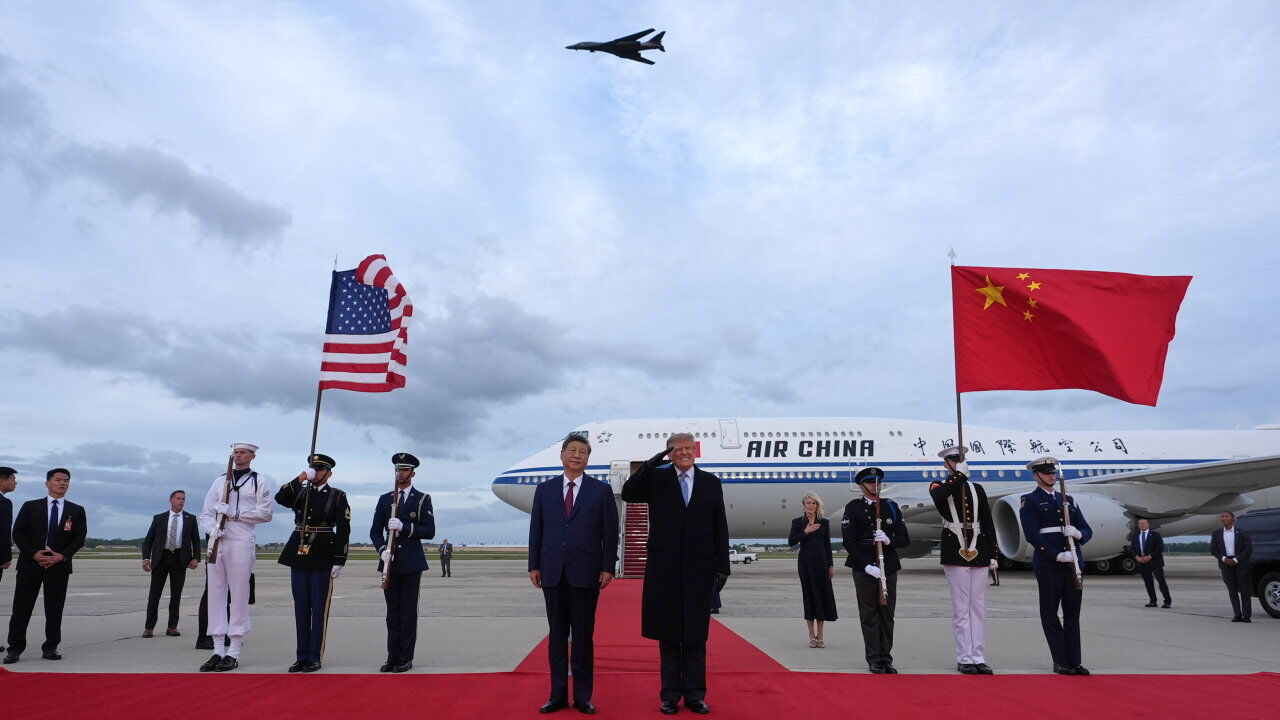
Xi Jinping landed in Washington Wednesday for his first visit since 2015, and the White House pulled out every piece of pageantry it has. A red carpet, a B-2 stealth bomber flyover, the Marine Silent Drill Platoon, and a military review in what’s left of the Rose Garden. In the spirit of cooperation, Xi brought two new pandas that are en route to the Atlanta Zoo. However, beneath the ceremony lies the real question investors care about: does any of this change the trajectory of U.S.-China economic relations, or is it just a PR stunt ahead of midterms?
What Was Expected
Going into the summit, expectations were modest. Former officials told the press they anticipated a meeting strong on ceremony but light on major developments (WSJ). Most analysts agreed the most notable deliverable would be an extension of the Busan trade truce: a one-year agreement for trade and tariff relief that was set to expire on November 10th. However, the market is also watching for movement on agricultural purchases, an AI risk-management agreement, and any signal on Taiwan. This follows Trump’s comments during his May visit to Beijing, which critics said softened U.S. support for the island.
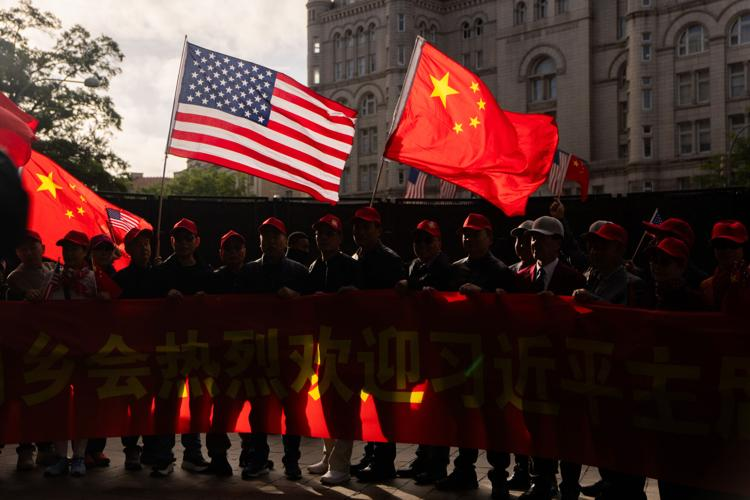
Pro-China demonstrators on Pennsylvania Ave. on September 24th (Allison Robert, AP).
What Has Actually Happened So Far
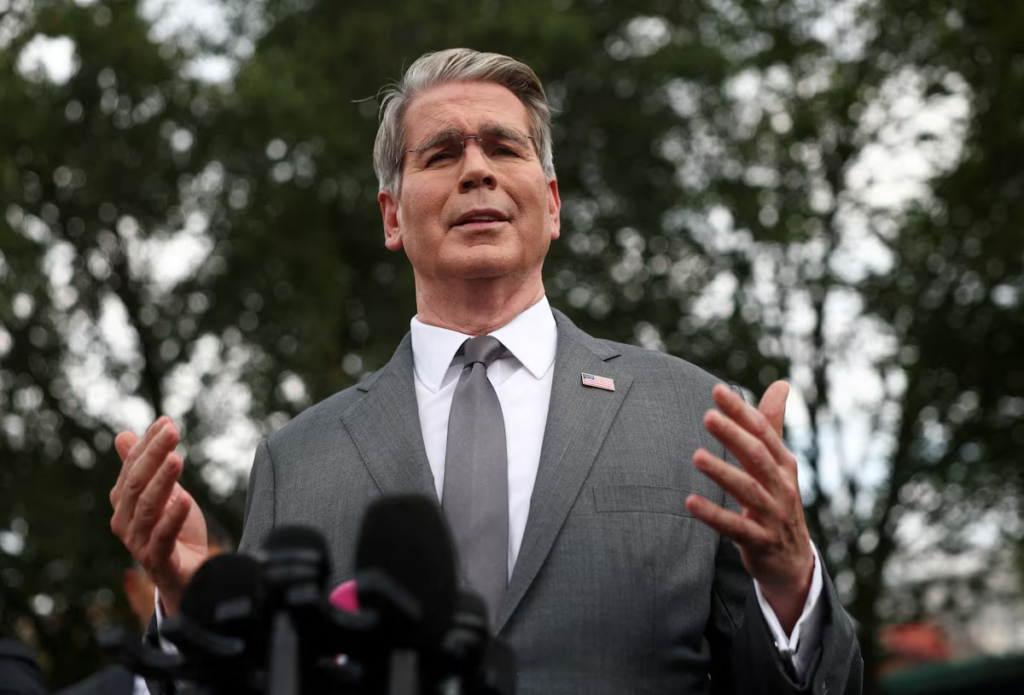
A temporary truce extension came through. Treasury Secretary Scott Bessent confirmed Wednesday night that both sides agreed to push the deadline from November 10th to January 10th, while indicating possibly a larger deal down the road (WSJ). China has stayed on pace with its pledge to purchase 25 million tons of U.S. soybeans this year. Though Bessent noted Beijing remains behind on roughly $17 billion in more extensive agricultural purchases (WSJ).
On AI, the two sides announced an “AI Dialogue” to manage security risks tied to “frontier models” (FT). Xi cautiously asserted that the U.S. and China have “the capability and responsibility to manage AI for good” and that development should remain “under human control” (FT). The President of China also said that “our competition should be a healthy one… not a wrestle in which [one nation] wins and [one] loses” (FT). In contrast, Trump has posted on Truth Social that he wants AI to be left “exactly where it is,” saying the DOJ is the only necessary guardrail.
Many critics of the state visit, including Senate Armed Services Chairman Roger Wicker, have weighed in. The chairman said he would have advised against inviting Xi for “such a lavish welcome” just weeks ahead of midterms (WSJ). Major U.S. broadcast networks also boycotted live coverage of the event after the White House banned several outlets from the building last week.
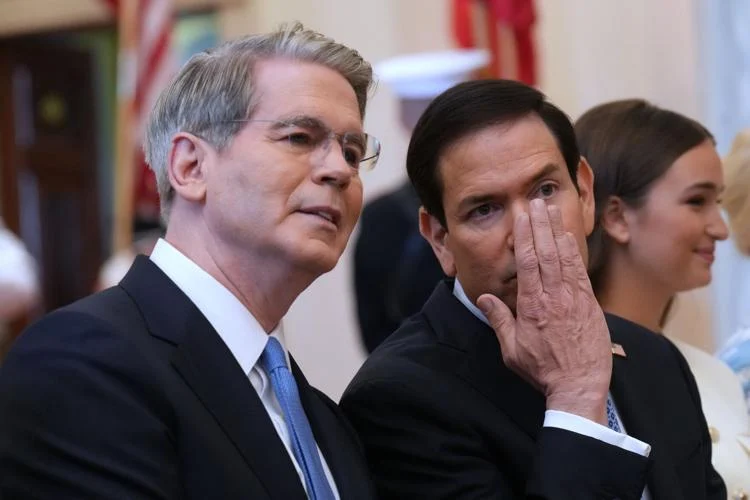
Treasury Secretary Scott Bessent (left) and Secretary of State Marco Rubio (right) arrive to the White House before the presidential motorcade (Jacquelyn Martin, AP).
What’s Still Unresolved
Washington is holding the line on advanced semiconductor export controls, keeping chip manufacturing equipment off the table entirely in trade talks. China’s leverage sits in its dominance over rare-earth refining, which will stay a point of tension for the foreseeable future. The administration is also increasingly unnerved by China’s indirect support for Iran. In the past year, China has ramped up its drone and missile component shipments to Tehran. Additionally, Beijing has continued its rapid nuclear buildup, which the Pentagon projects will exceed 1,000 warheads by 2030 (WSJ). Taiwan remains the largest point of contention. Beijing continues pressing the U.S. to halt weapons sales to the island, an issue unlikely to get resolved in a single sit-down.
What’s Next
The two-month extension buys time in the trade and military development war, not a resolution. January 10th is now the next real deadline, and both sides are already peering ahead. Trump is expected to attend the Asia-Pacific Economic Forum in Shenzhen in November, and Xi is expected to attend the G20 in Miami in December (FT). If both trips happen, it would mark the first time a sitting U.S. or Chinese president visited the other’s country twice in the same year (WSJ).
Like the Chinese and U.S. presidential administrations, investors should keep their eyes on the future. This summit has yet to produce and will likely not produce a durable trade agreement, just a couple extra photos for the White House Twitter page. Plan on a shift in freight rates, agricultural futures, and supply chain scheduling in January. Deeper disputes over technology transfer, rare earths, and Taiwan are still very much alive. Corporate planners will likely keep pricing geographic risk into Indo-Pacific cap-ex, no matter how many pandas are gifted to the U.S.