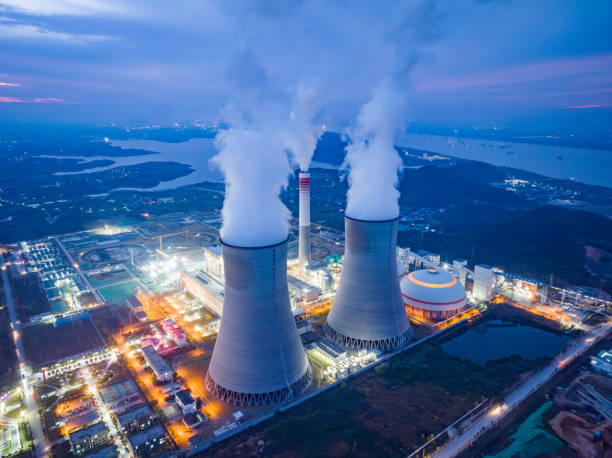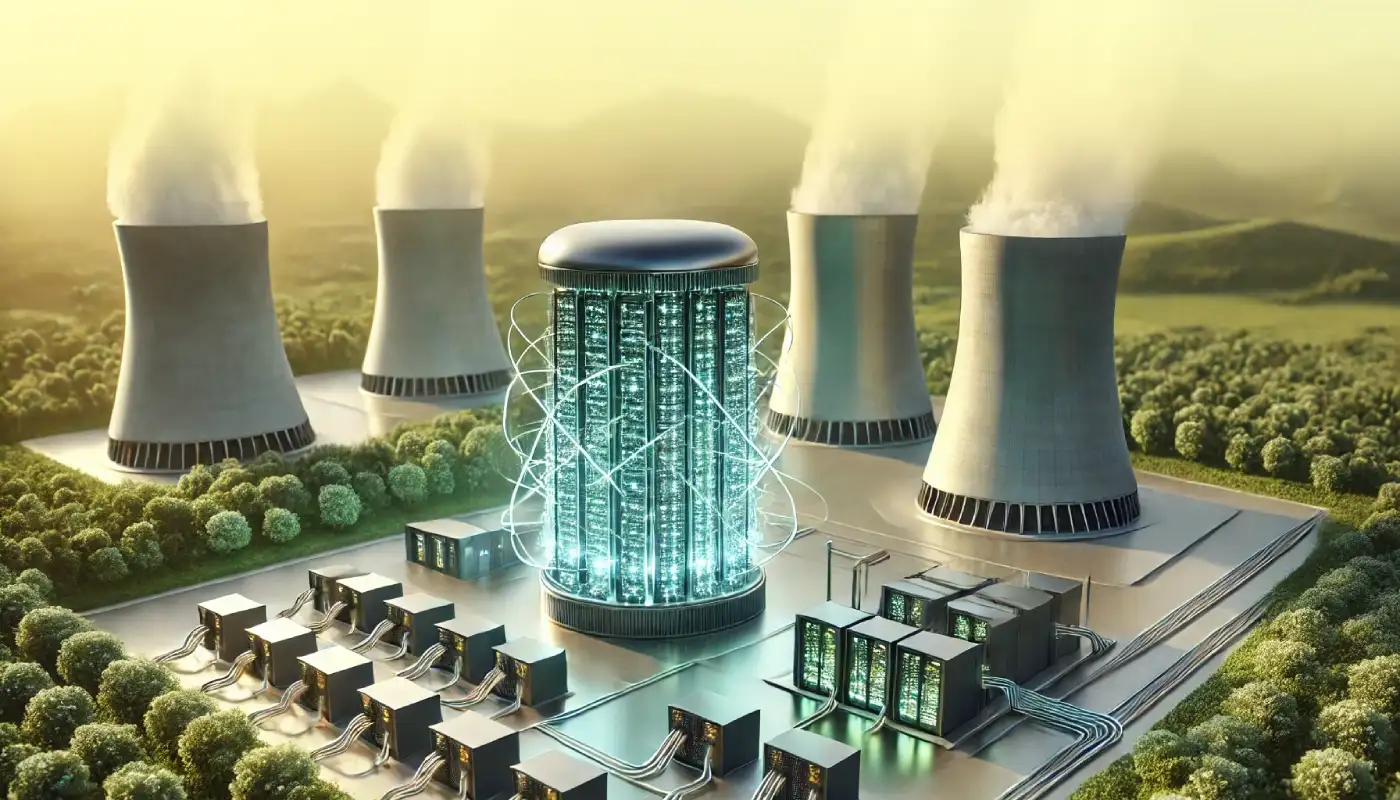
A massive shift in American infrastructure is underway, yet it is not being driven by environmental policy. Instead, the revival of the U.S. nuclear industry is steadily being pushed forward by Silicon Valley’s growing demand for electricity. As artificial intelligence expands, major tech firms are beginning to realize that ambitious software development means little without a stable power supply behind it.
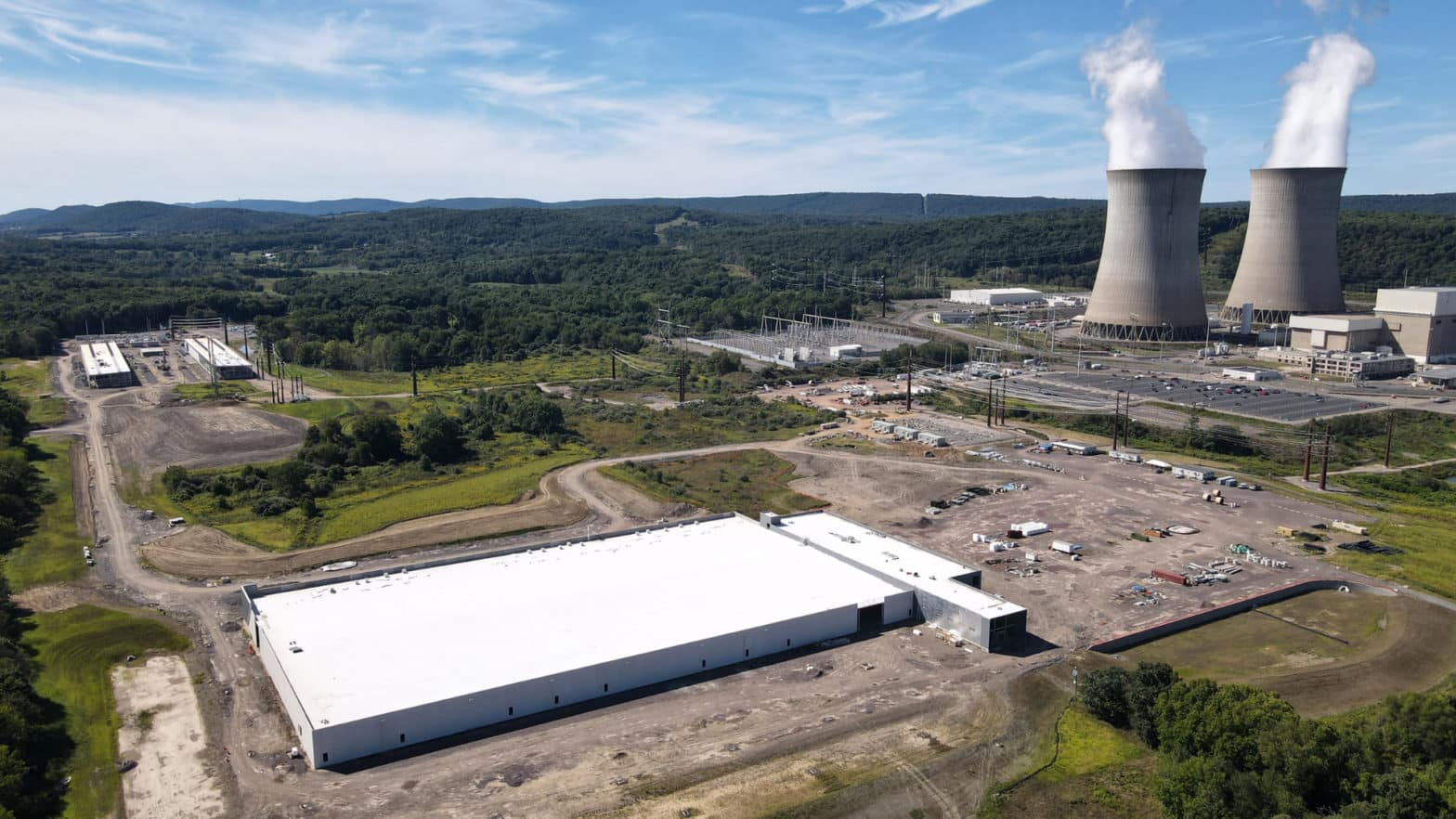
Cumulus data center and Talen Energy’s Susquehanna (Disaster Recovery).
The clearest example is in Pennsylvania, where Constellation Energy announced a $1.6 billion investment to restart Unit 1 of the Three Mile Island nuclear plant, rebranding it a Crane Clean Energy Center. In a major agreement, Microsoft committed to purchasing 100% of the plant’s output for twenty years to power its AI data centers (Bloomberg). Amazon Web Services followed with a $650 million acquisition of the Cumulus data center, which draws power directly from the neighboring Susquehanna nuclear plant (WSJ). Meta even struck a multi-billion-dollar deal with Vistra, Constellation, and two new nuclear start-ups (NucNet). These are not isolated business deals; they show that large-scale computing infrastructure requires a reliable power grid. Nuclear energy is being placed back at the center of America’s industrial future.
Despite this renewed interest, the United States remains at a global disadvantage. Years of political hesitation and public doubt left much of the American nuclear supply chain weakened, while competitors accelerated investment. The imbalance is difficult to ignore. Of the nuclear plants that began construction worldwide over the last decade, more than 90% relied on Chinese or Russian reactor designs (Nikkei/IAEA). China alone is rapidly building dozens of reactors to secure long-term energy independence. In France, nuclear energy provides roughly 70% of the country’s electricity, helping it maintain some of the lowest carbon emissions and most affordable energy rates in Europe (Financial Times).
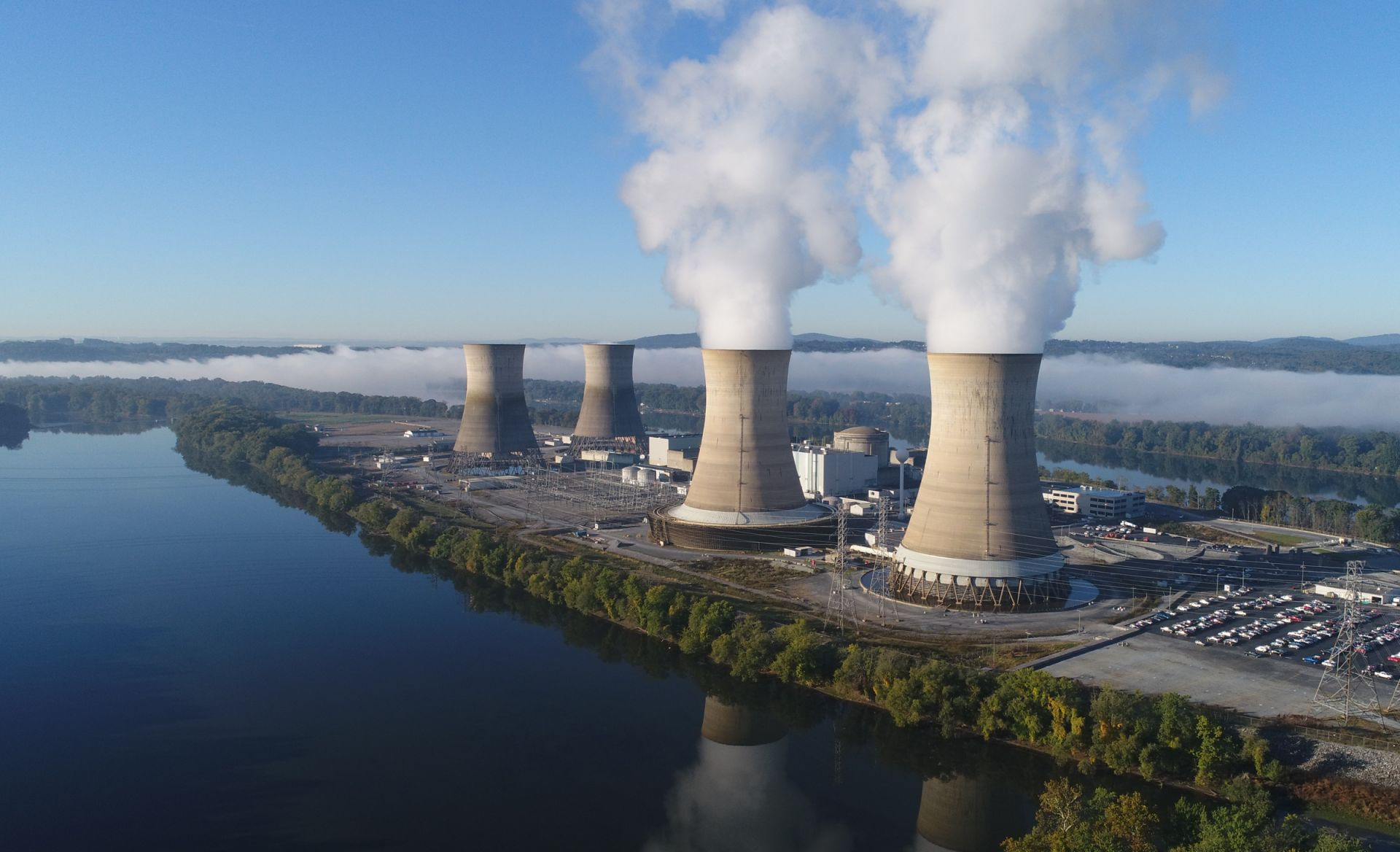
Three Mile Island today (American Nuclear Society).
Meanwhile, the United States has struggled to build new reactors. The recent completion of the Vogtle-4 reactor in Georgia cost billions and took years (AP News). Much of this standstill can be traced to ongoing public fears stemming from Three Mile Island, Chornobyl, and Fukushima. Yet modern data shows a far different picture from public perception. By “fatalities per terawatt-hour,” nuclear energy is one of the safest forms of large-scale power generation, outperforming coal, oil, and even some renewable energy sources (Our World in Data).
The disasters most often associated with nuclear power were also affected by highly specific circumstances. The Chornobyl explosion resulted from a deeply flawed Soviet reactor design combined with severe operational negligence. Fukushima was hit by a massive tsunami that struck Japan’s coastline, a geographical threat irrelevant to the proposed inland reactor sites. Even the 1979 partial meltdown at Three Mile Island resulted in zero direct injuries or deaths despite becoming one of the main causes of nuclear fear in the American public (World Nuclear Association).
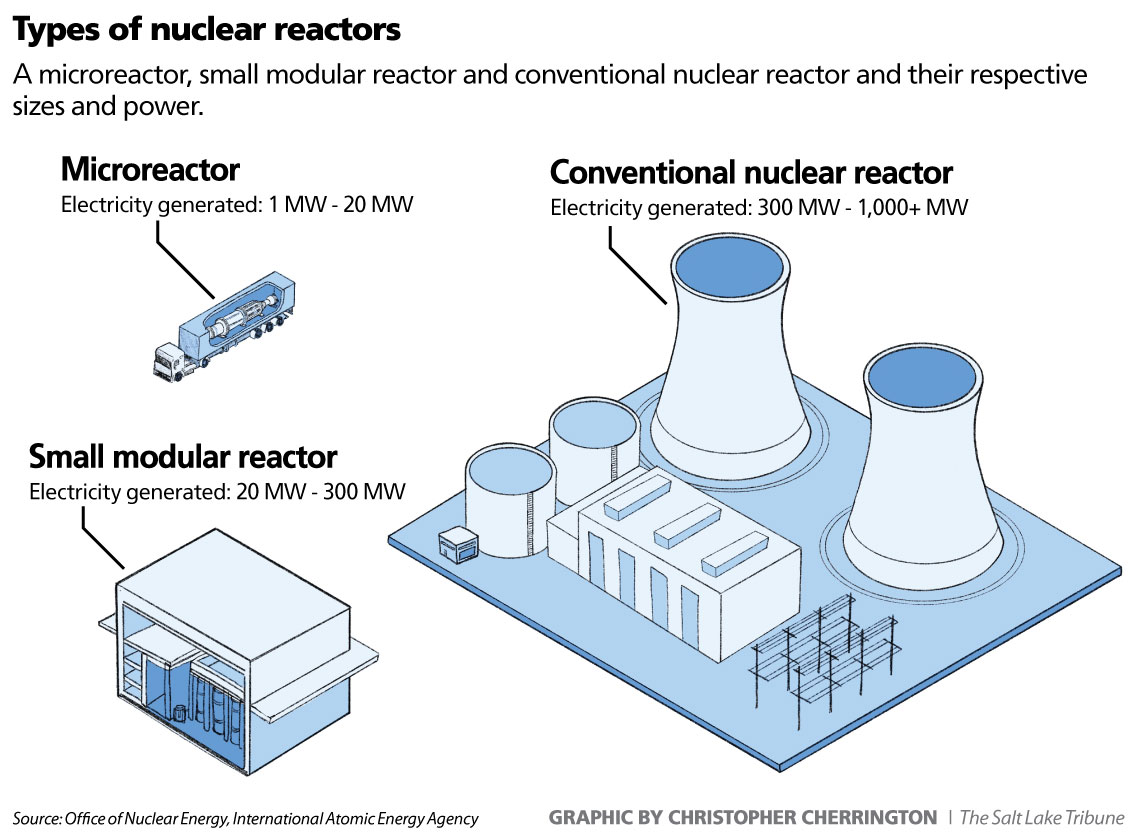
Types of nuclear reactors and their size (Office of Nuclear Energy Agency).
Federal policy still reflects this uncertainty. While lawmakers have acknowledged rising electricity demand, the general consensus remains fragmented. The current administration has pushed to expand domestic natural gas production as an immediate response to grid strain (NYT). Congress passed the ADVANCE Act in 2024 to accelerate nuclear licensing, but the approval process through the Nuclear Regulatory Commission remains slow and difficult to navigate. There are startups developing “Small Modular Nuclear Reactors” that provide safer, more flexible power. However, they face significant barriers, including regulatory, development, and funding constraints, that prevent broad deployment in the U.S. (Reuters).
For financial markets, the tension between rising energy demand and limited supply is already creating clear winners. Paul Prager, CEO of TeraWulf, summarized implications after the Amazon deal, stating that the transaction “underscores the considerable value of scalable infrastructure with access to low-cost, sustainable power adaptable for high-performance computing or AI” (Trending Topics).
Investors are beginning to realize that the companies capable of securing reliable energy capacity will ultimately shape the pace of the tech sector itself. As a result, markets have started to reprice utility companies with existing nuclear fleets, as well as uranium producers tied to future reactor development. The AI revolution may currently be defined by advancing software, but its ceiling will ultimately depend on who can navigate the regulations and build the infrastructure to power it.