The Psychology Behind Financial Decisions
Why do some lottery winners go broke while average earners quietly become extremely wealthy? Contrary to popular belief, financial success is not entirely determined by intellect, high income, or the ability to “beat the market.” It is also heavily influenced by psychology, emotions, experiences, and one’s overall savings habits. As Morgan Housel, author of The Psychology of Money, explains, financial success often comes from emotional control, long-term thinking, and personal habits.
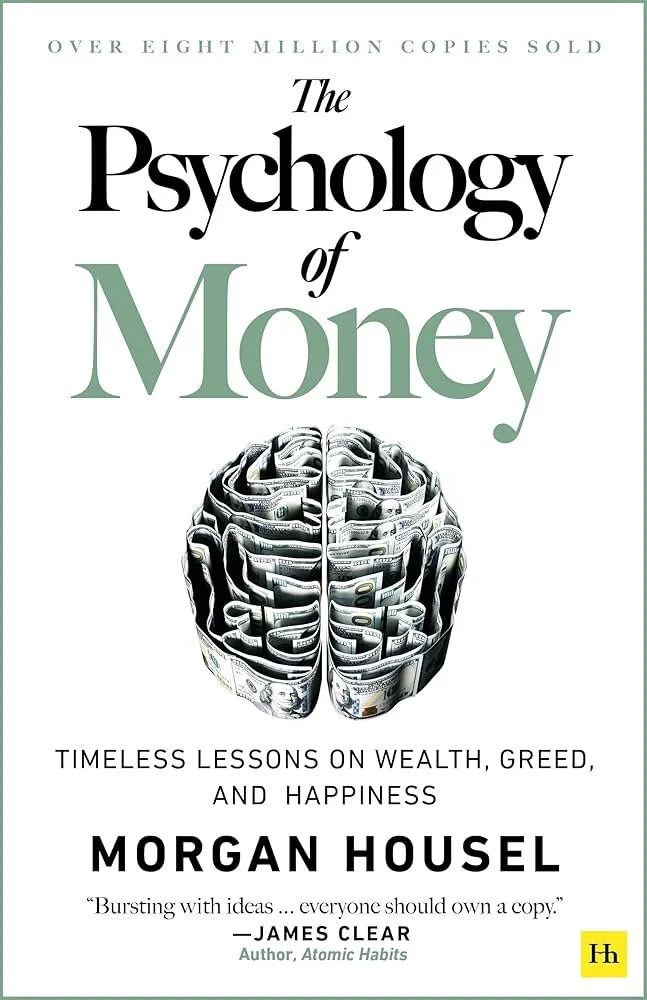
At first glance, it seems obvious that someone making $200,000 a year would be better off than someone making $75,000 a year, but that is not always the case. We will refer to the person making $200,000 as person one, and the person making $75,000 as person two. Person two is clearly more limited in the lifestyle they can afford than person one. Perhaps person one can afford a relatively small house and one vacation a year, while person two can afford a larger house and multiple vacations. Psychologically, person two recognizes these limitations and wants to grow their wealth to a level where they can eventually afford person one’s lifestyle. Instead of taking yearly vacations, they invest that money, and instead of owning a large house, they settle for a modest apartment. Person one, however, may not feel the same pressure to save because they can already live comfortably and spend freely. In this example, person two actually ends up with a higher savings rate than person one. This “savings rate,” as Morgan Housel describes it, is the gap between your income and your ego.
People also tend to underestimate the role that luck and personal experience play in financial decision-making. Someone who grew up during a recession or watched their parents struggle with debt may become far more cautious with money than someone raised in financial stability. Likewise, investors who experience major market crashes early in their lives often carry those emotional memories into future decisions, becoming either overly fearful or overly aggressive. Housel argues that every person views money through the lens of their own experiences, which explains why two intelligent people can make completely different financial decisions while both believing they are being rational. Financial behavior is rarely driven purely by numbers on a spreadsheet; it is shaped by emotions, memories, risk tolerance, and personal history.
As someone’s income rises, their lifestyle often increases along with it. To build wealth, your lifestyle cannot grow at the same rate as your income. Keeping that gap wide between income and spending increases the savings rate. However, this is much harder than it sounds. Modern culture revolves around instant gratification and the display of wealth. As people move up the social and financial ladder, the pressure to spend increases: nicer clothes, luxury cars, expensive vacations, and second homes all become status symbols.

From an investing standpoint, many people do not need to beat the market in order to become wealthy. If you can consistently increase your savings rate instead of increasing your spending as your income rises, simple investing strategies can work extremely well over time. Consistent 5% returns often outperform risky attempts to outperform the market or to sell assets to cover unexpected expenses in the long run. In some cases, keeping a cash reserve for emergencies, even though cash slowly loses value to inflation, can be a smarter financial decision than investing every dollar and being forced to sell investments at the wrong time. This is because of the power of longevity and compounding, two principles that are already widely discussed in investing.
Ultimately, financial success is not simply about how much money someone makes, but how they manage their behavior around money. Emotional discipline, patience, and maintaining a high savings rate are often more important than trying to outperform the market or display wealth through expensive lifestyles. In a culture driven by instant gratification and social comparison, the people who quietly build long-term wealth are usually the ones who resist unnecessary spending and plan years ahead rather than focusing solely on the present. Understanding the psychological side of money may ultimately be one of the most valuable financial skills a person can develop.