The Cost of Darkness: Why Cuba’s Crisis is an American Risk
What's Happening in Cuba?
Three times in March 2026, Cuba experienced nationwide blackouts. Roughly 10 million people were plunged into the dark (TIME). In Havana, hospitals were forced to cancel surgeries, and ordinary people had to watch as what little food they had rotted in warm refrigerators. Some news sources were quick to point to Cuba's decaying infrastructure, like the boiler failures at the Antonio Guiteras power plant. But let's be clear about what's actually happening: there is no fuel to run Cuba's energy infrastructure, and the United States has deliberately engineered it that way.
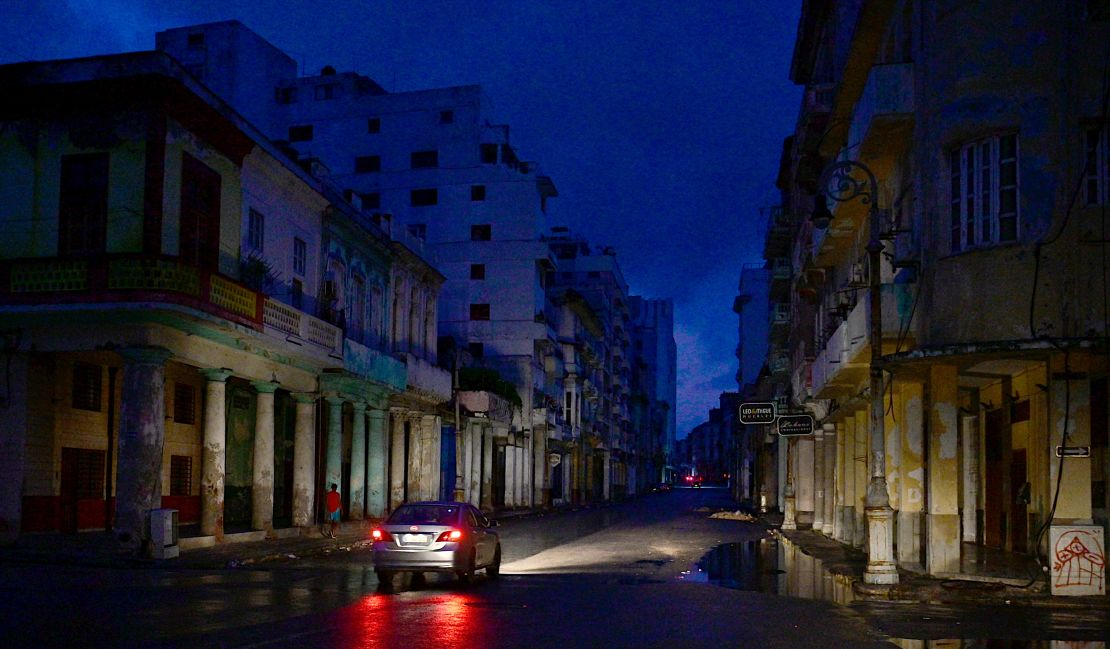
Car drives down a street in Havana during a blackout (CNN).
Early in January of 2026, the United States military captured Venezuelan President Nicholas Maduro and effectively took control of the state's oil industry. Before this, Venezuela was Cuba's primary oil supplier and ally, sending roughly 35,000 to 70,000 barrels a day to Havana (Time). In the last weeks of the month, the Trump administration signed an executive order citing Cuba's alignment with Russia and Iran, as well as its Human Rights abuses, as a national security threat (White House). This executive order was not merely "naming and shaming," but the start of a de facto economic siege. Trump's order made it clear that any country that directly or indirectly provides oil to Cuba will face severe tariffs and penalties.
Washington's border geopolitical maneuvers have exacerbated the oil crisis. Following the U.S. and Israeli strikes in the Middle East last month, global commodity markets started to price in a supply chain shortage. When Qatar shut down much of its oil and LNG production in response to the conflict, baseline energy prices skyrocketed. Cuba is not only barred from buying oil, but the cost is high.
Illicit Trade Networks Strengthen
To survive this kind of financial weaponization, targeted nations typically rely on the "shadow fleet"—an aging network of largely uninsured tankers that use AIS spoofing (turning off location transponders)—to smuggle fuel in the open ocean. Contrary to what you might think, it's a little bit more illegal than using a VPN to watch UK Netflix. The shadow fleet isn't a fringe black market; recent data suggests 17 to 20% of global tanker capacity is avoiding Western jurisdiction (S&P Global). Many tankers are operated by shell companies based in the UAE, using ships tied to Russian state entities such as Sovcomflot and Iran's National Iranian Oil Company (NIOC).
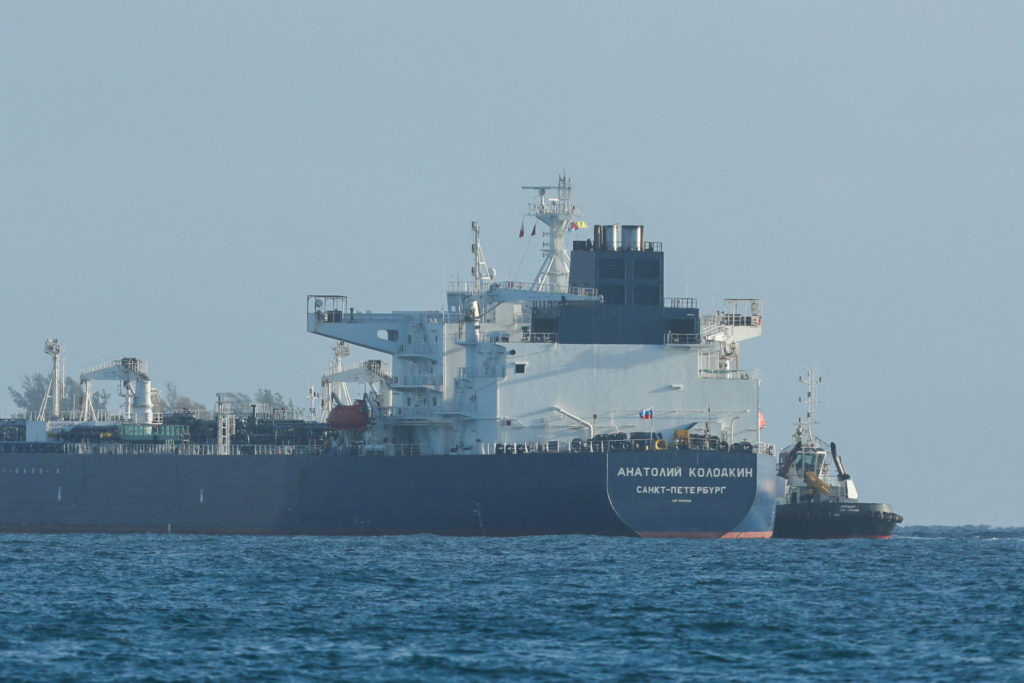
Image of the Anatoly Kolodkin oil tanker (Reuters).
Since U.S. authorities are actively hunting ghost ships, the cost to operate them is extremely high. Smugglers demand massive risk premiums to bypass the U.S. Coast Guard and Navy. Suppliers like Russia are logically pivoting their illicit oil output to wealthy buyers who can afford premiums, primarily in China and India. A bankrupt nation like Cuba, whose GDP per capita sits in the bottom 20 globally, cannot afford to outbid Asian superpowers (ECLAC). Some might point to the recent arrival of the Anatoly Kolodkin, a crude oil tanker flying under the Russian flag. This sanctioned Russian Aframax tanker docked in Matanzas with ~730,000 barrels of crude, as proof that Cuba can and is surviving (Washington Post). But this is a delusion. Cuba consumes nearly 100,000 barrels a day—a one-week bandaid on a severed artery won't cut it.
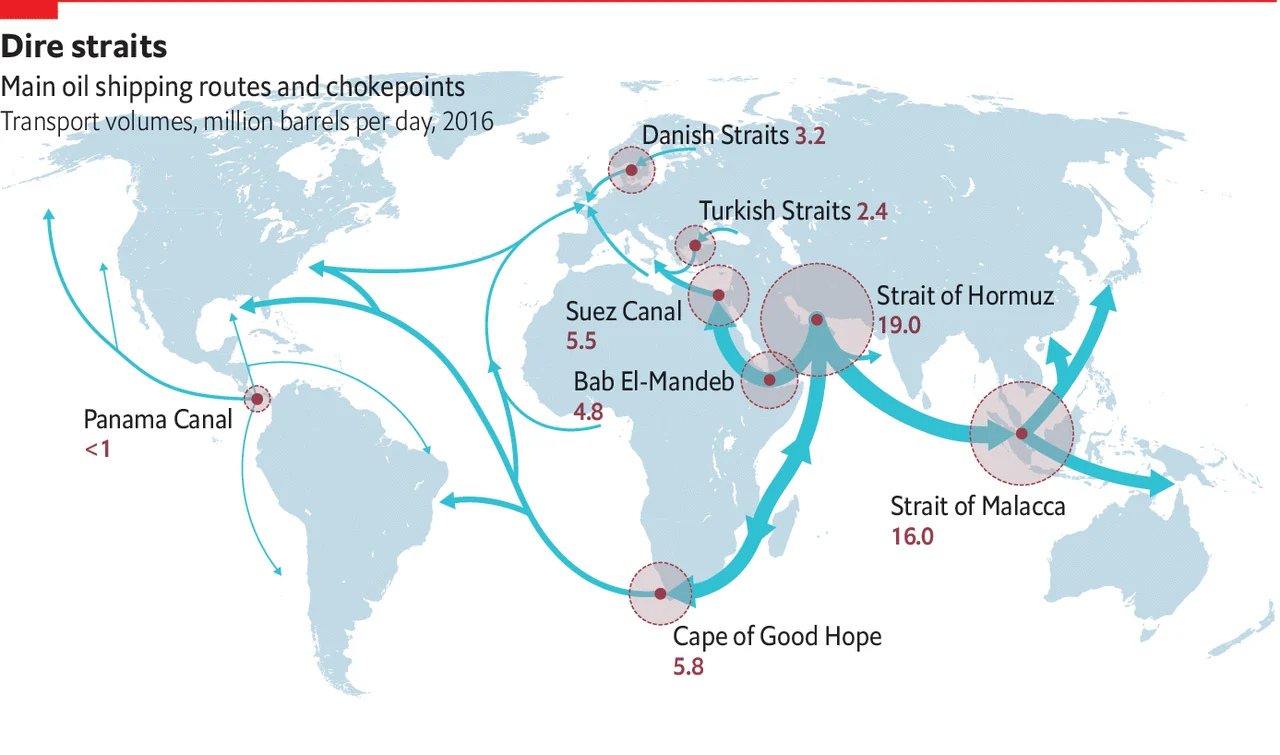
Oil shipping routes each day in 2016 (The Economist).
Why Should We Care?
Because in a globalized economy, the market hates vacuums. As 20% of the world's oil shipping is pushed into a shadow economy, we aren't just punishing adversaries but incentivizing permanent, black-market trade. The current administration has proven it is unafraid to financially pressure any state perceived as a threat to U.S. dominance, but the strategy carries a price.
The immediate reality is a double-blow to our own economic interests. American producers are being underpriced in the global East by discounted illicit crude, while our domestic shipping industry is losing jurisdiction. Even with U.S. exports at record highs today—driven largely by the closure of the Strait of Hormuz—this is a brittle victory. The structural damage to the transparency of global trade will compound once the Middle East conflict ends, leaving the world with a fractured supply chain. We may be winning the battle for volume today, but we are losing the war for a stable, Western-led market tomorrow.
We are plunging 10 million people into darkness today by forcing a fifth of the world's energy into a shadow market. It is American producers and consumers who will be stuck with the long-term bill for the fractured global economy.