Strong Numbers, Stretched Households
On paper, American households looked fine in May, as both income and spending were up. The details are less reassuring. In today’s Personal Consumption Expenditures report, the spending looks less like confidence and more like households struggling to keep up.
The top-line numbers were strong. Personal income rose 0.7% in May, nearly double what economists expected, and consumer spending was up 0.7% as well. On its own, this seems to be healthy. But the personal saving rate fell to 3%, near its lowest in years and well below the long-run average of 8%. This is a sign that households are spending more of their income just to keep up with higher prices.
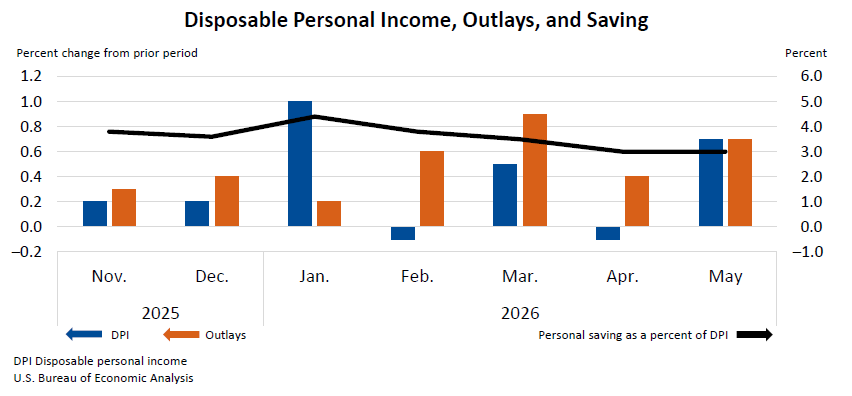
The squeeze shows up most clearly in wages. Average hourly earnings rose just 3.4% over the past year, while overall prices increased 4.1% by the PCE index, the highest since April 2023. So even as paychecks grow, they are not growing fast enough to keep up with prices. A 0.7% rise in income did not leave households any better off; it went straight to covering higher costs rather than being saved.
A strong job market normally protects a stretched consumer because if you lose your job, you can easily find another. This time, that protection is less stable than the headlines suggest. Employers added 172,000 jobs in May, beating forecasts, and unemployment remained steady at 4.3%. But beneath that, the labor market has effectively frozen. Companies are barely hiring, and few workers are leaving their jobs. The share of the unemployed who have been jobless for six months or longer climbed to 27.5%, up from 20.4% a year ago. In other words, layoffs are still low, but anyone who does lose their job is having a much harder time finding a new one. It is a job market that feels stable only as long as no one loses their job.
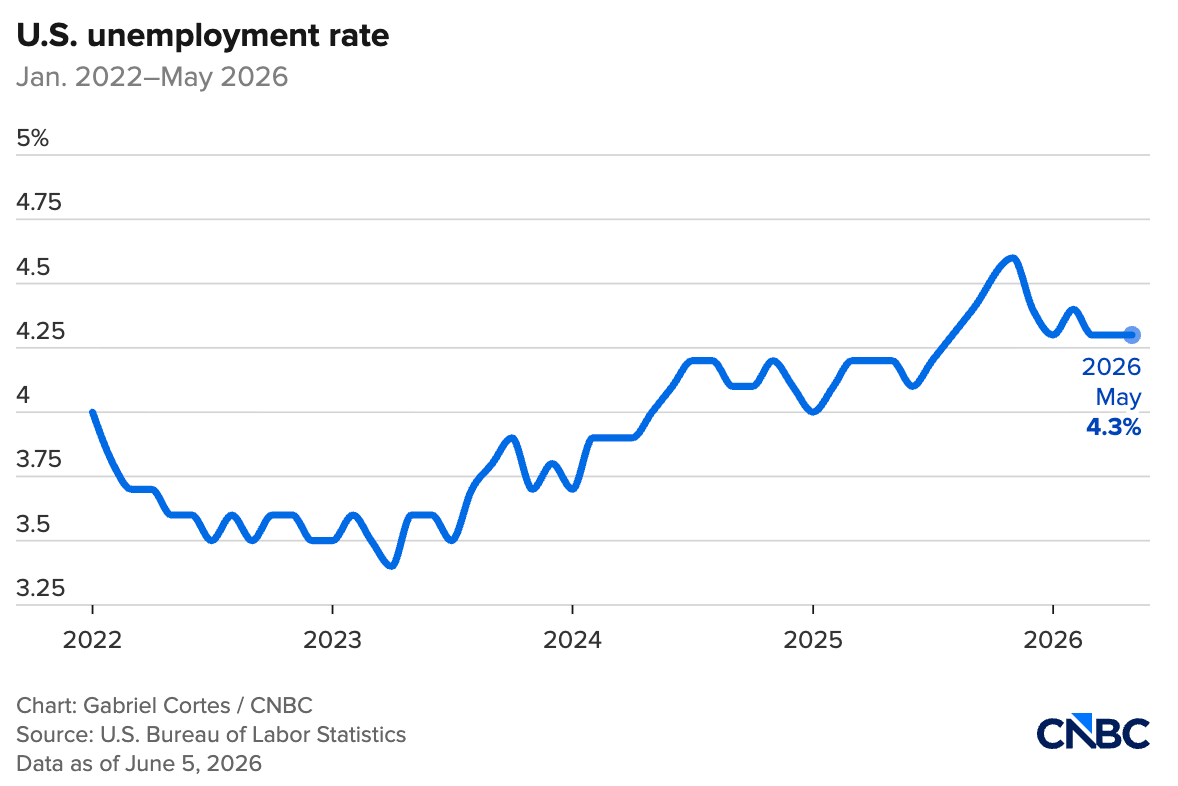
None of this means the consumer is about to break. Spending is real, and with unemployment still at 4.3%, plenty of households remain on solid financial footing. There is the chance that this eases on its own. Incomes are still rising, and as oil prices fall, the energy shock that drove inflation should fade through the second half of 2026.
What makes this report worth watching is what lies underneath the spending. Households are still buying, but with less in savings and paychecks that do not stretch as far, and the job market is not creating the new openings that would give them somewhere to turn to if they lose a job. For now, it holds together. What is worrying is not any single metric but that all of them slipped at the same time. Whether households can keep it up through the rest of the year is the question to think about heading into the second half of the year.