Stock Pick of the Week (3/2)
Overview
This week's pick goes against the grain of your single company stock, but is essential for any investor looking to diversify their portfolio and put some money back in their pocket. The Vanguard High Dividend Yield ETF (VYM) is a passively managed exchange-traded fund composed of roughly 560 of the strongest dividend-paying stocks currently on the market. The fund follows the framework of the FTSE High Dividend Yield Fund, which is forward-looking, focusing on what companies are going to pay next rather than what they have consistently paid in the past
Composition
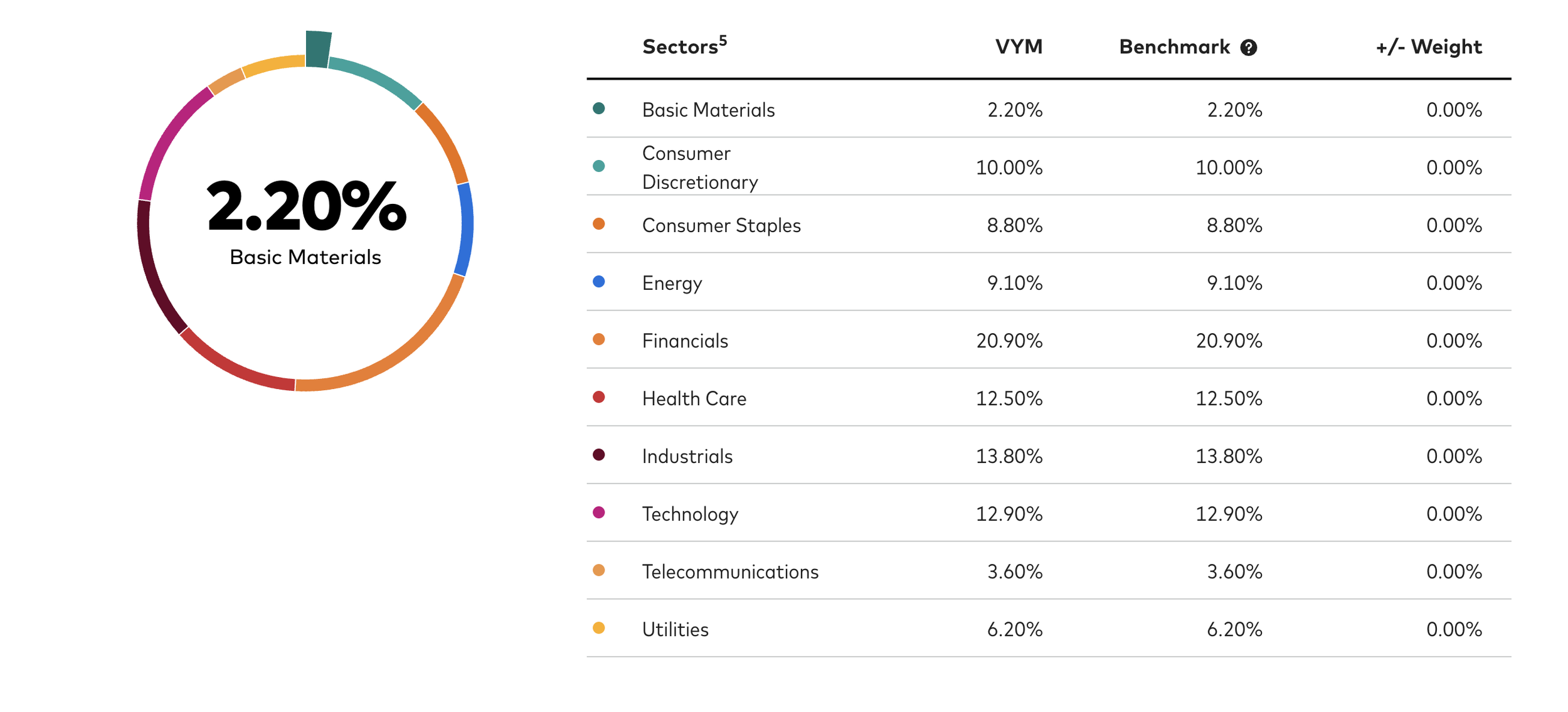
VYM is made up mainly of financial and technology stocks, with the largest holdings including Broadcom (6.95%), JPMorgan Chase & Co (3.63%), and Exxon Mobil Corporation (2.71%). It has a dividend yield of approximately 2.34% (this fluctuates daily with stock price) and pays out quarterly at $0.94 per share (as of 12/23/25). VYM sits on the inexpensive side of exchange-managed funds with an expense ratio of only 0.04%. The average equity ETF expense ratio is about 0.40% to 0.50%.
Performance
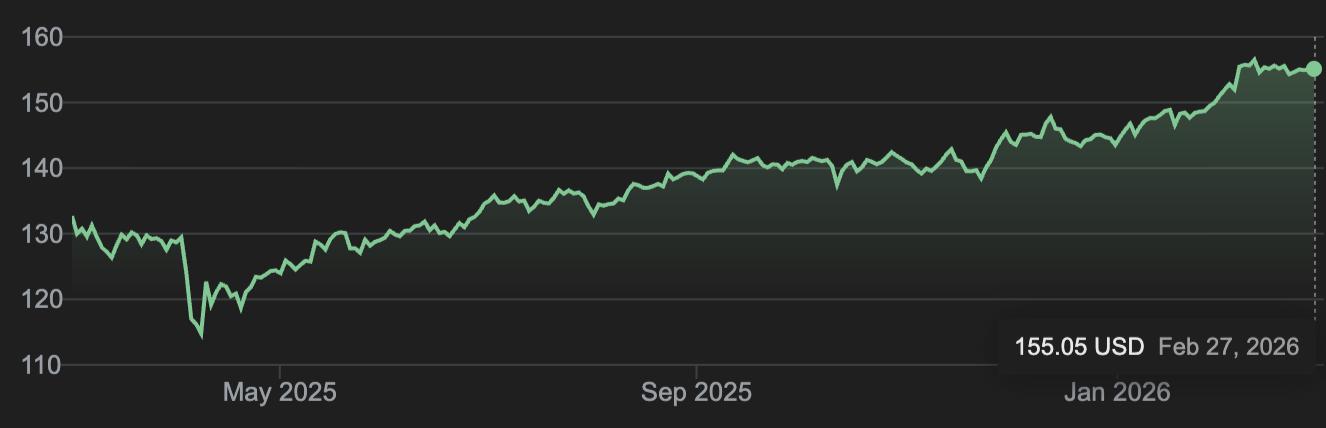
Over the last 12 months, VYM has actually outperformed the S&P 500, boasting a 18.69% total return (vs the S&P 500 return of 18.2%). While this isn’t always the case for “value” ETFs, VYM’s makeup of steadfast sectors gives it both the growth performance one might see in a riskier fund like VUG (the Vanguard Growth ETF made up of large-cap tech stocks), along with the lower volatility of secure industries like energy.
Why-to-buy
While it might not be the flashiest pick out there, VYM is a critical anchor to balance and diversify any investor's portfolio. With a makeup of over 560 companies across multiple sectors, quarterly dividend returns, and lower risk than other growth-focused funds, VYM is CFR’s Pick of the Week!
How-to-buy
When it comes to investing in ETFs, a DCA (dollar-cost average) approach is highly recommended. For those investors wary of buying at the top of the market, investing a set amount of money over a specific timeframe (say, once every month) can greatly increase efficiency and lower the average cost of one's position in a fund. By performing a DCA, an investor can capture the natural swings of the market and turn a market dip into an opportunity rather than a setback.
Disclaimer: The content published by The Colby Financial Review is for informational and educational purposes only and should not be construed as financial, investment, or trading advice. The views expressed are those of the student authors and do not reflect the views of Colby College or any affiliated institution. Readers should conduct their own research and consult with a qualified financial professional before making any investment decisions.