Affordability Crisis: Inflation outpacing growth in American Wages
Government data published on Friday showed prices have risen 3.3% on an annual basis, pushing toward the 3.5% yearly growth seen in average hourly earnings for March. On a monthly basis, the staggering 0.9% price hike between February and March has workers netting $0.07 less per hour than the month prior as gas prices spiked. The mismatch coming between prices of goods and wages is being felt unequally by Americans. March saw upper class household incomes grow by over 5%, while low and middle income households were between 1% and 2%, which falls short of the recent increase in prices.
Inflation, rising the most it has since 2022, makes sense during times of war for the United States. What we are forced to confront, however, is the impact on the standard of living: when the price growth (3.3%) outpaces the growth of real wages (3.5%), the quality of life for everyday Americans declines. The declining purchasing power may be the primary effect of this, as the vast majority of income has to be allocated toward the direct needs of the household. This change leads to a lower standard of living, and forces middle and lower class households to not save or invest their money for the future or retirement.
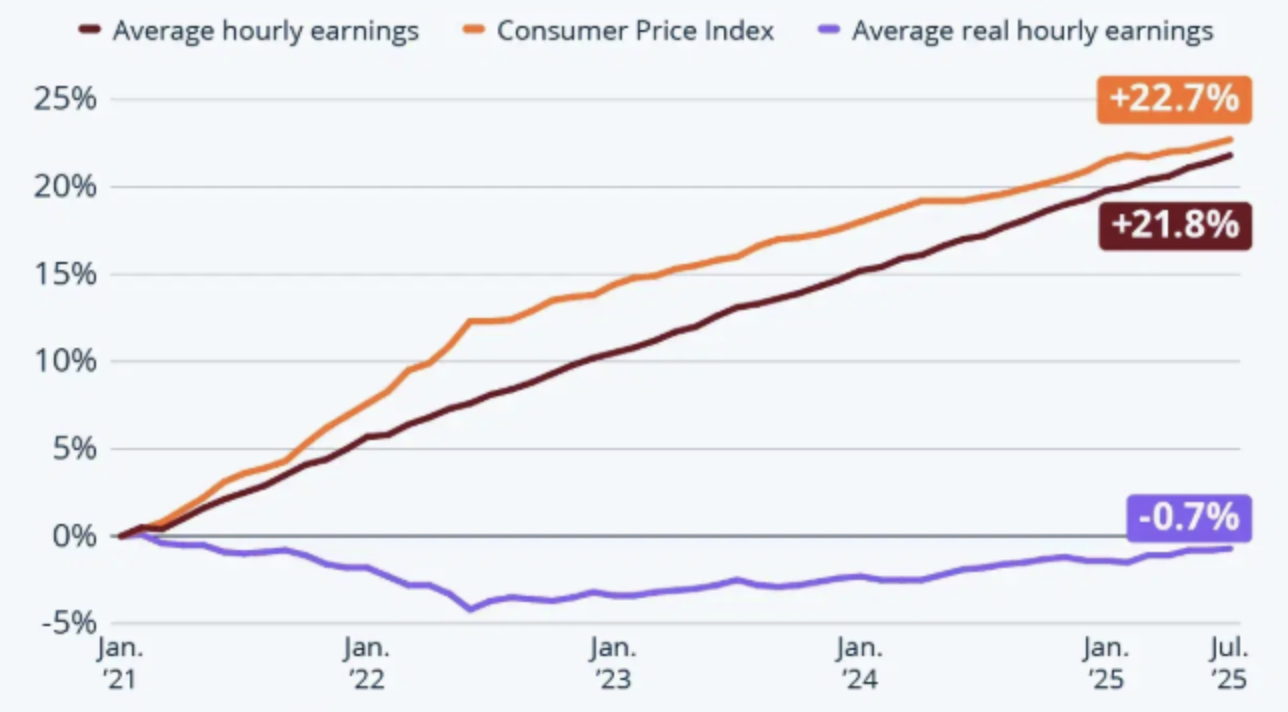
Source: U.S. Bureau of Labor Statistics
In general, when consumer spending falls, businesses see lower demand, reduce output, and pull back on hiring, or cut jobs outright. This dynamic leads to a higher risk of a recession cycle like we saw nearly two decades ago from the collapse of the Lehman Brothers. As demand weakens further, firms face pressure on revenues and margins, often forcing operational pullbacks that reinforce the slowdown. At the same time, reduced income and job insecurity limit households’ ability to spend, creating a compounding cycle that can deepen and prolong an economic downturn.
Source: Fox News
Just as it is difficult to make rational decisions in an emotional state, judging the economy clearly during an unforeseen circumstance like war is no different. Any analysis or overview at this moment will inherently be incomplete. Nonetheless, Americans should be preparing for how to combat rising inflation, especially if the economy fails to return to equilibrium once the war concludes.
Ultimately, the cost of living is rising, and there is little sign it will ease anytime soon. What steps can we continue to take to ensure that everyday Americans can still afford to live comfortably?