The Business Behind Formula 1
Formula 1’s popularity, especially in the US, surged in 2020 when the hit Netflix TV show Drive to Survive captured global attention and built a new wave of fandom. Funny enough, the first two seasons of the show were a flop. Initially, Netflix’s algorithm targeted a narrow audience of 50-year-old petrolhead men, but as the series gained momentum, its broader appeal became clear, and a younger, more diverse audience, particularly women across the United States, began to engage with the show, significantly boosting F1 popularity (Acquired). Rather than focusing solely on the races, Drive to Survive highlights the behind-the-scenes drama, the luxury and prestige of the sport, and the larger-than-life personalities of its drivers. Formula 1, however, is far more than a standard racing series or a typical sporting event. It operates a global, year-long competition spanning 21 countries and 24 races, with destinations ranging from Las Vegas to Monte Carlo to Abu Dhabi. Ultimately, Formula 1 is not just a sports organization but a global media juggernaut, one whose recent growth has been driven less by the cars on the track and more by the media ecosystems surrounding them.
Formula 1’s strategy fundamentally shifted in 2016 when American media giant Liberty Media acquired the sport for $4.4 Billion ($8 billion enterprise value) and sought to expand its presence in new media markets, particularly the United States, while deepening fan engagement on and off the track (NYT). The results have been significant: since 2017, revenue increased from $1.83 billion to $3.87 billion in 2025 (Sportpro). To understand how this growth has been achieved, it is essential to break down Formula 1’s revenue model into three primary streams: media rights, race promotions, and sponsorships.
The primary revenue driver of Formula 1 is its global broadcasting deals, which comprises 39% of total revenue (Sportpro). Formula 1 sells its product, races, to media companies in each country, which pay for exclusive rights to broadcast all 24 events. In many ways, this is the heart and soul of the company.
The second major revenue stream comes from race hosting fees, which comprises 33% of total revenue (Sportpro). With the exception of Las Vegas, where Formula 1 owns and operates the event, races are hosted by circuit owners or governments that pay substantial fees to Formula 1 for the right to stage a Grand Prix. The limited number of races creates scarcity, allowing Formula 1 to charge a premium. For example, Abu Dhabi reportedly pays around $40 million annually to host the season finale at Yas Marina Circuit (F1). However, this model has not been without controversy. Formula 1 has faced scrutiny for accepting hosting fees from authoritarian regimes, including Russia, which hosted a race from 2014 until 2021 before it was abruptly canceled following the invasion of Ukraine. While such decisions raise ethical concerns, they also highlight the commercial reality of the sport: Formula 1 is a profit-driven organization, and hosting decisions are often decided by the highest bidder. Another major news headline is the cancellation of the 2026 Bahrain and Saudi Arabian Grand Prix due to safety concerns with the ongoing war in Iran.
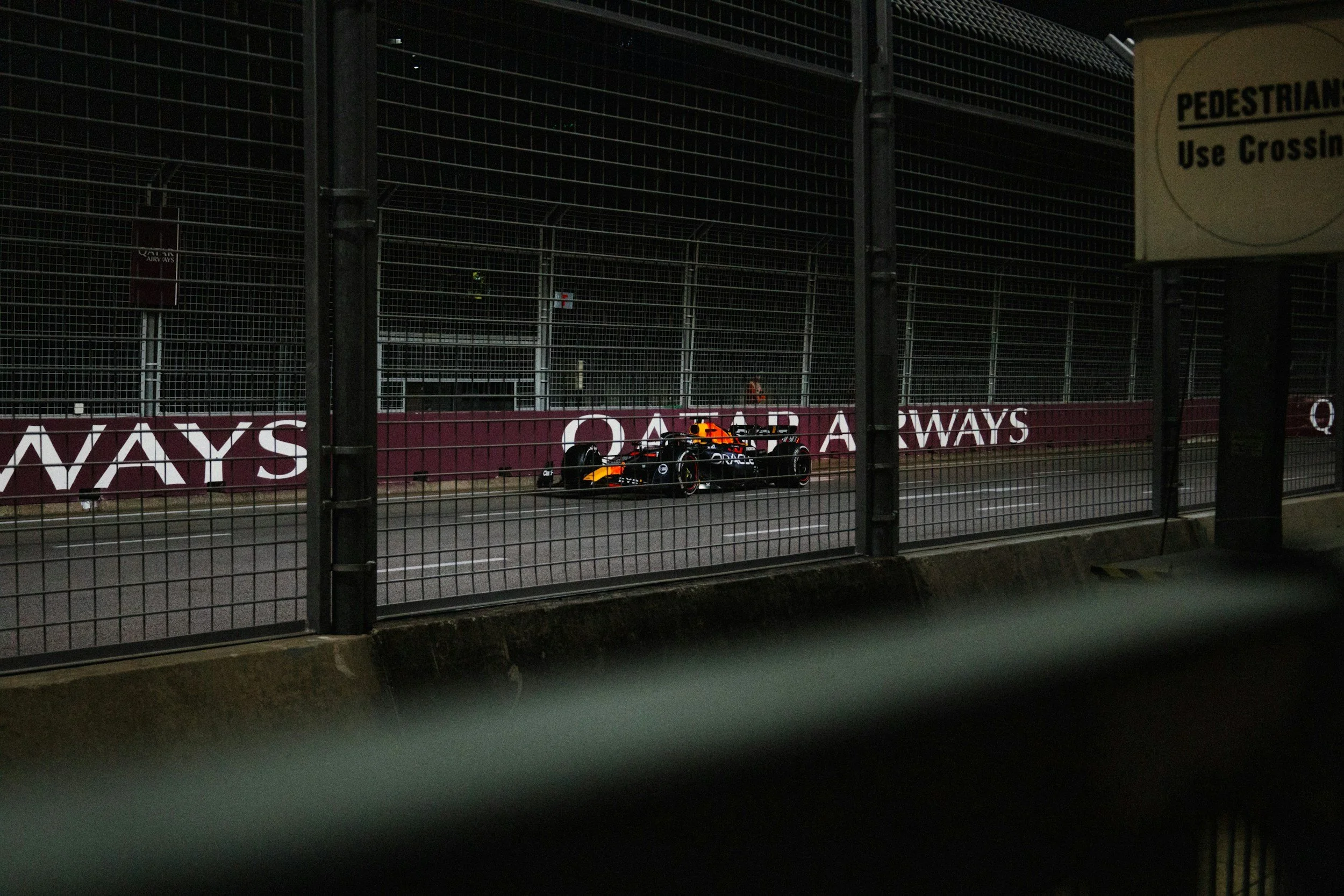
The final revenue stream is sponsorship and advertising, which is deeply embedded throughout the sport. Branding is everywhere, from the cars to the driver’s helmets to the team uniforms to the trackside barriers, etc. Formula 1’s global high-income audience attracts luxury brands and corporate brands to sponsor the events. The most notable sponsorship is with LVMH, which reportedly agreed to a 10-year, $1 billion partnership to become a key sponsor (Fortune).
Taken together, this revenue model reflects a high degree of centralization. Liberty Media controls the commercial rights and revenue streams, not the individual teams. Teams receive roughly 37% of total revenue, with payments varying by team (Liberty Media). As a result, Formula 1 operates more like a centralized media business than a traditional sports league.
This business model predominantly works because of scarcity. With only 24 races in a season and 11 teams on the grid, limited supply drives demand, giving Formula 1 significant pricing power. At the same time, Formula 1's status as a truly global sport enhances its value. By hosting races across 21 countries, Formula 1 gives sponsors international exposure that US-centric sports leagues can’t match. This global reach, combined with the sport’s positioning as a European luxury product, makes it particularly attractive to high-end brands. Companies like LVMH are willing to pay a premium to associate themselves with Formula 1’s elite image. This perception allows Formula 1 to operate as a premium product rather than mass entertainment, supporting higher prices across its revenue streams. Importantly, these sponsorships extend beyond the track. Through media properties like Netflix’s Drive to Survive, branding and storytelling reach a broader audience, amplifying their value. This ability to monetize not just the sport but also the narratives surrounding it has become central to Liberty Media's strategy and a key reason behind Formula 1’s growth over the past decade.
However, with growth also comes risk. The biggest risk is rapid expansion. In 2026, a new team, Cadillac, entered the grid, increasing the number of teams from 10 to 11. At the same time, the race calendar has expanded from 21 events in 2016, when Liberty acquired the sport, to 24 races beginning in 2024, a number that remains in place today. This expansion risk dilutes one of Formula 1’s core advantages: scarcity. As the number of teams and races increases, the exclusivity that underpins the sport’s pricing power may begin to erode, potentially pressuring both league and team revenues. Another key vulnerability is Formula 1’s heavy reliance on media-driven engagement. Much of the sport’s recent popularity has been fueled by content like Netflix’s Drive to Survive, not the actual races. If fans are more engaged with the narrative than the product, monetization becomes very difficult. This gap is evident when looking at other leagues. The NFL monetizes a fan at $127 per year, while Formula 1 monetizes a fan at $7 per year, a stark difference that highlights the challenge of converting attention into revenue (Acquired).
Looking ahead, Formula 1 is well-positioned for continued growth. Liberty Media has already done a great job cutting low-hanging fruit to maximize its revenue streams, but the next steps are a bit trickier. A key focus is the world’s largest media market, the United States. With three races in the States, Las Vegas, Miami, and Austin, Formula 1 has significantly increased its presence in the region. Notably, Las Vegas Grand Prix, the only race that Formula 1 owns and operates, has been a stunning success, potentially signaling a new business model for future events. At the same time, media monetization continues to accelerate. Liberty has signed a new U.S. broadcasting deal with Apple, reportedly worth around $150 million annually, up from $60 million under its prior deal with ESPN (WSJ). The digital streaming potential of the sport is immense, and with revenue up 14% this year, Formula 1 is well-positioned for growth. With new engine regulations and new car designs hitting the grid this year, Formula 1 has a lot to be excited about.
To close out the article, I will provide a SWOT analysis of Formula 1 to evaluate the company’s position by identifying internal strengths and weaknesses, as well as external opportunities and threats.
Strengths
Global Brand Recognition
Strong Diverse Revenue Streams
Digital Engagement
Weaknesses
High Operating Costs
Predictable Race Winners
High Financial Entry Barriers
Opportunities
Monetization of Fans
Growth in the US
Digital and DTC Content Growth
Threats
Overexpansion Diluting the Sport
Economic Downturn
Teams Revenue Sharing Dissatisfaction