AI Won’t Break the Economy: But Private Credit Might
Despite the surge of capital into AI, the real vulnerability lies not in the AI startups themselves, but in the private credit supporting them. Since 2025, venture capital has poured an estimated $270 billion into AI, with titans like OpenAI and Anthropic leading the way. Yet, as Fitch Ratings noted, private credit defaults surged to 9.2% in 2025. In this roughly $3 trillion market, flexible loans that bypass banks could fuel our next crisis.
Unlike other bubbles, AI spending is infrastructure-driven, supporting tangible assets like data centers and engineers, but the private credit feeding some of these companies is far less regulated, as recent examples like Blue Owl illustrate. Shares in Apollo and KKR also tumbled as credit risks spread. Why do people perceive these risks? Well:
Auto-parts company First Brands raised billions in loans while allegedly inflating invoices and falsifying financial statements. About $2.7 billion in receivables used as collateral were fake (FT). PC lenders including BlackRock’s HPS unit issued more than $400 million in loans backed by receivables that prosecutors say never existed, allegedly created using fake email domains (Reuters/FT). In another case, funds ended up exposed to loans from specialty property lenders with hundreds of millions in mortgages used as collateral, showing how risky real-estate financing flows through PC structures (WSJ). But these examples are more a case of fraud than anything else.

Patrick James arrives at federal court in New York on Feb. 4. (Michael Nagle/Bloomberg)
Instead, here are three real types of private-credit loans backed by “crazy collateral” that are often cited when citing how far the market has stretched. This isn’t outright fraud, but they show how lenders are increasingly structuring loans around hard-to-value revenue streams.
Cosmetic-Surgery Receivable Financing
Some lenders have financed medical procedure providers by lending against expected patient payments for elective procedures, including facelifts and liposuction (Bloomberg). The loans are effectively collateralized by the clinic’s projected revenue from procedures. Critics argue these receivables are risky because they depend on discretionary consumer spending and are difficult to value if demand drops.
2. Music-Royalty Backed Loans
Funds have issued loans backed by future royalty streams from music catalogs. Investors lend money to artists or catalog buyers in exchange for claims on future streaming revenue from platforms like Spotify or Apple Music (Northleaf Capital). While lucrative, collateral depends on unpredictable listening trends and the long-term popularity of specific songs.
3. Litigation-Finance Loans
Another growing niche is litigation finance,in which lenders fund legal cases in exchange for a share of future settlements or court awards (Covenant Lite). The collateral is essentially the expected outcome of a lawsuit. If the case fails, lenders lose their entire investment.
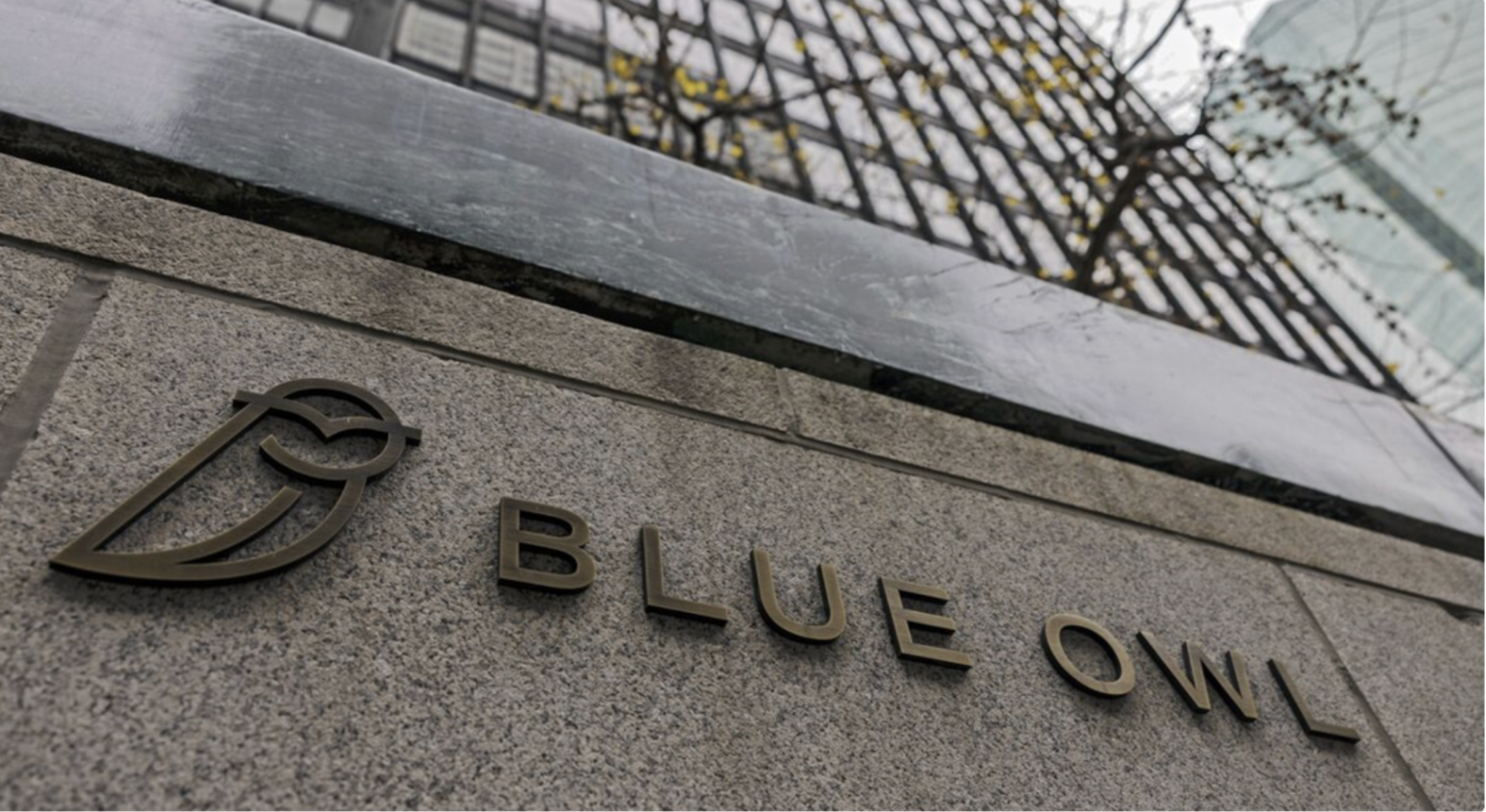
Blue Owl Headquarters
As Fitch warns, these unregulated loans, often issued to weaker firms, could become a flashpoint like subprime mortgages once were. And if private credit implodes, the ripple effects would hit pension funds and insurers, institutions that rely on stable yields and underpin critical organizations, and even endowments. As the WSJ notes, a few defaults cascading into commercial real estate could spark a full-blown credit crisis, destabilizing the wider economy.
Private credit is a remarkable innovation of the private sector. It has catalyzed growth for many businesses and provided a viable lending option outside the banking system. It should not be mistaken that many of the practices of PC are very credible, and we should note that certain types of these loans have been executed for a decade or more. As capital raising continually evolves, the question is not whether PC is “good” or “bad,” but whether its more extreme enterprises will lead to catastrophe. In other words, will the excesses of private credit prove to undermine its more credible side?
AI infrastructure will endure, but an unregulated private credit bubble hidden in the shadows could be the match that ignites our next downturn.