The House Always Wins
With the Super Bowl behind us, it’s clearer than ever that sports betting is deeply embedded in American sports culture in 2026. Since the Supreme Court legalized sports wagering in Murphy v. NCAA in 2018, the market has expanded rapidly across the United States. What was once confined to Las Vegas is now seamlessly integrated into broadcasts, stadium sponsorships, and fantasy platforms. Betting is no longer adjacent to the game — it is fully integrated in the experience.
The Scale of the Super Bowl Market
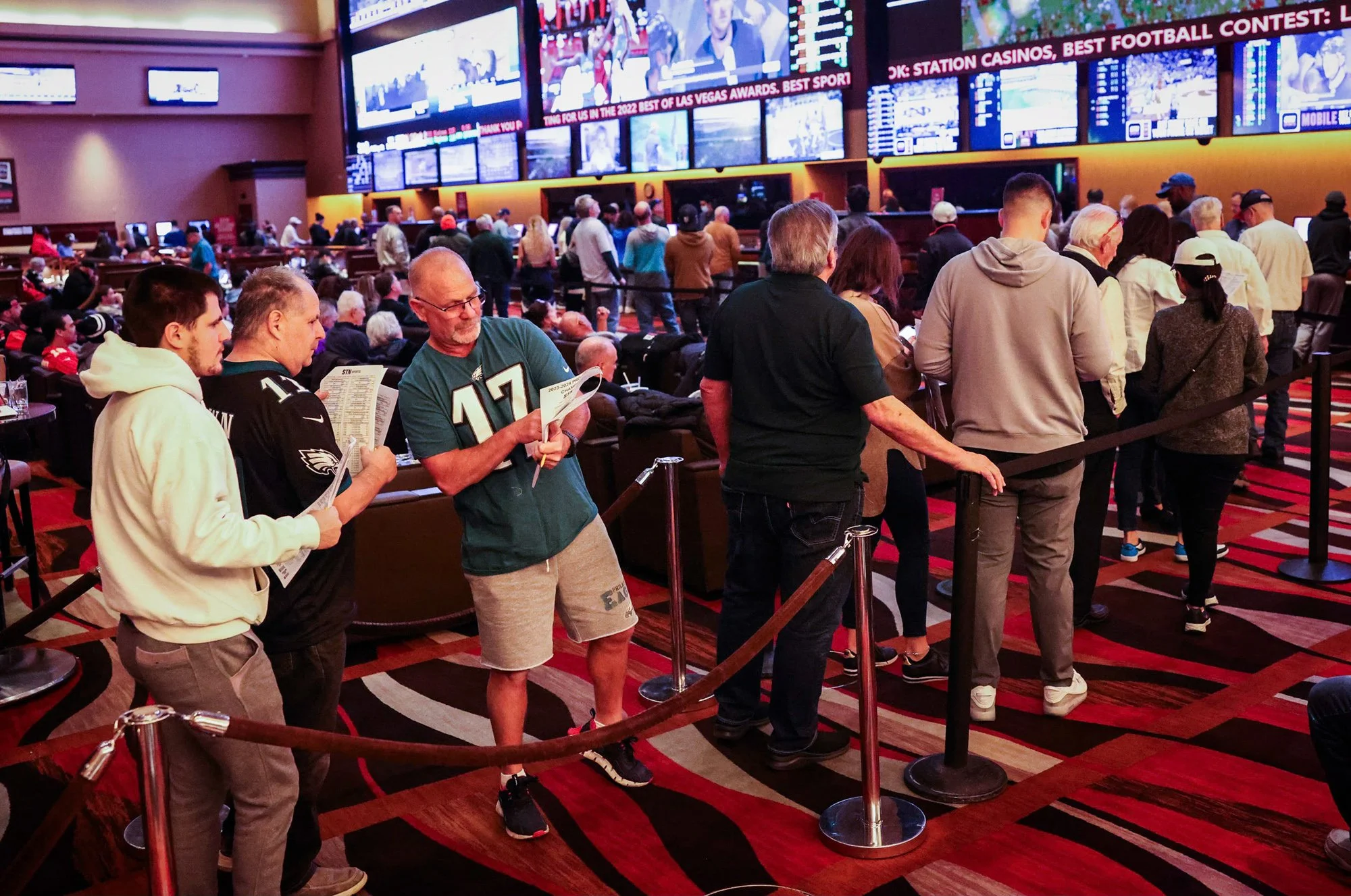
The Super Bowl captures the scale of the modern sports betting economy better than any other event. It is consistently the most heavily wagered sporting event of the year, and this year was no exception. Americans were expected to place a record $1.6 billion in bets, reflecting the explosion of mobile platforms and increasingly creative betting options. Today, wagers extend far beyond traditional spreads and moneylines to player props, micro-bets, and even novelty outcomes like the length of the national anthem.
What makes the Super Bowl uniquely efficient from a betting perspective is the sheer volume of analysis and capital behind it. Professional models, public sentiment, injury reports, and weather data are rapidly incorporated into odds. Because betting volume is so high, sportsbooks adjust lines quickly in response to new information. Live betting has further transformed the market, with odds updating in real time as the game unfolds. Economically, this increases betting frequency — and more bets mean higher total handle. Since every wager contains a built-in house edge, increased volume strengthens long-term sportsbook profitability.
The House Edge
At its core, sports betting can be explained through expected value:
EV = (p × payout) − ((1 − p) × stake)
In short, if the expected value is negative, the bettor loses over time; if positive, they gain. However, most bettors consistently face negative expected value due to the sportsbook’s pricing advantage.
Behavioral biases amplify this disadvantage. Overconfidence leads many fans to believe their sports knowledge gives them an edge. Loss chasing encourages bettors to double down after defeats in an attempt to recover quickly. Emotional attachment to favorite teams further distorts rational decision-making. Together, these biases help explain why sportsbooks remain consistently profitable while many bettors struggle.
How Sportsbooks Manage Risk
While sportsbooks often benefit from the house edge embedded in the odds, their goal is not simply to take bets against bettors; rather, they operate more like market makers, frequently changing lines to balance action on both sides of a wager. By doing so, sportsbooks attempt to guarantee a profit regardless of the game’s outcome.
This dynamic explains why betting lines are always moving. If too much money happens to flow toward one team, sportsbooks will shift the odds to encourage bets on the other side. By doing this, sportsbooks are managing exposure much like financial institutions hedge risk in capital markets.
Data and technology have made this process even more sophisticated. Modern sportsbooks rely heavily on mathematical algorithms that incorporate real-time betting flows, models, and external data inputs. The result is a fast-moving market where prices adjust quickly, making it increasingly difficult for casual bettors to find mispriced odds.
Sports betting is no longer a niche market; it is a massive, information-driven financial ecosystem. And like any market, those who understand the structure have the advantage.