The New AI Arms Race
Anthropic’s Rapid Rise
Not too long ago, Anthropic was viewed as an inferior and much less well-known competitor to OpenAI. Founded in 2021 by former OpenAI employees, led by Dario Amodei, Anthropic entered a market many believed OpenAI had already won following the release of ChatGPT in late 2022 (WSJ). Yet, this hierarchy no longer stands true.
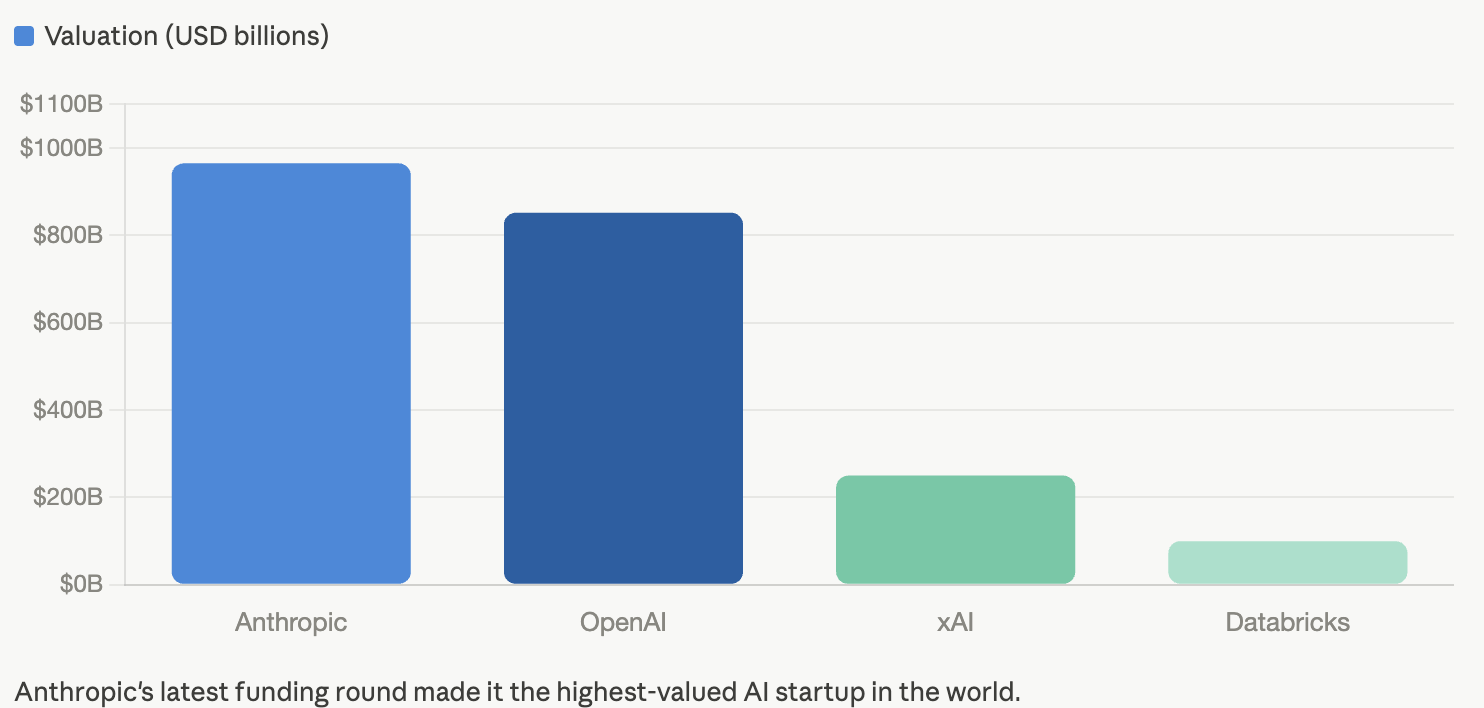
On May 28th, Anthropic announced a $65 billion funding round that valued the company at roughly $965 billion, surpassing OpenAI’s most recent valuation of $852 billion and making Anthropic the most valuable AI startup in the world (WSJ). Thus, the speed of Anthropic’s rise has really been the most remarkable factor here. Just three months ago, the company raised capital at a $380 billion valuation. As seen, its latest financing nearly triples that figure, representing one of the fastest increases in valuation ever seen in VC markets (The Hill). While at first glance investors may view this as simply another chapter in the increasingly competitive battle between Anthropic, OpenAI, and Elon Musk’s growing AI ambitions, Anthropic’s rise reveals something much more significant and important about where the AI industry is headed, as the AI race is no longer just a technology race, but instead is becoming a capital race as well.
Unlike OpenAI, which initially focused on building a massive consumer audience through ChatGPT, Anthropic concentrated much of its effort on enterprise customers, particularly software developers and businesses, providing them with AI tools to write and automate code (New York Times). As this strategy appears to be paying off, Anthropic reported that its revenue run rate recently surpassed $47 billion, up dramatically from approximately $9 billion at the beginning of the year (Morning Brew; New York Times). The company’s Claude family of models has become especially popular among developers, as its recently released Claude Opus 4.8 model has been recognized as one of the strongest coding AI systems currently available (New York Times).
The New AI Arms Race
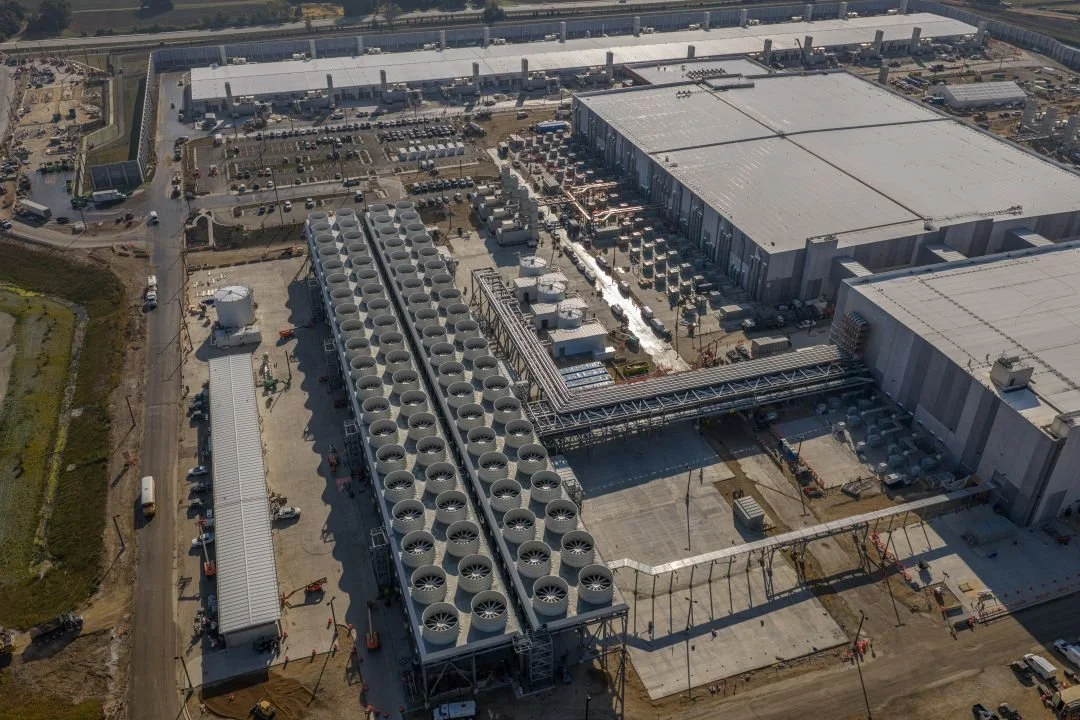
However, the most impressive aspect of Anthropic’s success doesn’t lie in the technology itself, but in its ability to attract unprecedented amounts of capital. The company has now raised well over $100 billion from investors and recently added major strategic partners, including Samsung, Micron, and SK Hynix (New York Times). These investments are not just bets on Anthropic as a company but also attempts to secure the computing infrastructure necessary to train increasingly powerful AI systems. One of the biggest challenges in the industry now is that building these state-of-the-art models requires enormous amounts of computing power, specialized chips, data centers, and electricity, which is why access to capital is becoming just as important as human capital.
The company’s valuation also illuminates how aggressively private markets are pricing the future of artificial intelligence. At nearly $1 trillion, Anthropic is now valued above many of the world’s largest public companies despite still remaining privately held (WSJ).
Ultimately, Anthropic’s ascent suggests that the next phase of the AI revolution may be determined less by who builds the best chatbot and more by who can secure the capital and infrastructure needed to scale. As OpenAI, SpaceX, and Anthropic move closer to potential public offerings, investors will soon have an opportunity to determine whether these companies can actually justify their valuations.